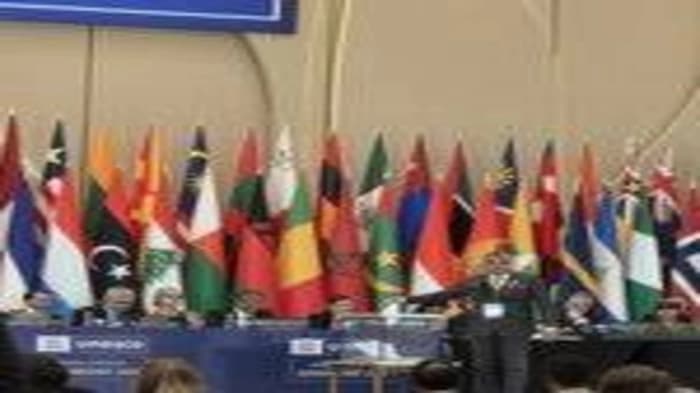
India has been re-elected to the UNESCO Executive Board for the 2025–2029 term, securing a strong vote of confidence from member nations. The Executive Board is UNESCO’s key decision-making body responsible for guiding the organisation’s programmes, budget priorities, and global initiatives across education, culture, science, communication, and information. India’s re-election signals growing international trust in its leadership, diplomatic outreach, and contributions to multilateral institutions. It also reinforces India’s status as a cultural and civilizational power with increasing relevance in contemporary global governance.
Why It Matters:
A seat on the UNESCO Executive Board gives India a more influential voice in shaping international norms and policies—from safeguarding world heritage sites to advancing education for all, from promoting scientific collaboration to strengthening media freedom and digital governance. As a country with 42 UNESCO World Heritage Sites, a vibrant knowledge tradition, and rich linguistic and cultural diversity, India is well-positioned to champion inclusive global cultural policies.


The re-election also supports India’s broader soft power strategy. UNESCO provides a platform to highlight India’s civilizational legacy, intangible cultural heritage, traditional knowledge systems (like Yoga, Ayurveda, classical arts), and educational reforms such as the National Education Policy (NEP 2020). Through active participation, India can influence global discussions on climate education, cultural restitution, open science, digital literacy, and protection of cultural property during conflicts.
India’s membership further strengthens cooperation with developing nations, aligning with its “Global South” leadership approach. It allows India to advocate for equitable access to education, preservation of indigenous heritage, multilingualism, and ethical technology use.
Overall, India’s re-election marks an important milestone in its quest to enhance multilateral engagement, cultural diplomacy, and global cultural governance. It underscores India’s commitment to preserving global heritage, promoting educational excellence, and shaping a more inclusive and culturally rooted international order.



.webp&w=256&q=75)