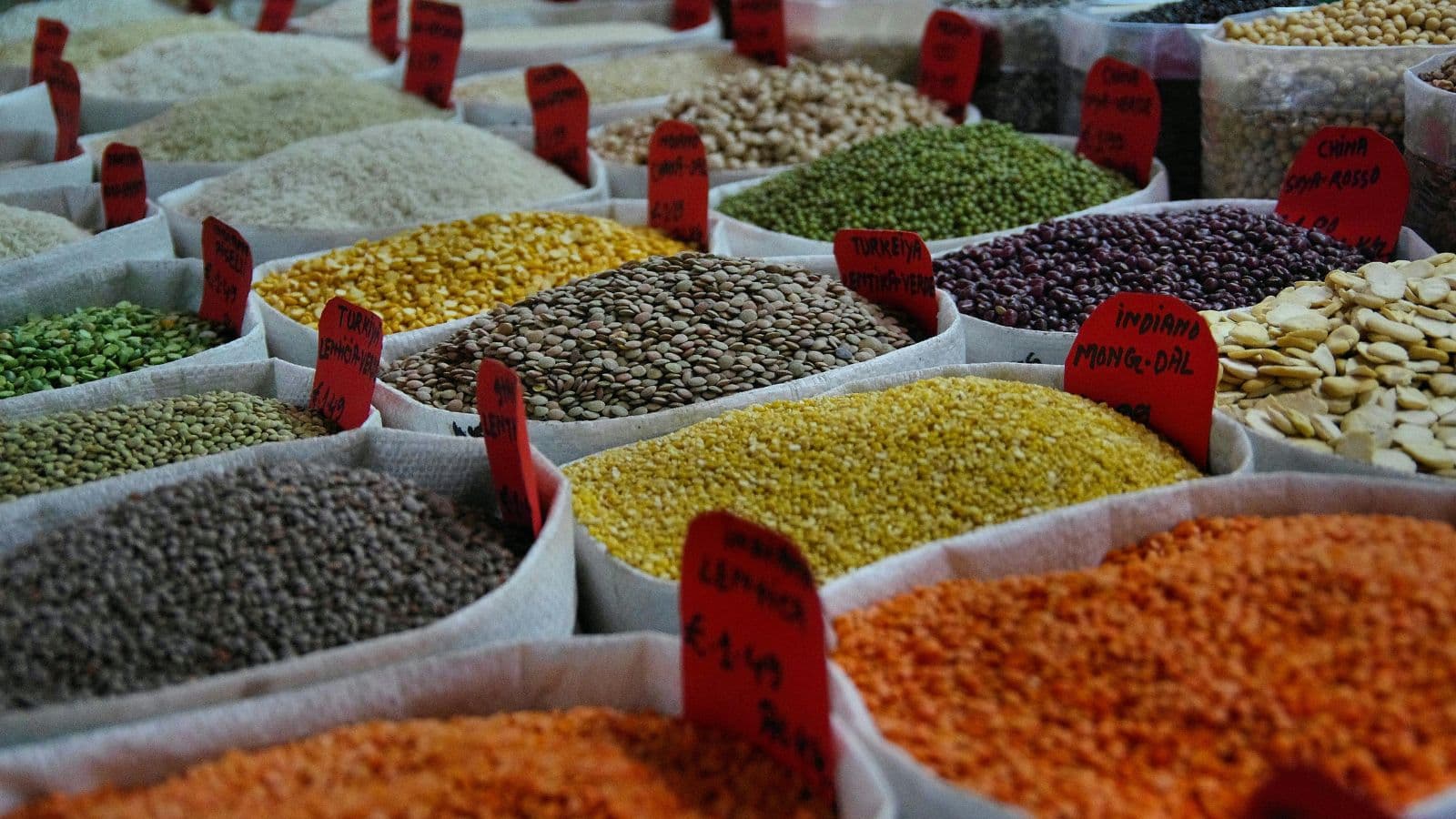
Days after India and the United States unveiled a framework for an interim, reciprocal trade agreement, the White House has released a detailed fact sheet indicating that New Delhi will eliminate or reduce tariffs on American industrial goods and a broad basket of food and agricultural products — notably including “certain pulses”, a category absent from the earlier joint statement.
The reference, made in the White House document issued on February 9, marks a key departure from the February 6 joint statement that outlined the “key terms” of the interim deal following a call between US President Donald Trump and Prime Minister Narendra Modi.

“India will eliminate or reduce tariffs on all US industrial goods and a wide range of US food and agricultural products, including dried distillers’ grains (DDGs), red sorghum, tree nuts, fresh and processed fruit, certain pulses, soybean oil, wine and spirits, and additional products,” the White House fact sheet said.
By contrast, the February 6 joint statement listed DDGs, red sorghum for animal feed, tree nuts, fresh and processed fruit, soybean oil, wine and spirits, and other products — without any mention of pulses.
The interim agreement framework was announced after the Trump–Modi call last week, with both leaders reaffirming their commitment to push forward negotiations on a broader US-India Bilateral Trade Agreement (BTA).
However, mixed signals have since emerged from within the Indian government. Speaking at a press conference in Bhopal on February 8, Union Agriculture Minister Shivraj Singh Chouhan said a wide range of farm products — including hulled grains, flour, wheat, corn, rice, millet, potatoes, onions, peas, beans, cucumbers, mushrooms, pulses, frozen vegetables, oranges, grapes, lemons, strawberries and mixed canned vegetables — would not be allowed into India.
A day later, Union Commerce and Industry Minister Piyush Goyal struck a more nuanced note, explicitly naming lentils among items that have been imported from the US for years and are now set to see tariff reductions.
“We’ve been importing some items for 20 years, even during the UPA government’s tenure. Some items, like pistachios, walnuts, almonds and lentils, have been exported [from the US to India] for years. We’ve granted phased eliminations on some of these items, and we’ve granted exemptions from the very beginning for certain items we need,” Goyal said.
The White House fact sheet also underlined Washington’s long-standing concern over India’s tariff regime, stating that India maintains “some of the highest tariffs on the United States of any major world economy”, with average agricultural tariffs as high as 37% and duties exceeding 100% on certain automobiles.
Against this backdrop, India’s pulses import data underscores why the issue is politically and economically sensitive. India’s pulses import bill surged 46% to ₹5.48 billion in 2024-25 from ₹3.75 billion a year earlier. Of the total ₹5.48 billion pulses imports in 2024-25, the US accounted for just ₹89.65 million.
Lentils — the primary pulse imported from the US — were brought in at ₹78 million last fiscal, with Canada (₹466 million) and Australia (₹328 million) ranking ahead as the top suppliers.
Overall, India imported ₹1,285.40 million worth of pigeon peas, ₹1,116.64 million of Bengal gram, ₹960.58 million of yellow peas and ₹916.03 million of lentils during 2024-25.
While imports of tur and urad remain duty-free until March 31, 2026, yellow peas will attract a 30% duty from November 1, 2025. Lentils, currently facing a 10% import duty, remain at the centre of the evolving trade discussion — now firmly back in focus after the White House’s expanded fact sheet.