

“In ‘Why Sanatan-Hindu Cannot Avoid Politics,’ the Author argues that politics is inescapable for Sanatan (Hindu) citizens, despite their reluctance to engage in it. Political decisions impact every facet of daily life, including taxes, education, healthcare, and personal freedoms. While many educated Sanatan individuals feel ashamed or brainwashed into avoiding political discourse due to historical, cultural, and social conditioning, the author asserts that disengagement from politics is not a neutral act. It often tacitly endorses the status quo and allows others to shape the nation's future. The narrative explores how Sanatan citizens are unconsciously involved in politics, why they have distanced themselves from it, and the importance of conscious political participation to safeguard their cultural and religious rights. The narrative calls for a reclamation of politics as a moral duty (Dharma), encouraging Sanatan citizens to engage constructively at both local and national levels to strengthen India’s democratic fabric and protect their values,” writes Ryan Baidya.


Ryan Baidya outlines a model where truthfulness forms the base of meaningful relationships, leading to respect, responsibility, dependability, and ultimately, trust. This progression culminates in love, suggesting that deep, transformative connections are built on consistent character traits and actions.

The Indian Constitution, through various amendments, has allegedly created imbalances favoring minority communities over the Hindu majority. Key concerns include religious freedoms under Articles 25, 28, and 30, the government's control over Hindu temples, and the introduction of secularism in 1975. Reform is urged to ensure equal rights for all, preserve Hindu culture, and correct perceived injustices.

Ryan Baidya suggests December 30, 1943, should be India’s true Independence Day. On this date, Subhas Chandra Bose’s Azad Hind Government declared sovereignty by raising the flag in the Andaman and Nicobar Islands. This date signifies genuine political freedom, contrasting with the partial independence of August 15, 1947.

Russia plans to expand university presence in Africa, offers study grants
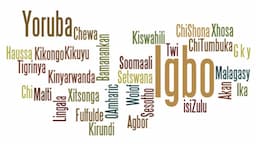
African languages remain marginalised in education despite push for equity, UNESCO think piece argues

MIT develops snake-inspired soft robot to help diagnose small intestine disorders

11-year-old Egyptian girl beats 40 million students in Arab Reading Challenge, wins Dh500,000
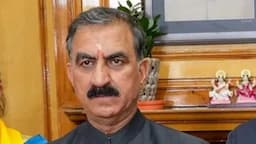
Himachal Pradesh approves hiring of 3,100 teachers for CBSE government schools

NTU Singapore, VFT launch joint research lab to develop safer batteries for renewable energy storage
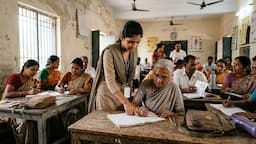
ULLAS 2026: Will B.Ed. Students' Academic Credits Depend on Adults Passing Literacy Tests?

Earth’s life story may not have begun with comets, new study finds

Can India's Biggest Examinations Become Leak-Proof?

Less juggling for parents? Singapore to unite kindergarten learning and after-school care by 2030

Copyright© educationpost.in 2026 All Rights Reserved.