


The incumbent chief minister announces up to 125 free units of electricity for domestic consumers just months before state elections.
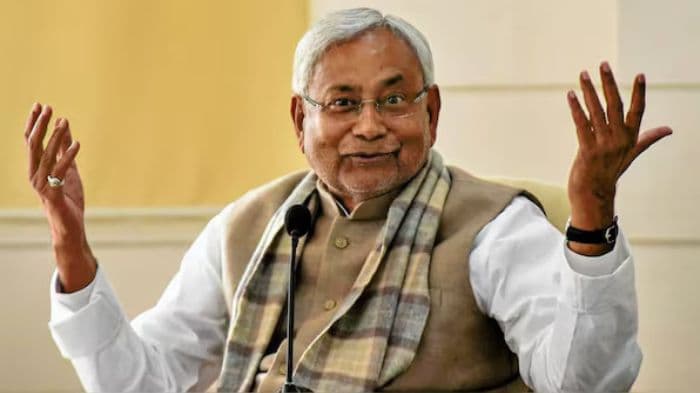
In a move widely seen as an electoral incentive, Bihar Chief Minister Nitish Kumar on July 17 announced that domestic households in the state would receive up to 125 units of free electricity each month.
The announcement comes just months ahead of the state assembly elections, marking the first major welfare promise of the poll season and prompting criticism from opposition parties and economists over the revival of freebie politics.

The scheme is set to benefit around 1.67 crore consumers and replaces the earlier partial subsidy model with a full waiver for those consuming within the 125-unit cap.
Calling the measure a step toward “relieving the financial burden on the poor and middle class,” Kumar said the scheme would improve living standards and ease monthly expenses for millions.
Announcing the move in a post on X, Chief Minister Nitish Kumar framed it as a measure to ease household expenses: “domestic consumers will no longer have to pay any charges for electricity up to 125 units,” starting with the July billing cycle.
He also unveiled a plan under the Kutir Jyoti scheme to expand the state's renewable energy capacity. The government will fund solar power installations for extremely poor families and provide support for others, aiming to increase solar capacity by 10,000 MW over the next three years.
The announcement follows similar pre-poll measures from the opposition: RJD leader Tejashwi Yadav had earlier promised 200 units of free electricity if his party came to power.
Opposition parties have long accused ruling governments across India of using taxpayer money for electoral gain. From Delhi’s subsidized water and electricity programs to Tamil Nadu’s free laptop schemes and Madhya Pradesh’s Ladli Behna initiative, pre-election giveaways have become a defining feature of Indian politics.
The revival of student-union elections at Indian universities: Explained

El Niño raises food-production risks as WMO flags uneven rainfall outlook for South Asia

EU research groups seek greater say in €175 billion Horizon Europe programme

NSF opens bioengineering funding call with awards of up to $50 million a year

A whale’s death inspired him at four, now 11-year-old is set for Earth Medal
A whale’s death inspired him at four, now 11-year-old is set for Earth Medal
Prof. Ajay Kumar Sood named International Science Council Fellow for 2026

2.6 million Afghan girls have lost five years of education, says UNICEF

Riyadh, Diriyah extend remote learning as security concerns persist
.jpg&w=256&q=75)
From Class 8 to hospital owner: Rajasthan Police expose alleged fake doctor registration

The revival of student-union elections at Indian universities: Explained
El Niño raises food-production risks as WMO flags uneven rainfall outlook for South Asia
EU research groups seek greater say in €175 billion Horizon Europe programme
NSF opens bioengineering funding call with awards of up to $50 million a year
A whale’s death inspired him at four, now 11-year-old is set for Earth Medal
A whale’s death inspired him at four, now 11-year-old is set for Earth Medal
Prof. Ajay Kumar Sood named International Science Council Fellow for 2026
2.6 million Afghan girls have lost five years of education, says UNICEF
Riyadh, Diriyah extend remote learning as security concerns persist
From Class 8 to hospital owner: Rajasthan Police expose alleged fake doctor registration
Copyright© educationpost.in 2026 All Rights Reserved.