The United States has signalled it is ready to allow India to resume buying Venezuelan oil — but only under a tightly controlled framework run by Washington — marking a dramatic shift in how one of the world’s largest crude reserves is brought back into global trade.
A senior Trump administration official confirmed to IANS that India, whose energy demand is rising sharply, would be permitted to purchase Venezuelan crude once the new system is finalised. Asked directly whether New Delhi would be allowed back into the Venezuelan market, the response was unequivocal: “Yes,” the official said, adding that operational details were still being worked out.

The move follows comments by US Energy Secretary Christopher Wright, who said Washington was now prepared to sell Venezuelan oil to “almost all countries,” but under a structure that keeps full control in American hands. In an interview with Fox Business, Wright said Venezuelan crude was already being allowed to flow again — but with the United States government marketing the oil and routing the proceeds into accounts it controls.
“So that oil, we’re allowing it to flow. Again, it’s marketed by the United States government. The money’s gonna flow into accounts,” Wright said, outlining a model that effectively replaces Caracas’ control over its own exports with Washington’s.
Before sweeping US sanctions froze most of Venezuela’s oil trade, India was among the country’s largest buyers, importing heavy crude to run its complex refineries. Any renewed access would give Indian refiners a valuable alternative at a time when energy security and diversification have become strategic priorities.
At an energy conference in New York, Wright went further, saying the United States plans to market between 30 million and 50 million barrels of Venezuelan oil currently sitting in storage, followed by continued sales from future production — a shift that could redraw parts of the global oil trade, with Washington now in the driver’s seat.
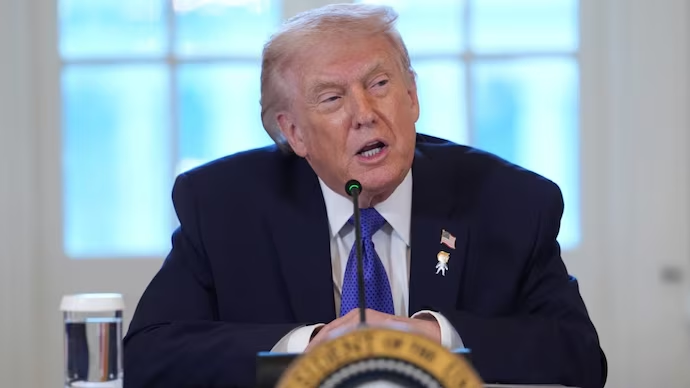
That approach was echoed, and amplified, by President Donald Trump, who said the United States would refine and sell up to 50 million barrels of Venezuelan crude under a new arrangement following the ouster of former president Nicolás Maduro.
Speaking to senior officials and executives from major oil companies, Trump framed the reopening of Venezuela’s oil sector as both a commercial windfall and a geopolitical reset.
“Venezuela is going to be very successful,” he said. “We’re taking back what was taken from us,” he added, in a pointed reference to the country’s vast energy resources.
Trump said US oil companies would invest at least $100 billion to revive Venezuela’s battered oil industry — the largest proven reserves in the world, but one crippled by years of sanctions, mismanagement and underinvestment. He made clear, however, that Washington would decide which companies are allowed in, underscoring a hands-on, gatekeeper role over capital, production and exports.
Under the plan unveiled this week, Venezuela will sell between 30 million and 50 million barrels of sanctioned crude to the United States, with further volumes expected as output ramps up. The announcement comes days after Maduro was captured in Caracas and transferred to US custody, a dramatic development that has reshaped Venezuela’s political and economic future.
For now, millions of barrels of Venezuelan crude remain stranded in tanks and on vessels, trapped by years of sanctions and logistical bottlenecks. US officials say Washington will control Venezuelan oil exports indefinitely — while selectively allowing shipments to flow to non-US buyers such as India — turning one of the world’s richest oil states into a US-managed supplier to the global market.