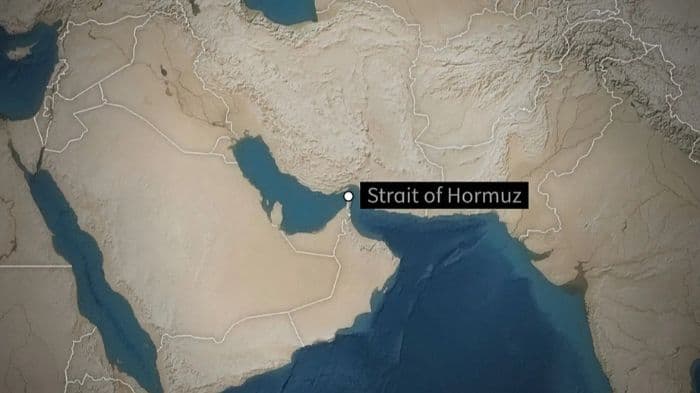
The Strait of Hormuz, a narrow maritime corridor between Oman and Iran, is one of the world’s most critical energy chokepoints. Nearly one-fifth of global petroleum liquids consumption passes through this route, making it indispensable to global energy markets and especially to oil-importing nations such as India.
The waterway connects the Persian Gulf to the Gulf of Oman and the Arabian Sea. Major oil producers including Saudi Arabia, Iraq, the UAE, Kuwait and Qatar rely on it to export crude oil and liquefied natural gas to Asia, Europe and beyond.

According to data from the US Energy Information Administration, roughly 17 to 20 million barrels of oil per day transit through the Strait.
India imports over 80% of its crude oil requirement, with a significant portion sourced from West Asian countries whose shipments move through the Strait of Hormuz. Any closure or prolonged disruption would likely lead to immediate supply concerns and a spike in global crude prices.
Higher crude prices directly affect India’s import bill, widen the current account deficit and put pressure on the rupee. Domestically, rising oil prices feed into higher fuel costs, transportation expenses and overall inflation, impacting both businesses and households.
Liquefied natural gas shipments are also vulnerable. Qatar, one of India’s key LNG suppliers, exports through the same route. Disruptions could therefore affect power generation and industrial fuel supply.
Even the threat of closure tends to roil global markets. Oil prices often react sharply to geopolitical tensions in the region, reflecting fears of supply shortages. A complete blockade, though historically avoided, would likely trigger severe volatility in global energy markets.
While some Gulf producers have alternative pipeline routes that bypass the Strait, these capacities are limited and insufficient to offset a full shutdown.
The Strait has long been a flashpoint in regional tensions, particularly involving Iran and Western powers. However, experts note that a total closure would also hurt regional exporters, including Iran, as energy exports are central to their revenues.
For India, the situation underscores the importance of diversifying energy sources, building strategic petroleum reserves and expanding renewable energy capacity to reduce vulnerability to external shocks.
As geopolitical tensions remain high, the Strait of Hormuz continues to dictate not only regional stability but also the economic weather of energy-dependent nations like India.