


Tehran has not confirmed the assertion, but any transfer of highly enriched material would mark a major breakthrough in tense nuclear negotiations.
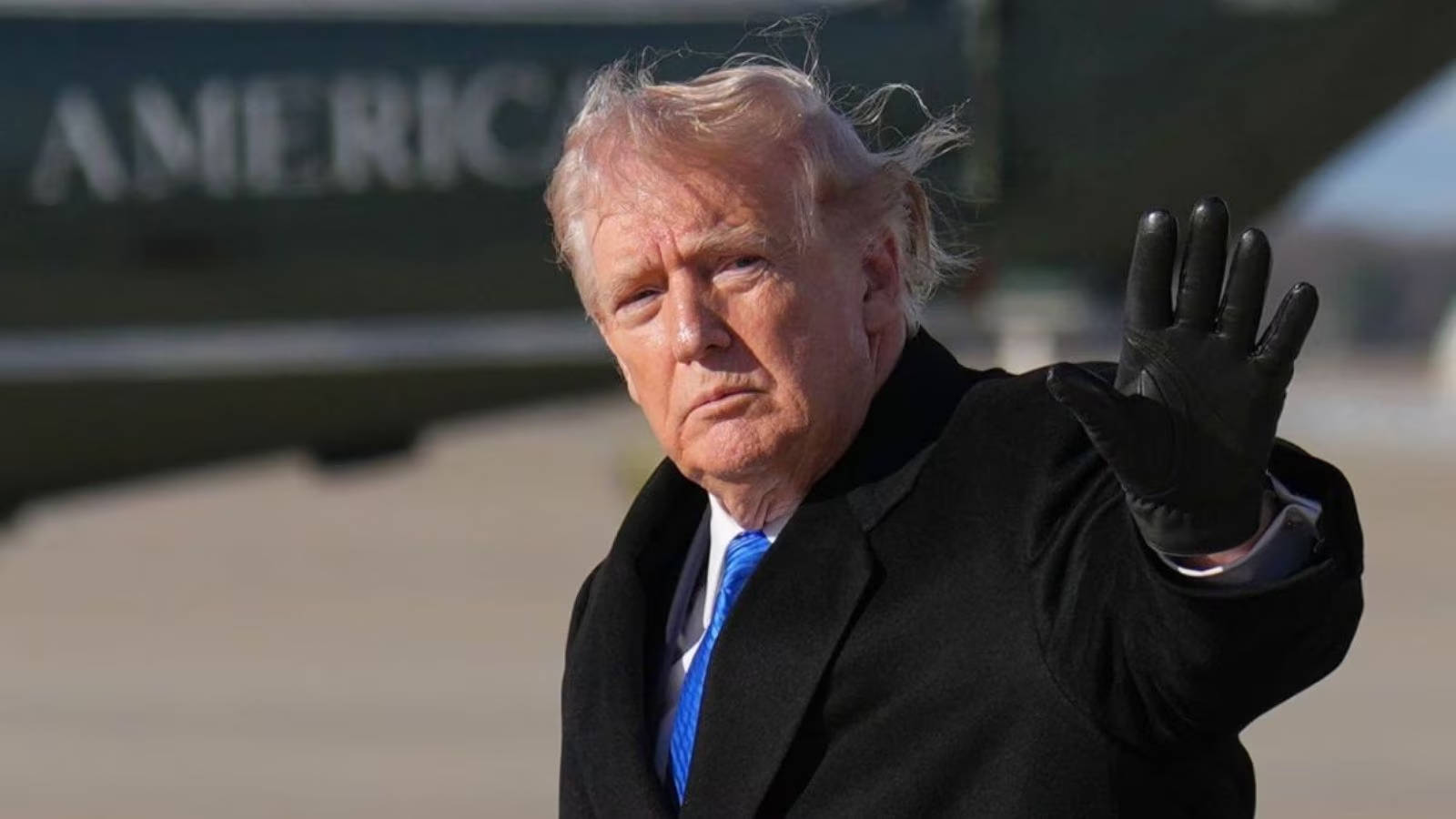
US President Donald Trump said on April 17 that Iran has agreed to hand over what he described as “nuclear dust” buried deep underground after last year’s US airstrikes on key Iranian nuclear facilities — a claim that, if verified, could significantly curb Tehran’s ability to pursue a nuclear weapon.
Iran has not publicly confirmed Trump’s statement, and there was no immediate indication from Tehran that such a concession had been made during ongoing talks with American officials and Pakistani intermediaries. The comments come as a two-week ceasefire edges closer to its April 22 expiry, raising pressure on both sides to secure progress.

Previous US claims regarding Iranian nuclear commitments have either been disputed or later collapsed, adding caution to Trump’s latest remarks.
Speaking on the broader geopolitical climate, Trump also projected confidence, pointing to market performance and economic indicators.
“If you look at the stock market, it’s up… everything’s doing really well,” he said, before returning to Iran as the key strategic issue.
Trump said the material would be returned following US military strikes.
“They’ve agreed to give us back the nuclear dust that’s way underground because of the attack we made with the B-2 bombers,” he said. “So we have a lot of agreement with Iran, and I think something’s going to happen very positively.”
The underground nuclear material remains a major concern for Washington, which fears it could potentially be used in weapons development. Its status has become one of the most sensitive issues in negotiations with Tehran.
Before the ceasefire was reached, Trump had directed the US military to explore options for recovering the material from Iranian territory without Tehran’s approval. Officials reportedly described such a mission as highly complex and dangerous.
US Vice President JD Vance held discussions with Iranian officials in Islamabad last weekend, but the meeting ended without a formal agreement.
However, diplomatic exchanges have continued behind the scenes. Trump said another round of face-to-face talks could take place “probably, maybe over the weekend.”
“Iran wants to make a deal, and we’re dealing very nicely with them,” he said, adding that Tehran now appears more willing to compromise.
Restricting Iran’s nuclear programme remains at the heart of the negotiations.
Under the 2015 nuclear accord negotiated during former President Barack Obama’s administration, Iran accepted strict limits on uranium enrichment in return for sanctions relief.
After Washington withdrew from the agreement, Iran expanded its programme and enriched uranium to higher levels. Tehran continues to insist that its nuclear activities are intended for civilian energy and research purposes.
Diplomats say that while a renewed promise not to build nuclear weapons would be politically significant, physically handing over enriched uranium stockpiles would be a far more concrete and measurable step.
Officials have warned that any attempt to seize the uranium by force would likely require a major military operation inside Iran, potentially involving thousands of troops and severe risks.
For that reason, many diplomats and security experts argue that a negotiated settlement remains the most realistic path forward.
Trump warned that hostilities could quickly resume if diplomacy fails.
“If there’s no deal, fighting resumes,” he said, underlining the fragile nature of the current truce.
US Defense Secretary Pete Hegseth also said Washington remains prepared for further military action if talks collapse.
Pakistan has increasingly positioned itself as a channel for dialogue, with officials working to keep negotiations alive.
Prime Minister Shehbaz Sharif and Army chief Asim Munir have both been involved in diplomatic outreach efforts.
A Pakistani official said extending the ceasefire could help “create space for peace talks.”
Despite some movement, major gaps remain — including disagreements over uranium enrichment limits and wider regional security demands.
For now, both sides are signaling willingness to keep talking. But with the ceasefire deadline fast approaching, uncertainty continues to shadow the process.

US probes nine universities over J-1 visas, halts PERM processing for eight firms
NLSIU Bengaluru announces NLSAT 2027 date for BA, LLB, MPP and PhD admissions

School Holiday Today, October 12, 2026: Are Schools Closed? Check State-Wise Updates

NIOS Date Sheet 2026: Class 10, 12 October-November Exam Timetable Released, Check Schedule
Yogesh Singh begins second term as Delhi University vice-chancellor
US probes nine universities over J-1 visas, halts PERM processing for eight firms
.jpg&w=256&q=75)
Regional universities face international student slump as visa refusals and political rhetoric deter applicants

AI may lift homework scores but weaken real learning, World Development Report raises concerns
Ken Griffin’s record $3 billion gift to Carnegie Mellon to fuel new Miami campus

Michael Jordan pledges $10 million to UNC social work school in mother’s honour

US probes nine universities over J-1 visas, halts PERM processing for eight firms
NLSIU Bengaluru announces NLSAT 2027 date for BA, LLB, MPP and PhD admissions
School Holiday Today, October 12, 2026: Are Schools Closed? Check State-Wise Updates
NIOS Date Sheet 2026: Class 10, 12 October-November Exam Timetable Released, Check Schedule
Yogesh Singh begins second term as Delhi University vice-chancellor
US probes nine universities over J-1 visas, halts PERM processing for eight firms
Regional universities face international student slump as visa refusals and political rhetoric deter applicants
AI may lift homework scores but weaken real learning, World Development Report raises concerns
Ken Griffin’s record $3 billion gift to Carnegie Mellon to fuel new Miami campus
Michael Jordan pledges $10 million to UNC social work school in mother’s honour
Copyright© educationpost.in 2026 All Rights Reserved.