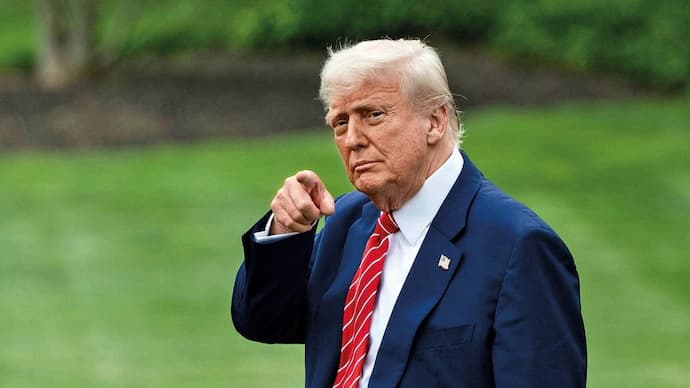
Donald Trump on January 9 announced a dramatic pullback from further US military action against Venezuela, cancelling a planned second wave of strikes after Caracas began releasing large numbers of political prisoners and signalled cooperation with Washington on reviving the country’s battered oil and gas sector.
Calling the move a “very important and smart gesture” aimed at peace, Trump said the releases marked a turning point in US–Venezuela relations, paving the way for political de-escalation and large-scale American investment in the oil-rich nation.

“Venezuela is releasing large numbers of political prisoners as a sign of ‘seeking peace’,” Trump wrote on social media. “The USA and Venezuela are working well together, especially in rebuilding their oil and gas infrastructure. Because of this cooperation, I have cancelled the previously expected second wave of attacks.”
While stressing that US naval forces would remain deployed “for safety and security purposes”, Trump said the diplomatic breakthrough had made further military action unnecessary. He also revealed that major US energy firms were preparing to invest heavily in Venezuela, with more than $100 billion expected to flow into its energy sector.
The announcement came just days after US forces launched airstrikes on Caracas in the first wave of operations, followed by the dramatic capture of Venezuelan President Nicolás Maduro and his wife, Cilia Flores. The two were flown to New York to face what Trump described as charges of “narco-terrorism”, accusing the Maduro government of producing and trafficking drugs that have “destroyed American lives”.
Venezuela’s sudden release of prominent opposition figures, journalists and activists — both Venezuelan citizens and foreign nationals — appears to have shifted Washington’s stance. Caracas described the move as a gesture to “seek peace” amid escalating tensions with the United States.
In an interview with Fox News recently, Trump praised the government of Acting President Delcy Rodríguez, saying, “They’ve been great. Everything we’ve wanted, they’ve given us,” in a striking reversal of Washington’s long-held hostility towards the Venezuelan leadership.
Among those freed was Biagio Pilieri, a senior opposition leader linked to Nobel Peace Prize laureate María Corina Machado’s 2024 presidential campaign, according to Foro Penal, a Caracas-based prisoners’ rights group. Also released was Enrique Márquez, a former electoral authority and 2024 presidential candidate.
The prisoner releases follow a violent special forces operation on January 3 that led to Maduro’s capture — an operation Venezuelan authorities say left at least 100 people dead. Trump has since said the United States would oversee Venezuela during a transitional period, tapping its vast oil reserves in the process.
Energy now sits at the heart of Washington’s strategy. Earlier this week, Trump announced plans for the US to sell between 30 million and 50 million barrels of Venezuelan crude, with the proceeds used by Caracas to buy American-made goods. Rodríguez defended the arrangement, saying it was not “unusual” and would help stabilise the country’s economy.
With Venezuela holding the world’s largest proven crude reserves, oil diplomacy has rapidly become the currency of peace — and for now, it has helped avert another round of American bombs.