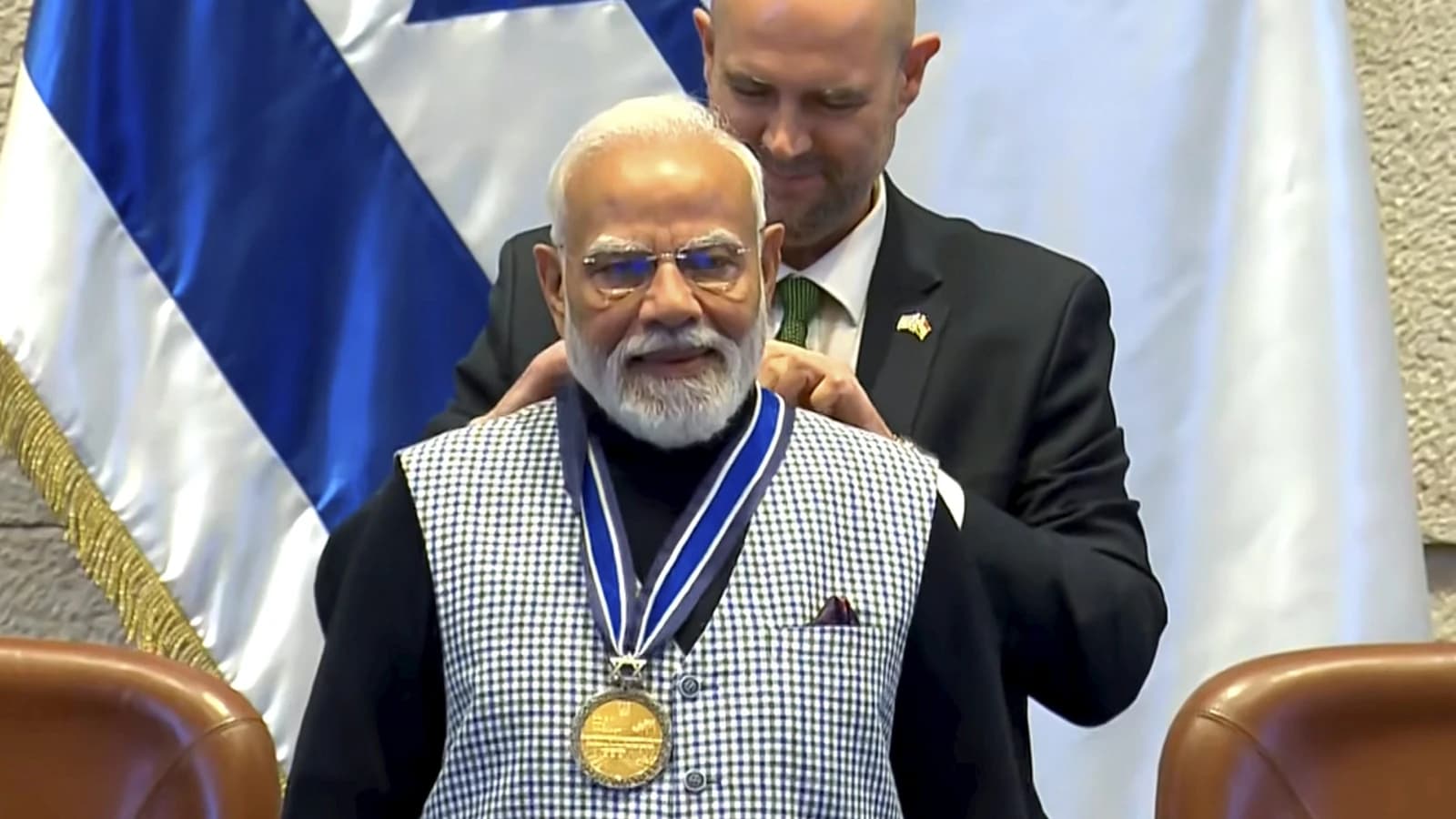
In a carefully calibrated address to the Knesset, Prime Minister Narendra Modi on February 25 threw India’s weight behind the Gaza peace initiative, asserting that any lasting solution must also address the Palestine question.
Calling the UN-endorsed proposal a pathway to “just and durable peace,” Modi said India firmly supports efforts that promise stability for all people of the region, “including by addressing the Palestine issue.”

His remarks come at a delicate moment, with a fragile ceasefire holding between Hamas and Israel after nearly two years of intense conflict in Gaza.
A historic first at the Knesset
Becoming the first Indian Prime Minister to address the Israeli Parliament, Modi was welcomed earlier in the day at Tel Aviv’s Ben Gurion International Airport by Prime Minister Benjamin Netanyahu and his wife Sara.
In his 31-minute speech, marked by repeated applause and a standing ovation, Modi spoke of “India’s connection to this land… written in blood and sacrifice,” underscoring shared histories of resilience and nationhood.
“We believe that it holds the promise of a just and durable peace for all the people of the region,” he said of the Gaza initiative. “Let all our efforts be guided by wisdom, courage and humanity. The road to peace is not always easy. But India joins you and the world for dialogue, peace and stability in this region.”
Zero tolerance for terror
Striking an emotional chord, Modi recalled the October 7 attacks in Israel alongside the 26/11 Mumbai terror strikes.
“I carry with me the deepest condolences of the people of India for every life lost… We feel your pain. We share your grief. India stands with Israel, firmly, with full conviction, in this moment and beyond,” he said.
“No cause can justify the murder of civilians. Nothing can justify terrorism.”
Emphasising India’s long-standing position, he said New Delhi maintains an uncompromising policy of zero tolerance for terrorism “with no double standards,” adding that terror anywhere threatens peace everywhere and requires sustained global coordination.
Hope amid turbulence
Referring to the Abraham Accords, the US-brokered agreements that sought to normalise ties between Israel and several Arab nations, Modi said India had applauded the “courage and vision” behind them.
“It was a moment of new hope for a long-troubled region,” he said, while acknowledging that the path has since grown more challenging after the October 7, 2023 attacks and the ensuing Gaza war.
Yet, he stressed, sustaining hope remains critical.
Deepening strategic ties
Modi described India and Israel as democracies “shaped by history and focused on the future,” asserting that their partnership contributes not only to national interests but also to global stability and prosperity.
He highlighted expanding cooperation in defense, technology, water management and agriculture, pointing to 43 centres of excellence for agriculture established across India with Israeli collaboration. Cultural exchanges, including the growing popularity of yoga and Ayurveda in Israel, were also noted.
He underscored that Jewish communities have lived in India for centuries without fear of persecution, calling it “a source of pride” for the country.
Warm welcome from Israeli leaders
Netanyahu described Modi as “more than a friend, a brother,” recalling their personal rapport and previous visits, including Modi’s landmark 2017 trip to Israel.
“You stood next to Israel. You stood by Israel. You stood for Israel. You stood for the truth,” Netanyahu said.
Knesset Speaker Amir Ohana likened PM Modi to “both statesman and poet,” while Opposition leader Yair Lapid said Israel admired Modi’s leadership and steadfast support.
The two sides are expected to elevate their strategic partnership further, with agreements spanning economic, security and diplomatic cooperation set to be signed during the visit.
With his address, Modi sought to strike a delicate balance — reaffirming unwavering solidarity with Israel against terrorism while backing a peace initiative that recognises the centrality of the Palestinian question in securing lasting regional stability.