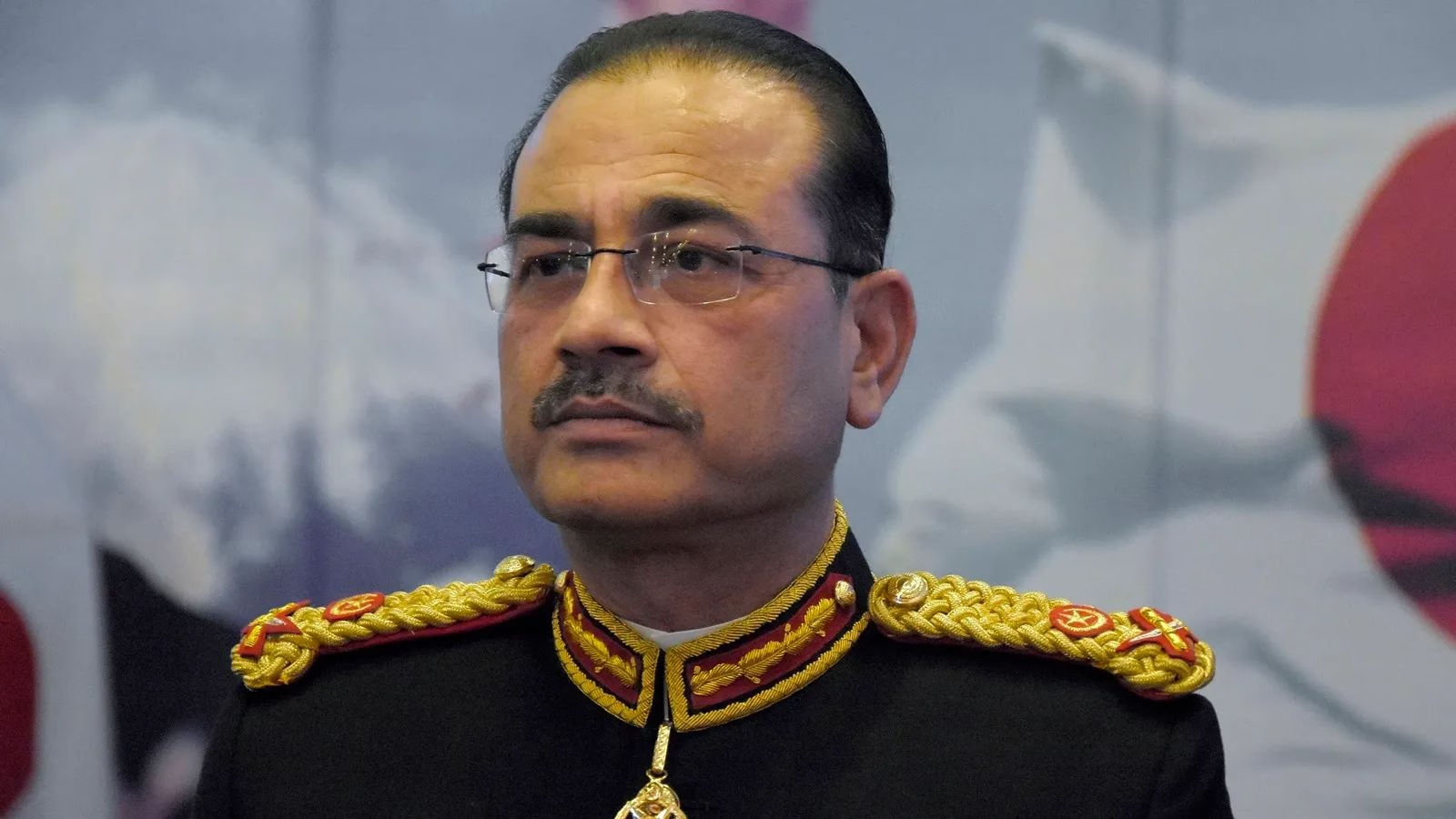
Pakistan is stepping up diplomatic efforts to position itself at the centre of high-stakes negotiations over the ongoing US-Israel conflict with Iran, with Army Chief Asim Munir holding a direct conversation with US President Donald Trump, according to a report by Financial Times.
Islamabad has proposed hosting talks as early as this week, offering itself as a neutral venue for potential discussions involving senior members of the Trump administration and Iranian officials. The move signals Pakistan’s attempt to emerge as a “lead mediator” in efforts to de-escalate the conflict.

The diplomatic push comes alongside parallel engagements, with Prime Minister Shehbaz Sharif holding talks with Iranian President Masoud Pezeshkian. Pakistan’s outreach reflects a broader regional effort, as countries including Turkey and Egypt intensify back-channel diplomacy to bridge gaps between Washington and Tehran.
Officials cited by Dawn described an emerging “strategic synergy” among Ankara, Cairo and Islamabad, creating what they called a “vital diplomatic conduit” aimed at curbing further escalation. These efforts reportedly involve US Middle East envoy Steve Witkoff and Iran’s Foreign Minister Abbas Araghchi.
The flurry of diplomacy coincides with Trump’s announcement that he would delay his threat to “obliterate” Iran’s power infrastructure, citing “very good and productive” conversations with Tehran. The White House, however, has declined to provide further details, calling the discussions sensitive.
Regional actors continue to play a critical role. Turkey has renewed contacts with Iranian officials and US representatives to push for a temporary ceasefire, while Pakistan’s Foreign Minister Ishaq Dar has coordinated with Turkish counterpart Hakan Fidan. Egypt’s Foreign Minister Badr Abdelatty has also engaged counterparts across Iran, Pakistan, the US and Qatar.
Despite the diplomatic momentum, Iran has denied any direct negotiations with the United States since the conflict began. Tehran, however, acknowledged receiving messages via intermediary states, indicating that indirect communication channels remain active.
Pakistan’s unique geopolitical position appears to be strengthening its claim as a credible mediator. Unlike several regional players, it hosts no US military bases and has avoided direct military targeting by Iran—factors that enhance its perception as a neutral actor.
The report also noted that Pakistani officials are facilitating discreet communication between Tehran and US-linked figures, including Jared Kushner. Islamabad has reiterated its commitment to supporting peace efforts, with Sharif assuring Tehran of Pakistan’s “constructive role” in facilitating dialogue.
With one of the world’s largest Shia populations and deep regional ties, Pakistan is leveraging both diplomacy and strategic positioning to insert itself into one of the most volatile geopolitical crises—seeking to turn influence into impact as tensions continue to simmer.