The United States and Iran failed to secure a breakthrough in high-stakes truce talks in Islamabad, with US Vice President JD Vance confirming that Washington is “returning without a deal” after marathon negotiations yielded no consensus.
The talks, held after nearly 40 days of conflict in the Middle East and a subsequent two-week ceasefire, were aimed at converting the temporary pause into a lasting peace framework. However, discussions between Washington and Tehran collapsed over key sticking points, including the reopening of the Strait of Hormuz and broader strategic commitments.

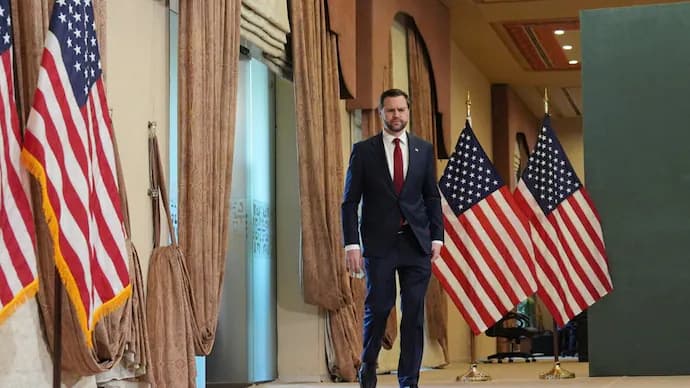
Leading the US delegation, Vance said the 21-hour engagement included “substantive discussions” but ultimately failed to produce an agreement. He maintained that the United States had presented its “best deal,” which Iran declined to accept.
“We’ve made very clear what our red lines are… and they may have chosen not to accept our terms,” Vance told reporters after the talks.
Despite acknowledging progress in dialogue, Vance underscored the absence of a final agreement as a significant setback—particularly for Tehran. “We have not reached an agreement — and I think that’s bad news for Iran much more than it's bad news for the United States,” he said.
US presses on nuclear assurances
A central point of contention remained Iran’s nuclear programme. While stopping short of detailing specific proposals, Vance indicated that Washington did not receive firm assurances from Tehran on abandoning nuclear weapons ambitions.
“The simple fact is that we need to see an affirmative commitment that they will not seek a nuclear weapon,” he said, emphasizing that long-term guarantees—not short-term compliance—were critical to any deal.
He added that although Iran’s previous enrichment infrastructure had been dismantled, concerns persist over whether Tehran is willing to permanently step back from nuclear development.
Tehran pushes back on US demands
Iranian media outlet Fars News, citing delegation sources, painted a starkly different picture, accusing Washington of placing “unacceptable” and “ambitious” demands on the table.
According to the report, the US sought concessions on multiple fronts, including the Strait of Hormuz and Iran’s peaceful nuclear energy programme—conditions Tehran refused to accept.
Sources quoted by the outlet also alleged that the United States entered the talks with rigid expectations, seeking to secure through negotiations what it could not achieve during the conflict.
Another Iranian source claimed Washington was “looking for an excuse” to walk away, adding that Tehran is unlikely to engage in another round of talks in the near future.
Ceasefire hangs in the balance
The failure to reach an agreement has cast fresh uncertainty over the fragile two-week ceasefire, raising concerns about a possible escalation in the region.
Earlier, US President Donald Trump had warned of a “never-before-seen” military response if negotiations failed. Even as talks were underway, Trump asserted that the United States held a dominant position in the conflict, claiming victory regardless of the outcome.
With both sides entrenched and diplomacy faltering, the prospects for a sustained peace in the Gulf region remain increasingly uncertain.







.jpg&w=256&q=75)



.jpg&w=256&q=75)
