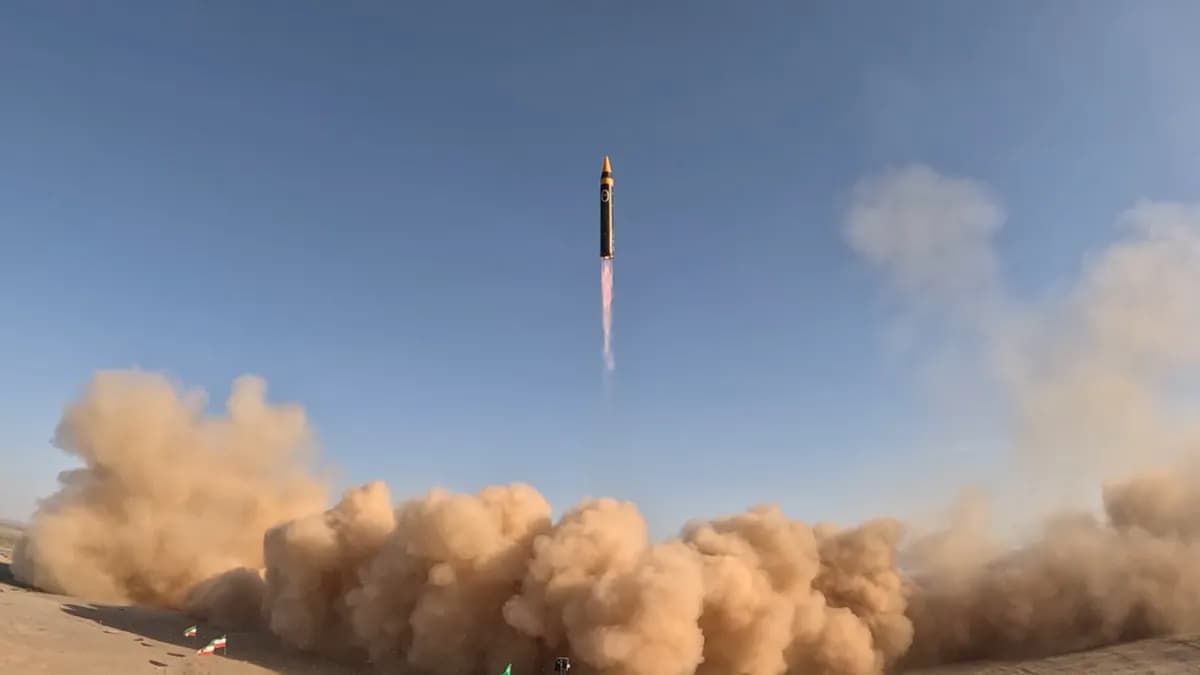
The war between Iran and Israel entered its 11th day on March 10 with intensifying military strikes, sharp warnings over global oil supplies and fresh geopolitical alignments across the Middle East.
Iran’s Foreign Minister said Tehran would continue missile attacks and ruled out negotiations with the United States, signaling that the conflict could stretch further despite growing international pressure for de-escalation.

The escalation has rattled global energy markets and raised fears of a broader regional confrontation as oil shipping routes, energy infrastructure and civilian areas increasingly come under threat.
Iran warns over oil flows as US threatens stronger retaliation
Iran’s Revolutionary Guards warned they would not allow “one litre of oil” to leave the region if US and Israeli strikes continue, raising alarm over the security of the Strait of Hormuz — a vital maritime route that carries roughly a fifth of the world’s oil supply.
US President Donald Trump responded with a blunt warning, saying Washington would retaliate “twenty times harder” if Tehran attempted to block tanker traffic through the strategic waterway.
The standoff has already shaken energy markets, with several tankers reportedly stranded and some oil producers halting pumping amid security concerns.
Within Iran, the security establishment appears to be rallying behind new Supreme Leader Mojtaba Khamenei, fuelling speculation that the leadership is preparing for a prolonged conflict.
Australia steps in with defensive military support
Australia announced it would deploy a military surveillance aircraft to the Middle East and send missiles to the United Arab Emirates, while making clear that no Australian troops would be sent into Iran.
Prime Minister Anthony Albanese said the move was aimed at strengthening Gulf security and protecting Australians in the region.
“Our involvement is purely defensive,” Albanese told reporters. “It is in defense of Australians who are in the region as well as in defense of our friends in the United Arab Emirates.”
Trump says war could end ‘very soon’
Even as strikes continued across the region, Trump suggested the conflict might not last much longer.
Speaking to reporters in Florida, he indicated that a resolution could come quickly, though he offered no concrete timeline for a ceasefire.
“I think soon. Very soon,” Trump said when asked whether the war could end within days or weeks.
Despite the remark, heavy attacks were reported in Tehran and across parts of the Gulf on Tuesday, while militant groups in the region vowed to continue fighting.
The conflict is also rippling across the wider Middle East, with energy facilities targeted, shipping security threatened in the Strait of Hormuz and rising casualties reported in Lebanon.
Diplomatic activity has intensified as regional leaders scramble to prevent further escalation, but the latest statements from Tehran suggest the confrontation could still widen before any path to negotiations emerges.




.jpg&w=256&q=75)





.jpg&w=256&q=75)
