


Tehran accuses Washington of turning diplomacy into surrender terms; fears of renewed conflict rise as fragile truce edges toward April 22 deadline.
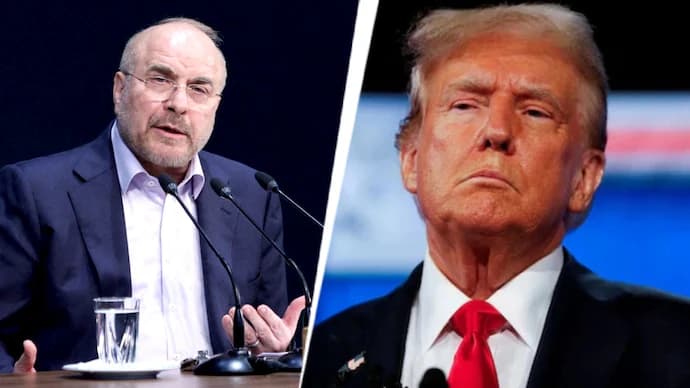
Tensions between Iran and United States intensified sharply after Iran’s chief negotiator and Parliamentary Speaker Mohammad Baqer Ghalibaf accused US President Donald Trump of sabotaging diplomacy through threats and repeated ceasefire violations, declaring that Tehran would not negotiate under pressure.
In a strongly worded post on X, Ghalibaf said Washington was trying to convert negotiations into a “table of surrender” and warned that Iran had prepared to reveal “new cards on the battlefield” if tensions continue to spiral.

His remarks came after Trump issued a stark warning ahead of the fragile two-week ceasefire deadline on April 22. Speaking to PBS News, the US President said that if no diplomatic breakthrough is achieved, “then lots of bombs start going off,” underscoring the high-stakes nature of the next round of talks scheduled in Islamabad.
Trump also expressed uncertainty over whether Iran would attend the talks. While stating that both sides had agreed in principle, he said Tehran’s participation was not guaranteed. He added that the American delegation would proceed regardless, signaling Washington’s willingness either to pursue diplomacy or pivot if negotiations collapse.
The latest standoff comes amid bitter disagreements over Iran’s nuclear programme and continuing disruptions in the Strait of Hormuz, one of the world’s most critical energy corridors.
Although the temporary truce has paused direct military confrontation, mistrust continues to dominate the diplomatic landscape.
Iranian state media indicated that Tehran may skip the upcoming talks, citing what it described as Washington’s excessive demands and shifting positions.
Iran has also questioned the credibility of the current diplomatic process, pointing to recent US actions.
During a phone call with Ishaq Dar, Iranian Foreign Minister Abbas Araghchi said “provocative actions and repeated ceasefire violations” by Washington remain major barriers to progress.
He also cited alleged threats and interference involving Iranian commercial vessels, alongside what he called contradictory messaging and escalating rhetoric from the US.
Araghchi said Tehran would examine “all aspects” before making its next decision, without confirming whether Iran would participate in the proposed Islamabad talks.
Earlier, Iranian President Masoud Pezeshkian reiterated Tehran’s resistance to US pressure, warning that decades of mistrust continue to poison any chance of meaningful engagement.
In another post on X, Pezeshkian said honoring commitments is the foundation of genuine negotiations, but accused Washington of sending contradictory and unhelpful signals in recent days.
He suggested the mixed messaging reflected an attempt to force Iran into submission — an idea he firmly rejected.
“Honoring commitments is the foundation of any meaningful dialogue,” he wrote, adding that deep suspicion of US conduct remains firmly embedded in Iran’s political outlook.
Pezeshkian further said recent actions and rhetoric from American officials carried a “bitter message” that they sought Iran’s surrender. He stressed such an approach would fail, insisting the Iranian people would not bend to coercion.
With the ceasefire deadline fast approaching, both nations remain trapped in a volatile impasse, heightening fears that if diplomacy breaks down, the region could once again slide toward open conflict.

Gulf countries gain ground in global higher education as student mobility patterns shift

Bengaluru Class 12 student designs ₹5 lakh portable classroom for migrant workers’ children

AI boom puts forward deployed engineers on track for ₹1 crore annual packages

70% of study-abroad aspirants target budgets below ₹30 lakh

NTA opens JEE Main 2027 registration, applications close on Nov 22
AI boom puts forward deployed engineers on track for ₹1 crore annual packages

Reed College’s concrete owl stolen, frozen and set on fire

Canada announces $813 million research boost to back 450-plus researchers
.webp&w=256&q=75)
Abu Dhabi aims to bring 2,000 Emirati teachers into private schools within five years
.jpg&w=256&q=75)
Australian schools record thousands of student sexual misconduct reports as child safety concerns grow

Gulf countries gain ground in global higher education as student mobility patterns shift
Bengaluru Class 12 student designs ₹5 lakh portable classroom for migrant workers’ children
AI boom puts forward deployed engineers on track for ₹1 crore annual packages
70% of study-abroad aspirants target budgets below ₹30 lakh
NTA opens JEE Main 2027 registration, applications close on Nov 22
AI boom puts forward deployed engineers on track for ₹1 crore annual packages
Reed College’s concrete owl stolen, frozen and set on fire
Canada announces $813 million research boost to back 450-plus researchers
Abu Dhabi aims to bring 2,000 Emirati teachers into private schools within five years
Australian schools record thousands of student sexual misconduct reports as child safety concerns grow
Copyright© educationpost.in 2026 All Rights Reserved.