||

Connecting Communities, One Page at a Time.

advertisement
advertisement

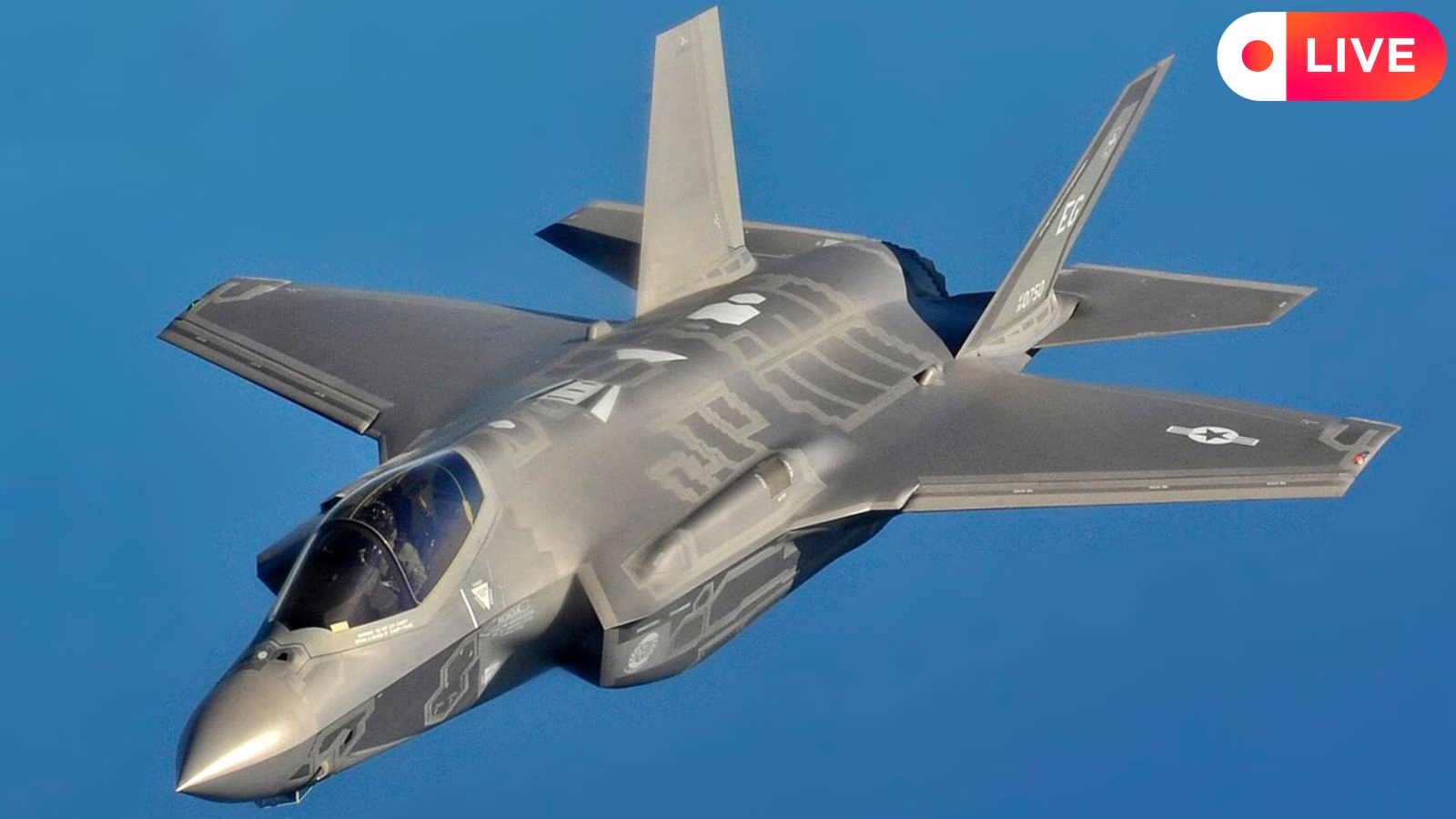
Iran claims second US F-35 shot down, pilot feared dead

Tehran says advanced US stealth jet destroyed in central Iran as conflict intensifies and Washington ramps up strike threats.

EPN Desk 03 April 2026 06:21

Conflict involving Donald Trump, Iran and Israel intensified sharply on April 2, with fresh military claims, escalating rhetoric and rising economic tremors signaling a widening crisis. In a dramatic assertion, Iran’s Islamic Revolutionary Guard Corps (IRGC) claimed it had shot down a second US F-35 fighter jet over central Iran, according to reports cited by Al Jazeera. The aircraft was said to be “completely destroyed” on impact, while Iran’s Mehr News Agency suggested the pilot was unlikely to have survived due to the intensity of the explosion. There was no immediate response from US Central Command, which had earlier dismissed similar claims. The battlefield developments came alongside a sharp escalation in Washington’s stance. In a late-night warning, Trump threatened further devastation after reported strikes targeted a key bridge linking Tehran and Karaj — described as the country’s tallest at 136 metres and valued at $400 million, according to The Guardian. Taking responsibility for the strike, Trump urged Iran to strike a deal “before it’s too late,” warning that critical infrastructure, including power facilities, could be next. In a social media post, he shared footage purportedly showing the bridge’s destruction, declaring that “there is nothing left of what still could become a great country.” The remarks followed his earlier threat to bomb Iran “back to the stone ages.” In a prime-time address from the White House, Trump said US military objectives were “nearing completion,” while cautioning that strikes on Iranian targets would continue “extremely hard” over the next two to three weeks to “finish the job.” Tehran responded with defiance. Iran’s army chief warned that any ground incursion by US forces would be met with total resistance, stating that “not a single person” among invading troops would survive. Meanwhile, diplomatic caution emerged from Europe. Emmanuel Macron said reopening the strategically vital Strait of Hormuz through military means would be impractical, following calls from Washington for allied intervention. Oil shocks and market jitters The geopolitical tensions quickly rippled through global markets, pushing oil prices sharply higher amid fears of prolonged disruption. US benchmark crude surged 11.4% to settle at $111.54 per barrel, while Brent crude rose 7.8% to $109.03 per barrel. Analysts warned that the conflict could significantly disrupt supplies, particularly through the Strait of Hormuz — a critical artery for global energy flows. A report by BMI, part of Fitch Solutions, cautioned that a prolonged conflict could heighten risks to infrastructure, delay post-war recovery and keep prices elevated well into the year. While the United States imports only a limited share of oil from the Persian Gulf, globally benchmarked prices mean supply fears can drive costs higher worldwide. Asian economies, however, face more immediate risks. Countries such as Japan, heavily reliant on Hormuz-linked shipments, may be forced to explore alternative routes if disruptions persist. Regional ripple effects The economic strain is already visible across the region. Pakistan announced a sharp hike in fuel prices, raising petrol to PKR 458.4 per litre and high-speed diesel to PKR 520.35 per litre, as governments brace for sustained volatility in energy markets. With military threats intensifying, diplomatic options narrowing and markets on edge, the conflict shows signs of entering a more dangerous and prolonged phase, with global consequences far beyond the battlefield.

The conflict involving US, Iran and Israel intensified sharply on April 2, with fresh military claims, escalating rhetoric and rising economic tremors signaling a widening crisis.

In a dramatic assertion, Iran’s Islamic Revolutionary Guard Corps (IRGC) claimed it had shot down a second US F-35 fighter jet over central Iran, according to reports cited by Al Jazeera. The aircraft was said to be “completely destroyed” on impact, while Iran’s Mehr News Agency suggested the pilot was unlikely to have survived due to the intensity of the explosion. There was no immediate response from US Central Command, which had earlier dismissed similar claims.

Advertisement

The battlefield developments came alongside a sharp escalation in Washington’s stance. In a late-night warning, Trump threatened further devastation after reported strikes targeted a key bridge linking Tehran and Karaj — described as the country’s tallest at 136 metres and valued at $400 million, according to The Guardian.

Taking responsibility for the strike, Trump urged Iran to strike a deal “before it’s too late,” warning that critical infrastructure, including power facilities, could be next. In a social media post, he shared footage purportedly showing the bridge’s destruction, declaring that “there is nothing left of what still could become a great country.” The remarks followed his earlier threat to bomb Iran “back to the stone ages.”

In a prime-time address from the White House, Trump said US military objectives were “nearing completion,” while cautioning that strikes on Iranian targets would continue “extremely hard” over the next two to three weeks to “finish the job.”

Tehran responded with defiance. Iran’s army chief warned that any ground incursion by US forces would be met with total resistance, stating that “not a single person” among invading troops would survive.

Meanwhile, diplomatic caution emerged from Europe. Emmanuel Macron said reopening the strategically vital Strait of Hormuz through military means would be impractical, following calls from Washington for allied intervention.

Oil shocks and market jitters

The geopolitical tensions quickly rippled through global markets, pushing oil prices sharply higher amid fears of prolonged disruption.

US benchmark crude surged 11.4% to settle at $111.54 per barrel, while Brent crude rose 7.8% to $109.03 per barrel. Analysts warned that the conflict could significantly disrupt supplies, particularly through the Strait of Hormuz — a critical artery for global energy flows.

A report by BMI, part of Fitch Solutions, cautioned that a prolonged conflict could heighten risks to infrastructure, delay post-war recovery and keep prices elevated well into the year.

While the United States imports only a limited share of oil from the Persian Gulf, globally benchmarked prices mean supply fears can drive costs higher worldwide. Asian economies, however, face more immediate risks. Countries such as Japan, heavily reliant on Hormuz-linked shipments, may be forced to explore alternative routes if disruptions persist.

Regional ripple effects

The economic strain is already visible across the region. Pakistan announced a sharp hike in fuel prices, raising petrol to PKR 458.4 per litre and high-speed diesel to PKR 520.35 per litre, as governments brace for sustained volatility in energy markets.

With military threats intensifying, diplomatic options narrowing and markets on edge, the conflict shows signs of entering a more dangerous and prolonged phase, with global consequences far beyond the battlefield.


Also Read


    advertisement