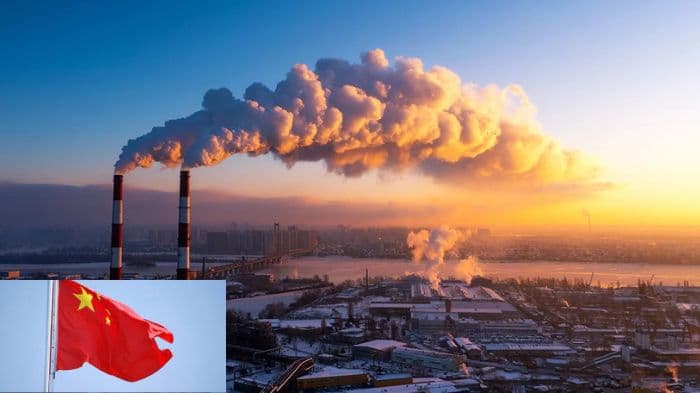
In a landmark announcement, China has pledged to cut its greenhouse gas emissions by 7 to 10% from peak levels by 2035. This marks China's first commitment to absolute emission reductions, shifting from its previous focus on reducing emissions intensity per unit of GDP.
President Xi Jinping made the announcement during a video message at a special climate change meeting convened by UN Secretary-General António Guterres on the sidelines of the UN General Assembly in New York.

China, the world's largest emitter of greenhouse gases, accounts for nearly a third of global emissions. In 2024, its emissions were estimated at approximately 15.8 billion tonnes of CO₂ equivalent, according to Climate Action Tracker.
In comparison, the United States emitted about 6 billion tonnes, and India around 3 billion tonnes during the same period.
To achieve this ambitious target, China plans to increase its solar and wind energy capacity to over six times its 2020 levels. With 530 GW of installed capacity in 2020, China aims to exceed 3,000 GW by 2035.
As of now, it has already reached about 1,600 GW. In contrast, India's total electricity installed capacity from all sources is currently less than 500 GW.
This commitment is seen as a significant step in global climate action. Between 1995 and the present, China's annual emissions have quadrupled, making it a primary driver of the ongoing rise in global greenhouse gas emissions.
Experts suggest that China's emissions may have already peaked, considering the rapid deployment of renewable energy in recent years. The country has installed more than 300 GW of renewable energy capacity in each of the last two years.
China's updated Nationally Determined Contribution (NDC), which includes this new emission reduction target, is expected to be submitted ahead of the upcoming COP30 summit in Brazil. This move is anticipated to accelerate global efforts towards achieving the goals of the Paris Agreement.
While the announcement has been met with optimism, some climate observers believe that China could have set more ambitious targets. Nonetheless, the scale of investment implied by these energy targets is unprecedented and is expected to lower costs and drive innovation in clean energy both within China and globally.