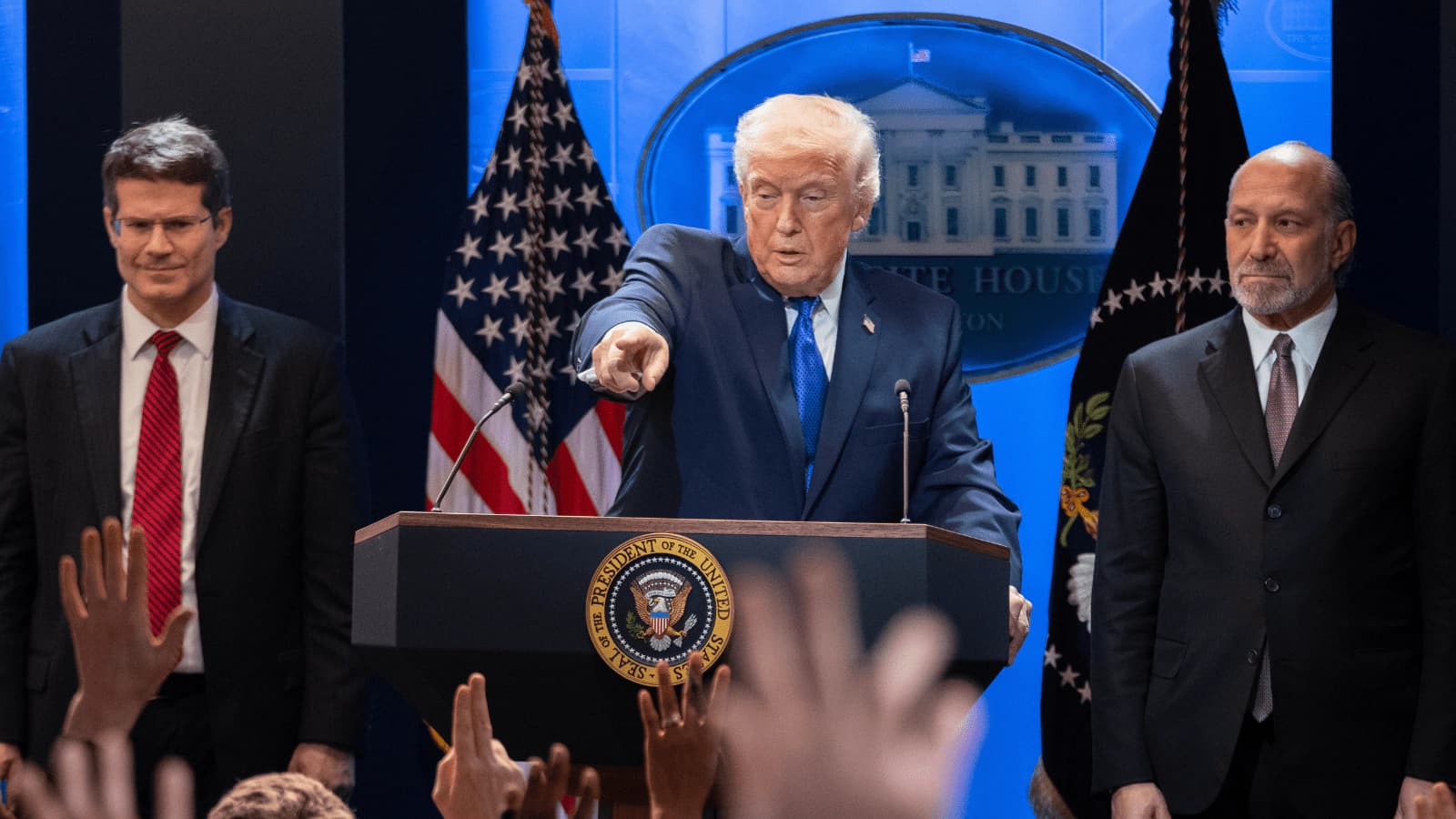
In an open rebuke to the Supreme Court of the United States, US President Donald Trump has raised his newly announced global tariff to 15%, just a day after the court struck down his sweeping reciprocal trade duties.
Hours after initially imposing a 10% worldwide tariff following the court’s 6–3 verdict, Trump escalated the move, announcing a 15% blanket levy on goods imported into the United States for a period of 150 days. The revised rate will apply to all countries, including India.

India will now face a 15% tariff — lower than the earlier 18% rate Washington had indicated but higher than what exporters had anticipated if the court’s ruling had fully dismantled the emergency-based tariffs.
The Ministry of Commerce said it is “studying” the implications of the US decision. “We have noted the US Supreme Court judgement on tariffs yesterday. President Trump has also addressed a press conference in that regard. Some steps have been announced by the US Administration. We are studying all these developments for their implications,” the statement said.
Proclamation and political pushback
In a proclamation titled Imposing a Temporary Import Surcharge to Address Fundamental International Payments Problems, Trump invoked executive authority to impose a “temporary import surcharge” effective February 24. Though the document initially cited a 10% ad valorem duty, he later announced an immediate hike to 15%.
In a post on Truth Social, Trump lashed out at the court’s ruling, calling it “ridiculous, poorly written and extraordinarily anti-American”, and declared he would raise the tariff to the “fully allowed, and legally tested, 15% level”.
At a White House press conference, he went further, expressing “deep disappointment” with the judges and using sharp language against those who ruled against him.
Key exemptions
A White House fact sheet clarified that several categories will be exempt from the temporary surcharge, citing economic necessity. These include:
- Certain critical minerals
- Currency metals and bullion
- Energy and energy products
- Natural resources and fertilizers not sufficiently produced domestically
- Select agricultural products such as beef, tomatoes and oranges
- Pharmaceuticals and ingredients
- Certain electronics
- Passenger vehicles, light and heavy-duty trucks, buses and select parts
- Certain aerospace products
India-US trade deal recalibrated
The ruling by the Supreme Court of the United States has altered the contours of the nearly year-long India-US trade negotiations. Though both sides had been working toward a formal agreement, it has yet to be legally signed.
US Customs had not implemented the earlier decision to reduce India’s tariff exposure to 18%. With the new announcement, the applicable rate now stands at 15%.
Trump insisted the interim framework with India remains intact. “Nothing changes. They’ll be paying tariffs, and we will not be paying tariffs,” he said, describing the arrangement as a “flip” in America’s favor.
He praised Prime Minister Narendra Modi but claimed India had previously been “ripping us off” before the new terms were negotiated.
Global trade impact
Switzerland-based think tank Global Trade Alert said that had the emergency-based IEEPA tariffs been fully removed, the US trade-weighted average tariff would have dropped from 15.3% to 8.3%.
According to GTA estimates:
- Chinese exporters’ effective tariff rate would have fallen from 36.8% to 21.2%
- Brazilian exporters from 26.3% to 6.8%
- Indian exporters from 22.3% to 8.2%
Brazil, China, India, Indonesia and Vietnam would have seen tariff reductions exceeding 10 percentage points. Smaller economies such as Myanmar, Laos, Bosnia-Herzegovina, Moldova, Tunisia and Serbia could have seen cuts of 20 percentage points or more.
With Trump now restoring a 15% across-the-board duty, those anticipated reductions stand neutralised, at least temporarily.
Strategic undertones
Trump also linked trade dynamics with broader geopolitical considerations, claiming India had scaled back oil purchases from Russia at his request amid the ongoing war.
“I think my relationship with India is fantastic,” he said, asserting that the new tariff structure reflects a “fair deal” for the US.
The 150-day clock on the temporary surcharge now sets the stage for another round of global trade recalibration — with exporters, including those in India, bracing for the impact of a revived protectionist push from Washington.