


A commentary published by UNESCO IdeasLAB argues that the dominance of colonial languages in classrooms and academic research can reinforce educational inequality, calling for African languages to play a greater role in teaching and knowledge production.
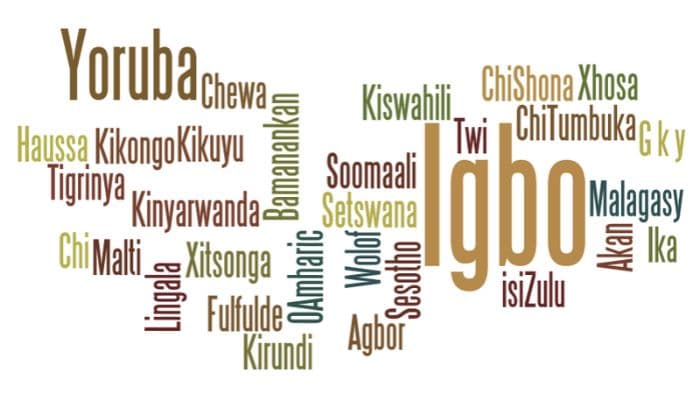
African languages need a greater role in education and academic research to address inequalities in access to knowledge, according to a think piece published by UNESCO IdeasLAB on Oct 28.
Written by Dr Sigame Boubacar Maiga, a lecturer and researcher at the École Normale Supérieure de Bamako in Mali, the article examines how the continued dominance of European languages in African education systems can affect students' access to learning, opportunities for social mobility and the production of research relevant to local communities.

The commentary argues that although many African countries gained independence decades ago, languages inherited from colonial rule, including French, English and Portuguese, continue to dominate classrooms, academic publishing and administrative systems in parts of the continent.
It calls for education policies and international cooperation to give greater recognition to Africa's linguistic diversity while enabling students and researchers to participate in international academic networks.
Language of instruction remains a challenge
Africa is home to more than 2,000 documented languages, but many education systems continue to rely heavily on a small number of international languages as the medium of instruction.
The think piece highlights the difficulties students can face when the language used in classrooms differs from the language they speak at home. It argues that this can create barriers to learning, particularly when schools lack appropriate teaching materials and teachers are not adequately trained to deliver lessons in local languages.
UNESCO has previously advocated mother-tongue-based multilingual education, particularly during the early years of schooling, as a way to improve learning and inclusion.
In a separate publication in 2025, UNESCO reported that children in Africa who learned in a familiar language were 30% more likely to read with understanding by the end of primary school than those taught in an unfamiliar language.
However, implementing multilingual education requires more than changing the language used in classrooms. Governments also need to invest in teacher training, textbooks, curriculum development and educational resources in local languages.
Mali illustrates the policy challenges
The commentary uses Mali to illustrate the difficulties of expanding multilingual education. The country recognises 13 national languages, including Bambara, which is widely spoken, while French continues to play a central role in education and administration.
According to Maiga, efforts to incorporate national languages into schools have faced obstacles, including shortages of teaching materials, inadequate teacher preparation and inconsistent policy implementation.
The article also raises questions about international education funding. It argues that programmes supported by international donors can reinforce the dominance of French or English when funding and resources favour these languages over local alternatives.
The issue extends to universities and academic research, where pressure to publish in internationally dominant languages can limit the visibility of research produced in African languages and reduce access to academic knowledge for local communities.
Calls for a more inclusive approach to education
The think piece points to regional initiatives that could help strengthen the role of African languages in education and research. These include efforts to promote Swahili through the African Union and regional cooperation among higher education institutions.
It also highlights bilingual education programmes and initiatives that seek to combine local languages with international languages, allowing students to retain access to local knowledge while developing skills for wider academic and professional opportunities.
Maiga argues that international cooperation should support education systems that reflect local linguistic and cultural contexts rather than rely exclusively on standardised approaches developed elsewhere.
The commentary concludes that linguistic diversity should be treated as a resource for educational development and knowledge production, rather than solely as a marker of cultural identity.
The views expressed in the IdeasLAB think piece belong to its author and do not necessarily represent the official position of UNESCO.

Russia plans to expand university presence in Africa, offers study grants
African languages remain marginalised in education despite push for equity, UNESCO think piece argues

MIT develops snake-inspired soft robot to help diagnose small intestine disorders

11-year-old Egyptian girl beats 40 million students in Arab Reading Challenge, wins Dh500,000

Himachal Pradesh approves hiring of 3,100 teachers for CBSE government schools
NTU Singapore, VFT launch joint research lab to develop safer batteries for renewable energy storage
ULLAS 2026: Will B.Ed. Students' Academic Credits Depend on Adults Passing Literacy Tests?

Earth’s life story may not have begun with comets, new study finds

Can India's Biggest Examinations Become Leak-Proof?

Less juggling for parents? Singapore to unite kindergarten learning and after-school care by 2030

Russia plans to expand university presence in Africa, offers study grants
African languages remain marginalised in education despite push for equity, UNESCO think piece argues
MIT develops snake-inspired soft robot to help diagnose small intestine disorders
11-year-old Egyptian girl beats 40 million students in Arab Reading Challenge, wins Dh500,000
Himachal Pradesh approves hiring of 3,100 teachers for CBSE government schools
NTU Singapore, VFT launch joint research lab to develop safer batteries for renewable energy storage
ULLAS 2026: Will B.Ed. Students' Academic Credits Depend on Adults Passing Literacy Tests?
Earth’s life story may not have begun with comets, new study finds
Can India's Biggest Examinations Become Leak-Proof?
Less juggling for parents? Singapore to unite kindergarten learning and after-school care by 2030
Copyright© educationpost.in 2026 All Rights Reserved.