


The system developed by South African scientists can identify information encoded in intricate light patterns without first producing detailed images, potentially helping improve future optical communication networks.
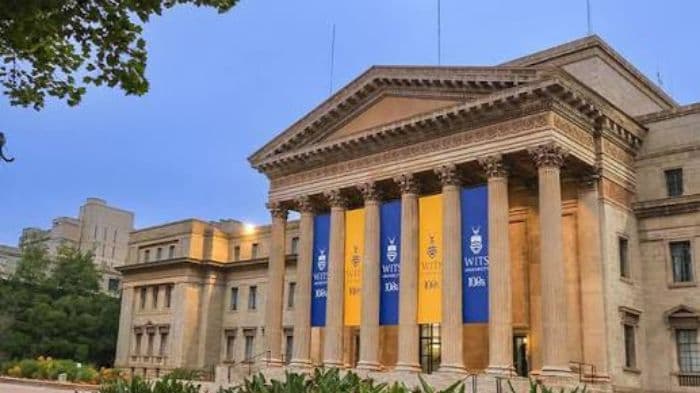
Researchers at the University of the Witwatersrand (Wits) in South Africa have developed an optical neural network that can extract information from complex light patterns without relying on detailed imaging or extensive computer processing.
The research, published in Nature Communications, explores how the technology could help overcome a challenge in optical communications: decoding specially structured light quickly and reliably, even when its appearance changes during transmission.

The project was conceived and supervised by Dr Isaac Nape and Professor Andrew Forbes at Wits’ Structured Light Laboratory. Master’s student Hadrian Bezuidenhout led the work, with contributions from Cade Peters and Ram Nandan Kumar.
How the light-powered neural network works
Conventional approaches to analysing complex light patterns can require detailed images and computational processing to identify the information they carry. The Wits system instead uses specially designed optical layers to direct incoming light towards detectors. The position at which the light lands reveals a property that can be used to identify the pattern.
The researchers focused on optical skyrmions, structured light patterns that carry information through a mathematical property known as topology. This property can remain unchanged even when the overall appearance of a light pattern is distorted.
The concept is similar to counting the twists in a ribbon: changing its shape does not necessarily change the underlying number of twists.
By detecting this property rather than reconstructing every detail of the light pattern, the system offers an alternative way to read information encoded in structured light.
Potential applications in future communications
Structured light could allow communication systems to encode information in different patterns, expanding the range of symbols available to transmit data. However, those patterns must be decoded efficiently for the approach to become practical.
The Wits team reported that its system recognised 81 light structures after training on just 15 examples, including patterns it had not encountered during training. Tests also showed that it could continue identifying the relevant information when noise was introduced.
These findings point to possible applications in optical communications, sensing and quantum technologies. Such systems could be particularly useful in settings where light travels through open air and is affected by atmospheric turbulence, including potential links between buildings or with satellites.
However, the work remains a research demonstration. The findings do not establish that the technology is ready for commercial communication networks.
AI and physics converge
The project combines principles from artificial intelligence with optical physics, using a neural-network approach to process information through the behaviour of light itself.
Professor Benjamin Rosman, director of Wits’ Machine Intelligence and Neural Discovery Institute, said the research illustrates the potential of bringing AI and fundamental physics together to develop new information-processing methods.
The team now intends to explore how optical intelligence could be applied to quantum technologies, where extracting information from individual particles of light presents additional measurement challenges.
The research adds to Wits’ work on structured light and optical communications, including earlier experiments investigating whether topological information can survive atmospheric distortion. Further development will be needed to establish how the new detection method performs in practical communication systems.

Singapore Management University’s Executive MBA enters global top 50 in Financial Times ranking

NUS launches clinical psychology program to expand Singapore’s mental healthcare workforce
DGT Partners with Medhavi Skills University to Expand Industry-Linked ITI Training
IIM Ahmedabad Opens Admissions for Second Batch of Blended MBA in Business Analytics and AI
Wits researchers develop light-powered neural network to decode complex signals
Singapore Management University’s Executive MBA enters global top 50 in Financial Times ranking
NUS launches clinical psychology program to expand Singapore’s mental healthcare workforce
Wits researchers develop light-powered neural network to decode complex signals

How China is expanding vocational education through undergraduate degrees, industry partnerships and financial aid

Singapore Institute of Technology launches new school for lifelong learning and career development

Singapore Management University’s Executive MBA enters global top 50 in Financial Times ranking
NUS launches clinical psychology program to expand Singapore’s mental healthcare workforce
DGT Partners with Medhavi Skills University to Expand Industry-Linked ITI Training
IIM Ahmedabad Opens Admissions for Second Batch of Blended MBA in Business Analytics and AI
Wits researchers develop light-powered neural network to decode complex signals
Singapore Management University’s Executive MBA enters global top 50 in Financial Times ranking
NUS launches clinical psychology program to expand Singapore’s mental healthcare workforce
Wits researchers develop light-powered neural network to decode complex signals
How China is expanding vocational education through undergraduate degrees, industry partnerships and financial aid
Singapore Institute of Technology launches new school for lifelong learning and career development
Copyright© educationpost.in 2026 All Rights Reserved.