


New observations of Pa 30, the suspected remains of a stellar explosion witnessed in 1181, reveal intricate gas structures that could shed light on how supernova debris evolves.
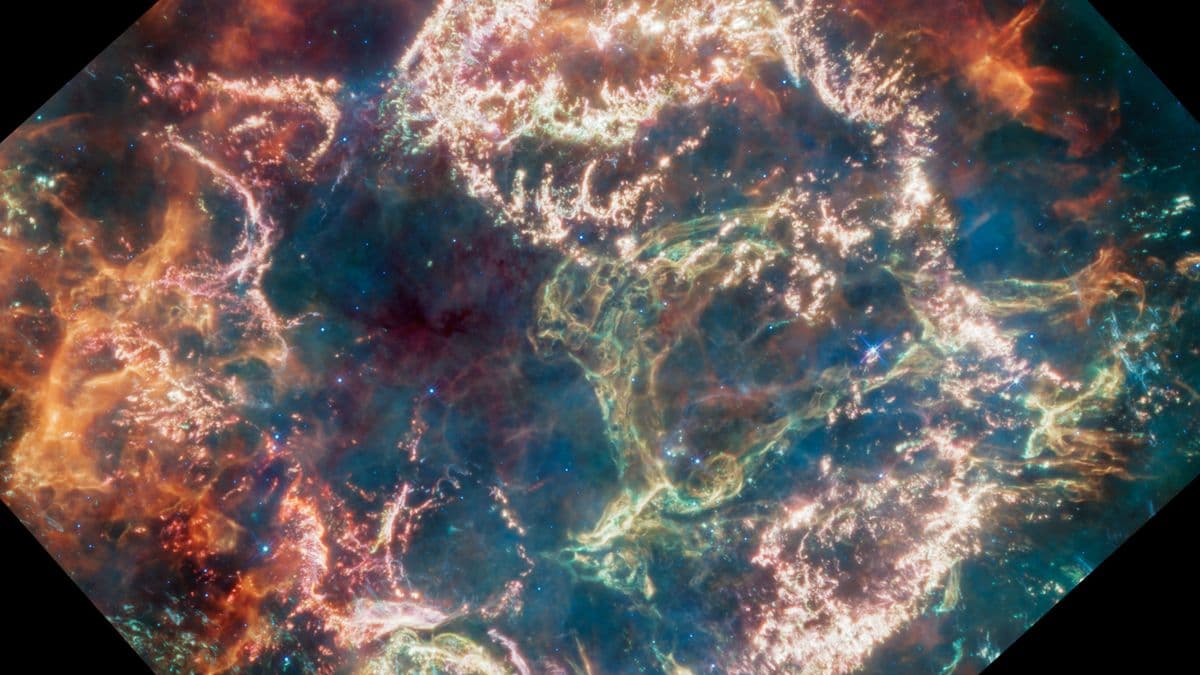
Astronomers have uncovered an unexpectedly complex structure in the remains of a stellar explosion witnessed more than 800 years ago, revealing that what once appeared to be smooth, firework-like streaks of gas are actually intricate formations of clumps and knots.
The discovery comes from highly detailed observations of Pa 30, a nebula in the Milky Way galaxy believed to be the remnant of a supernova recorded by observers in 1181. The findings offer a closer look at the aftermath of a rare cosmic event and raise new questions about how material expelled by exploding stars takes shape as it expands into space.

Using the Gemini North telescope in Hawaii, one half of the International Gemini Observatory, researchers identified a complex network of filaments unlike structures previously observed in supernova remnants. The study, published this month in The Astrophysical Journal, draws on observations made with support from the US National Science Foundation.
The newly revealed clumps and knots challenge the earlier impression that Pa 30's filaments form relatively smooth strands of stellar debris. Although the precise mechanism behind their formation remains unknown, researchers suggest that variations in the temperature or density of the gas, dust and charged particles surrounding the star before the explosion may have shaped the expelled material into these intricate patterns.
Pa 30 lies in the constellation Cassiopeia, visible in the northern sky. Amateur astronomer Dana Patchick discovered the nebula in 2013, and subsequent observations at the US National Science Foundation's Kitt Peak National Observatory revealed its distinctive radial filaments.
Its estimated age and brightness have led scientists to associate Pa 30 with a supernova recorded in 1181 by astronomers in China, Japan and the Arab world. The historical accounts make the nebula a rare link between centuries-old observations of the night sky and modern investigations into the life cycles of stars.
Pa 30 stands apart from other known supernova remnants because a surviving central star lies at the heart of its expanding sphere of gas filaments.
The star formed through the extreme heat and compression associated with a supernova triggered by the merger of two stars. Its surface temperature is estimated at around 200,000 degrees Celsius, making it extraordinarily hot.
The star is also surrounded by powerful stellar winds made up of rapidly moving charged particles. These winds travel at approximately 36 million miles per hour, adding to the extreme conditions shaping the remnant.
Despite the remarkable detail captured by Gemini North, the origins of Pa 30's knotted structures remain uncertain. Further investigation could help astronomers understand how conditions around an exploding star influence the distribution of its debris and why some supernova remnants develop such unusual forms.
The observations demonstrate how modern telescopes can uncover previously hidden details in cosmic structures, allowing scientists to revisit an event recorded more than eight centuries ago and investigate the physical processes that continue to shape its remains.
C-DAC, Bank of India join forces to build quantum-safe banking ecosystem
Supernova remnant reveals mysterious knots and clumps of gas in unprecedented detail

University of Johannesburg records second-largest rise in global research influence

IUCN launches global strategy to combat invasive species and protect biodiversity

Tamil Nadu: Two Class 11 Students Held in Dalit Student Death Case Linked to Alleged Caste Harassment

Canada announces $813 million research boost to back 450-plus researchers

Abu Dhabi aims to bring 2,000 Emirati teachers into private schools within five years

Australian schools record thousands of student sexual misconduct reports as child safety concerns grow
Egypt insists international schools include Arabic, history in final scores

China’s Chery unveils AI companion robot designed to ease loneliness

C-DAC, Bank of India join forces to build quantum-safe banking ecosystem
Supernova remnant reveals mysterious knots and clumps of gas in unprecedented detail
University of Johannesburg records second-largest rise in global research influence
IUCN launches global strategy to combat invasive species and protect biodiversity
Tamil Nadu: Two Class 11 Students Held in Dalit Student Death Case Linked to Alleged Caste Harassment
Canada announces $813 million research boost to back 450-plus researchers
Abu Dhabi aims to bring 2,000 Emirati teachers into private schools within five years
Australian schools record thousands of student sexual misconduct reports as child safety concerns grow
Egypt insists international schools include Arabic, history in final scores
China’s Chery unveils AI companion robot designed to ease loneliness
Copyright© educationpost.in 2026 All Rights Reserved.