


Researchers at the University of Oxford are examining a historic plant collection to investigate how Indigenous knowledge and colonial-era exchanges shaped the development of botanical science in Britain.
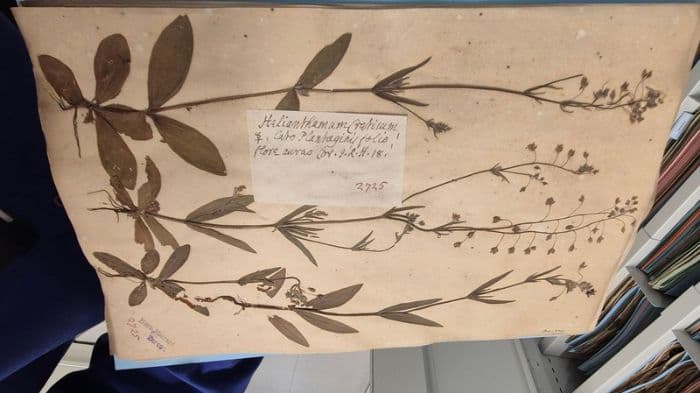
Researchers at the University of Oxford have launched a project to examine the scientific and colonial histories preserved in one of the university’s historic plant collections.
The project, called SEED: Specimens and Empire, will use the Du Bois Herbarium to investigate how plants and local knowledge from different parts of the world contributed to the development of botanical science in Britain.

Announced on Oct 28, the initiative brings together researchers from Oxford’s Faculty of History, Department of Biology and Gardens, Libraries and Museums division. It is led by Dr Madeline White and supported by an Arts and Humanities Research Council Catalyst Award.
What historic plant specimens can reveal
Herbaria are collections of dried and preserved plants that scientists have used for centuries to identify species and document their characteristics and distribution.
Oxford’s Du Bois Herbarium is an eighteenth-century collection assembled by Charles du Bois, a British merchant and plant collector. Its specimens offer a record of botanical collecting and the movement of plant knowledge across regions.
Researchers can examine such collections not only for botanical information but also for clues about when and where plants were collected, who contributed to the process and how that information entered scientific records.
Historical records and specimen labels can be incomplete or difficult to interpret. The SEED project aims to place the collection in its wider historical context to better understand its scientific and educational value.
Bringing overlooked contributions into the history of science
A central aim of the project is to investigate the role of Indigenous people and their knowledge in the development of botanical science and botanic gardens.
Plant collections often preserve evidence of international exchange, but the people who supplied local knowledge or helped collect specimens have not always received recognition in historical accounts.
By combining historical research with botanical expertise, the Oxford team hopes to examine how such contributions shaped scientific knowledge and how colonial relationships influenced the creation of these collections.
The project also seeks to make the collection more useful for research, teaching and public engagement, connecting the history of plants with questions about the production and ownership of scientific knowledge.
Why the collection matters today
Historic herbaria can support contemporary research by preserving evidence of plant species and past environments. When researchers can establish where and when specimens were collected, the material may help them investigate changes in plant distribution and the history of biodiversity.
However, older collections can be difficult to use because their records may lack precise locations, dates or consistent plant names. Historical research can help clarify these details and make specimens more useful to modern scientists.
The SEED project adds a further dimension by examining the people and historical circumstances behind the specimens. Its work could help connect botanical research with the history of science and provide new material for education and public engagement.
The project reflects a broader effort at Oxford to bring biological collections into closer dialogue with the humanities, allowing historic objects to be studied both as scientific evidence and as records of the societies that produced them.
ULLAS 2026: Will B.Ed. Students' Academic Credits Depend on Adults Passing Literacy Tests?
Oxford researchers turn historic plant collection into a window on colonial science

Magnitude 5.1 Earthquake Strikes Near Andaman and Nicobar Islands; No Immediate Reports of Damage
Earth’s life story may not have begun with comets, new study finds

Can India's Biggest Examinations Become Leak-Proof?
ULLAS 2026: Will B.Ed. Students' Academic Credits Depend on Adults Passing Literacy Tests?
Earth’s life story may not have begun with comets, new study finds
Can India's Biggest Examinations Become Leak-Proof?
Less juggling for parents? Singapore to unite kindergarten learning and after-school care by 2030
Bihar’s NMCH suspends 146 students over ragging: Wake-up call for medical colleges

ULLAS 2026: Will B.Ed. Students' Academic Credits Depend on Adults Passing Literacy Tests?
Oxford researchers turn historic plant collection into a window on colonial science
Magnitude 5.1 Earthquake Strikes Near Andaman and Nicobar Islands; No Immediate Reports of Damage
Earth’s life story may not have begun with comets, new study finds
Can India's Biggest Examinations Become Leak-Proof?
ULLAS 2026: Will B.Ed. Students' Academic Credits Depend on Adults Passing Literacy Tests?
Earth’s life story may not have begun with comets, new study finds
Can India's Biggest Examinations Become Leak-Proof?
Less juggling for parents? Singapore to unite kindergarten learning and after-school care by 2030
Bihar’s NMCH suspends 146 students over ragging: Wake-up call for medical colleges
Copyright© educationpost.in 2026 All Rights Reserved.