National Technology Day 2026: Indian innovations that transformed everyday life over the last decade
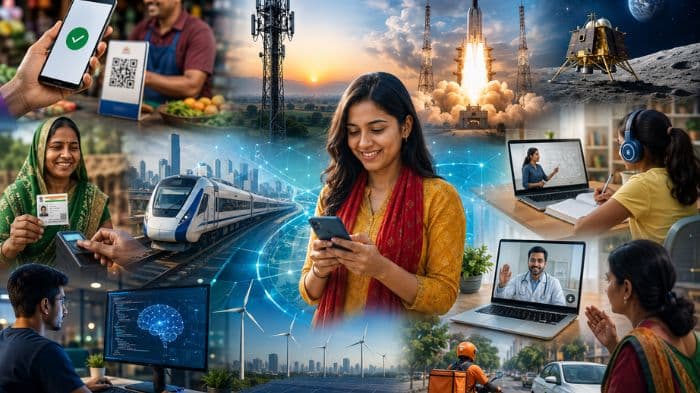
From UPI payments and affordable mobile internet to digital public infrastructure and space technology breakthroughs, India’s technological transformation over the past decade has reshaped how millions study, travel, communicate, work and access public services.
Fatima hasan11 May 2026 07:07
India observes National Technology Day every year on May 11 to commemorate the successful Pokhran-II nuclear tests conducted in 1998. Over the years, the occasion has evolved into a broader reflection on India’s technological progress across sectors ranging from digital payments and telecommunications to healthcare, education and space exploration.
In the last decade especially, India’s technology ecosystem has expanded rapidly, influencing not just industries but also the everyday lives of ordinary citizens. Several innovations that were once considered urban luxuries or experimental projects have now become deeply integrated into daily routines across cities, towns and villages.
UPI and India’s digital payment revolution
Among the most visible transformations has been the rise of Unified Payments Interface (UPI), which fundamentally changed the way Indians handle money. Introduced by the National Payments Corporation of India (NPCI) in 2016, UPI enabled instant bank-to-bank transfers through smartphones, eventually making QR-code payments common even among small vendors and roadside shops. What began as a digital convenience for urban users quickly expanded into one of the world’s largest real-time payment systems. Today, UPI transactions are visible across nearly every layer of Indian society. Small roadside tea stalls, vegetable vendors, autorickshaw drivers and local grocery stores now routinely accept QR-code payments.
The widespread use of affordable smartphones and cheap mobile internet helped accelerate adoption even in smaller towns and semi-urban areas.
During and after the Covid-19 pandemic, digital payments became even more common as people shifted away from cash transactions. UPI also significantly boosted small businesses, online shopping, fintech startups and digital banking services across the country.
Cheap internet and India’s smartphone boom
India’s digital transformation would not have been possible without the rapid expansion of affordable internet services. The sharp reduction in mobile data prices after the entry of Reliance Jio dramatically increased internet access across the country and triggered a smartphone revolution.
Millions of first-time users from villages, small towns and lower-income households suddenly gained access to online services, social media platforms, video streaming, digital payments and online education.
The internet boom also reshaped India’s media consumption patterns. Regional-language content exploded across platforms such as YouTube, Instagram and short-video apps as users from non-English-speaking backgrounds came online in large numbers.
Cheap internet also created new opportunities for small creators, freelancers and businesses that could now reach audiences digitally without traditional infrastructure. For students especially, smartphones became central tools for education, job preparation and skill development.
Aadhaar and digital public infrastructure
Another major transformation came through Aadhaar-linked digital infrastructure and the expansion of digital governance systems. Aadhaar, the world’s largest biometric identification programme, became central to various government welfare schemes, banking systems and identity verification processes.
Combined with Direct Benefit Transfer (DBT) mechanisms, the system allowed subsidies and welfare payments to be transferred directly into beneficiaries’ bank accounts.
Government officials have repeatedly said the system helped reduce leakages and improved efficiency in welfare distribution. Digital identity infrastructure also became important for opening bank accounts, accessing government schemes, verifying documents and enabling digital services in remote regions.
Over time, India’s broader digital public infrastructure model began attracting international attention as countries studied how large-scale population systems could be integrated with digital governance.
How apps changed transport and food delivery
Technology also reshaped urban lifestyles through app-based transport and delivery platforms. Companies such as Ola, Zomato and Swiggy fundamentally changed how people travel, order food and access local services.
The rise of app-based platforms created entirely new forms of employment through delivery networks and gig work. Consumers became increasingly dependent on mobile apps for convenience-driven services ranging from cab bookings and grocery deliveries to medicine orders and restaurant access. While the gig economy also triggered debates around worker rights and job security, there is little doubt that digital platforms reshaped consumption patterns and daily routines across urban India.
Edtech and the rise of online learning
The education sector witnessed major disruption through the growth of edtech companies and online learning platforms. Firms such as BYJU'S, Unacademy and PhysicsWallah popularised online coaching and digital classes for students preparing for competitive exams and school education.
The pandemic accelerated this shift further as schools and colleges moved online for extended periods. Virtual classrooms, recorded lectures and app-based learning became mainstream across India. Although questions continue regarding screen time, affordability and learning quality, technology undeniably changed how students access education and learning resources.
ISRO and India’s growing space ambitions
India’s space programme also witnessed historic achievements over the last decade. Missions led by the Indian Space Research Organisation strengthened India’s position in global space exploration and generated renewed public interest in science and technology.
The successful Chandrayaan-3 Moon landing placed India among a small group of nations to achieve a soft landing on the lunar surface. The Aditya-L1 solar mission and continued satellite launches further highlighted the growing sophistication of India’s space capabilities. These achievements also inspired discussions around scientific research, innovation and the importance of investing in advanced technology sectors.
AI emerges as India’s next big technology shift
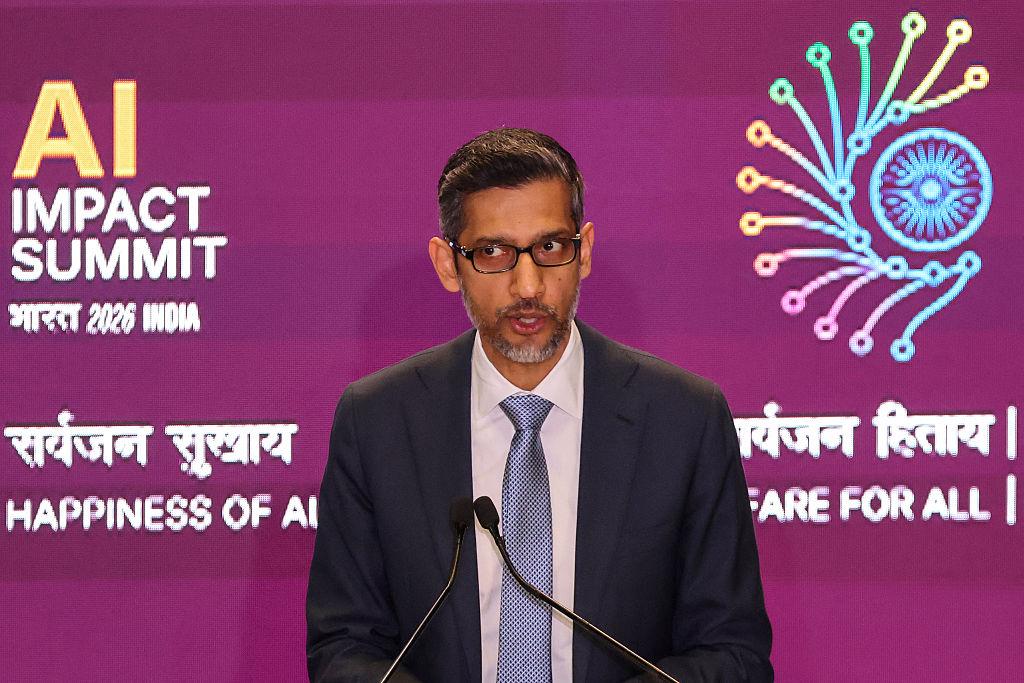
Artificial intelligence is now emerging as the next major technological transition shaping India’s future. AI tools are increasingly being integrated into workplaces, educational institutions, customer service systems, healthcare operations and content creation industries. Universities and private institutes have also started launching specialised AI-focused programmes as industries adapt to automation and machine-learning systems.
At the same time, AI has sparked concerns regarding misinformation, job displacement and ethical regulation. Experts believe India’s next technological challenge will involve balancing innovation with responsible implementation while ensuring that technological growth remains inclusive and accessible beyond metropolitan centres.