


Science Translational Medicine retracted a 2022 study exploring a vaccine targeting a conserved part of the coronavirus spike protein after an investigation found fabricated data and falsified images. The retraction is the researcher’s second this year.
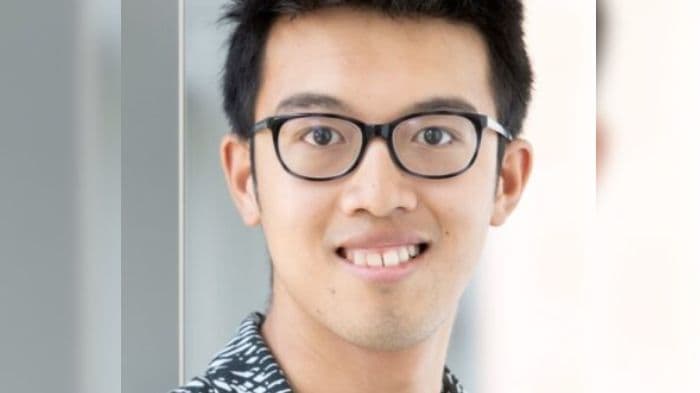
A research paper investigating a potential approach to developing broader protection against COVID-19 variants has been retracted after an investigation found that its lead author fabricated data and falsified images.
The paper, published in Science Translational Medicine in July 2022, examined whether a vaccine targeting the S2 subunit of the SARS-CoV-2 spike protein could generate antibodies capable of recognising a wider range of coronaviruses. The research used mice to investigate the potential of this approach.

According to Retraction Watch, the journal published the retraction notice on Oct 14 identifying Kevin Ng, a former PhD student at the Francis Crick Institute in London, as responsible for fabricating data in one figure and falsifying images in another.
Ng admitted responsibility during the editorial investigation, the retraction notice stated. The investigation also raised concerns about other experiments in the paper because the original data and samples needed to verify them were unavailable.
Second retraction for researcher in 2026
The retraction follows an earlier case involving Ng, whose research paper on lung cancer and immunotherapy was retracted by Nature in January 2026 after an investigation found manipulated data.
That paper, published in April 2023, examined how antibodies against endogenous retroviruses could influence lung cancer responses to immunotherapy.
The investigation by the Francis Crick Institute attributed the manipulation to Ng and found no evidence of misconduct by the paper’s other authors, according to the report.
Following the earlier investigation, the institute examined other research associated with Ng. Its statement said that, beyond the Science Translational Medicine paper, the investigation found no evidence of data fabrication or inappropriate manipulation. The institute also said there was no evidence of malpractice by the other authors of the retracted COVID-19 vaccine paper.
What the retracted COVID-19 study investigated
The 2022 paper, titled SARS-CoV-2 S2-targeted vaccination elicits broadly neutralizing antibodies, explored whether targeting the S2 portion of the coronavirus spike protein could help the immune system respond to a broader range of coronaviruses.
Unlike the more variable S1 portion of the spike protein, the S2 subunit contains relatively conserved regions. The researchers investigated whether vaccination targeting this region could generate antibodies with broader neutralising activity.
The study reported findings from experiments involving mice, including antibody responses against multiple coronaviruses and a degree of protection against SARS-CoV-2 challenge. The retraction means the paper’s findings can no longer be relied upon as a validated scientific record.
The retraction does not, by itself, establish that every experiment or conclusion in the study was fabricated. However, the journal’s notice said the absence of primary data and samples prevented verification of some additional experiments, casting doubt on those results.
Another paper under investigation
Retraction Watch also reported that Nature placed an editor’s note on another paper co-authored by Ng on September 29, 2026, after commenters on PubPeer raised concerns about unusual data and apparent reuse of numerical values.
A Nature editor said the journal was investigating the concerns and would take appropriate action after completing its review. The editor’s note is separate from the two retractions and does not mean that the additional paper has been retracted.
Ng subsequently worked as a postdoctoral researcher at Rockefeller University in New York. A university spokesperson told that he was no longer employed there but declined to provide further details.
The Science Translational Medicine paper was the journal’s second retraction in 2026 and its seventh in 17 years. The publication also noted that the paper had received 83 citations in Clarivate’s Web of Science.

BITS Design School Student Atharva Lele Secures Global Recognition in AGP Design Contest
Qatar career fair connects graduates with employers across key sectors
.webp&w=256&q=75)
Mohamed bin Zayed University for Humanities graduates record 402 students in largest-ever class
.jpg&w=256&q=75)
Irish university strikes force class cancellations across the country
.avif&w=256&q=75)
Cornell found 16 students responsible for sexual assault, expelled just two
Irish university strikes force class cancellations across the country

Philippines audit agency flags lapses in CHEd scholarship programs

Singapore Management University’s Executive MBA enters global top 50 in Financial Times ranking

NUS launches clinical psychology program to expand Singapore’s mental healthcare workforce
Wits researchers develop light-powered neural network to decode complex signals

BITS Design School Student Atharva Lele Secures Global Recognition in AGP Design Contest
Qatar career fair connects graduates with employers across key sectors
Mohamed bin Zayed University for Humanities graduates record 402 students in largest-ever class
Irish university strikes force class cancellations across the country
Cornell found 16 students responsible for sexual assault, expelled just two
Irish university strikes force class cancellations across the country
Philippines audit agency flags lapses in CHEd scholarship programs
Singapore Management University’s Executive MBA enters global top 50 in Financial Times ranking
NUS launches clinical psychology program to expand Singapore’s mental healthcare workforce
Wits researchers develop light-powered neural network to decode complex signals
Copyright© educationpost.in 2026 All Rights Reserved.