


The Rutgers University scientist has been recognised for defending evidence on lead contamination in Flint, Michigan, despite facing opposition and threats. Kerala-based liver specialist Cyriac Abby Philips was also among this year’s nominees.
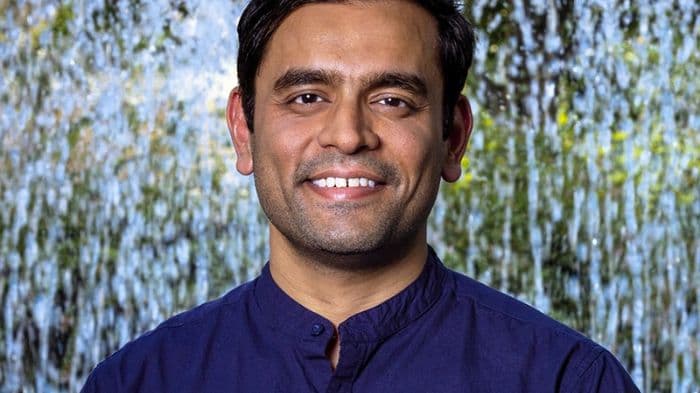
Siddhartha Roy, an environmental scientist at Rutgers University–New Brunswick in the US, has won the 2026 Maddox Prize for his work on water safety and his efforts to defend scientific evidence in the face of public and political pressure.
The award, presented at a ceremony at the Royal Society in London on Oct 29, recognises people who advance public discussion of difficult scientific issues despite challenges or hostility.

Roy co-led research into lead contamination in the drinking water supply of Flint, Michigan. The findings challenged official assurances that the city's water was safe and brought national attention to the public health crisis.
The judges recognised his commitment to presenting scientific evidence clearly while protecting the dignity and well-being of the affected community.
Research brought Flint water crisis into focus
Flint's water crisis began after the city switched its water source to the Flint River in 2014. Inadequate corrosion control allowed lead from ageing pipes to enter the drinking water supply.
Roy and his research team helped identify the risk of lead contamination, challenging claims that the water was safe. The findings contributed to wider scrutiny of the crisis, which led to legal settlements, infrastructure changes and policy responses.
However, Roy's later research also brought him into conflict with some campaigners and media coverage surrounding the crisis.
He examined claims that children in Flint had suffered widespread brain damage because of lead exposure. His analysis found no notable difference in the relevant data compared with the rest of Michigan. He raised concerns that describing children as brain-damaged without sufficient evidence could affect their well-being and expectations.
Roy described this as a possible 'nocebo' effect, in which negative expectations can contribute to adverse outcomes. His position attracted opposition and threats from pressure groups, according to Times Higher Education.
The Maddox Prize judges praised his decision to prioritise clear evidence and the dignity of Flint residents despite the personal and professional challenges involved.
Kerala doctor among Maddox Prize nominees
India was also represented on the 2026 shortlist through Cyriac Abby Philips, a liver specialist at Rajagiri Hospital in Kerala, widely known online as The Liver Doc.
His work has drawn attention to the potential harms associated with traditional and complementary medicines. The award organisers said the judges recognised his efforts to communicate medical evidence to patients and the wider public, despite working in an environment where traditional medicine has strong cultural support and institutional endorsement.
Other nominees included Sallie Baxendale, a neuropsychologist at University College London; Samer Abuzerr, a public health specialist working in Gaza; and Arna Mitchell, a clinical psychologist researching claims of systemic racism affecting people of Māori heritage.
Early-career award recognises Bolivian researcher
Mónica Guzmán-Rojo of Universidad Católica Boliviana received the Maddox Prize's early-career award.
Her work focuses on advocating for Indigenous and rural communities affected by powerful land interests. As a civil hydraulic engineer, she investigates water supplies and has worked to bring evidence from affected communities into public discussions.
The 2026 shortlist included eight researchers from different countries and disciplines, reflecting the award's international focus.
What is the Maddox Prize?
Organised by the UK-based organisation Sense about Science and supported by the Royal Society, the Maddox Prize recognises individuals who defend scientific evidence and contribute to public debate on difficult subjects.
Established in 2012, it commemorates Sir John Maddox, former editor of the journal Nature and a prominent advocate for scientific inquiry.
The award aims to recognise researchers who communicate evidence despite opposition, intimidation or professional challenges. Both the main prize and the early-career award carry a value of US$5,000.
Schools urged to make relationship education central to fight domestic violence in Australia
The Future Belongs to Those Who Can Collaborate Intelligently with AI

Diljit Dosanjh Delhi Concert Today: Traffic Restrictions from 1 PM, Check Roads to Avoid, Metro Timings and Parking Details
Why Are Women Still Only 20% of IIT Admissions? JEE Advanced 2026 Data Explained

Australia weighs screen time curbs and AI restrictions in schools
The Future Belongs to Those Who Can Collaborate Intelligently with AI
Diljit Dosanjh Delhi Concert Today: Traffic Restrictions from 1 PM, Check Roads to Avoid, Metro Timings and Parking Details
Why Are Women Still Only 20% of IIT Admissions? JEE Advanced 2026 Data Explained

Google adds hundreds of free textbooks to Gemini Notebook for students in India and US

NBEMS opens NEET Super Specialty 2026 applications: Check eligibility, dates and registration steps

Schools urged to make relationship education central to fight domestic violence in Australia
The Future Belongs to Those Who Can Collaborate Intelligently with AI
Diljit Dosanjh Delhi Concert Today: Traffic Restrictions from 1 PM, Check Roads to Avoid, Metro Timings and Parking Details
Why Are Women Still Only 20% of IIT Admissions? JEE Advanced 2026 Data Explained
Australia weighs screen time curbs and AI restrictions in schools
The Future Belongs to Those Who Can Collaborate Intelligently with AI
Diljit Dosanjh Delhi Concert Today: Traffic Restrictions from 1 PM, Check Roads to Avoid, Metro Timings and Parking Details
Why Are Women Still Only 20% of IIT Admissions? JEE Advanced 2026 Data Explained
Google adds hundreds of free textbooks to Gemini Notebook for students in India and US
NBEMS opens NEET Super Specialty 2026 applications: Check eligibility, dates and registration steps
Copyright© educationpost.in 2026 All Rights Reserved.