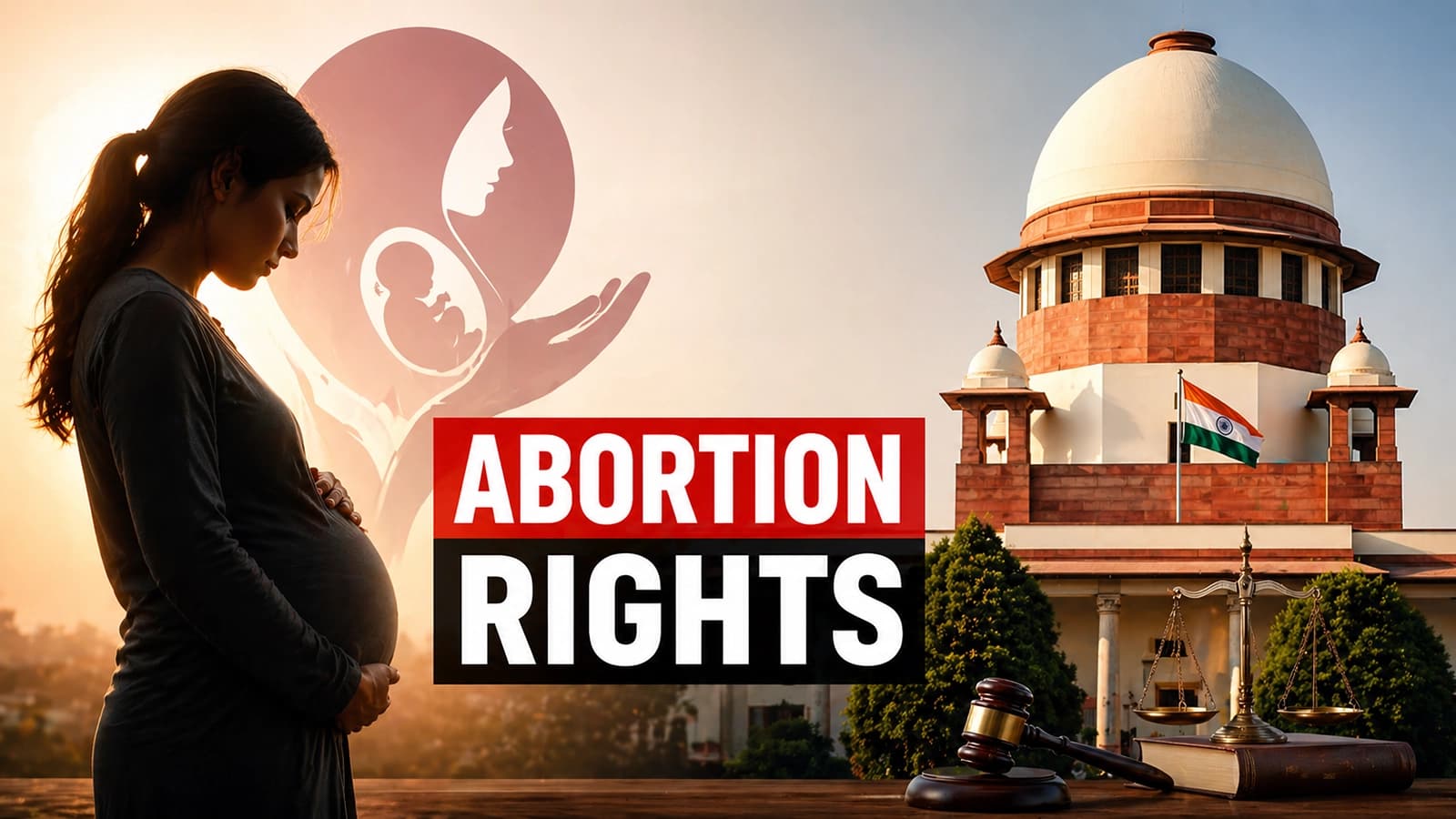
The Supreme Court on Thursday took strong exception to a plea filed by the All India Institute of Medical Sciences (AIIMS), which sought to overturn an earlier order allowing a 15-year-old rape survivor to terminate her pregnancy that had crossed 30 weeks.
A bench of the apex court sharply questioned why the country’s premier medical institution had moved against an order passed to protect the constitutional rights and welfare of a minor sexual assault survivor. The court reportedly observed that it was surprising for AIIMS to challenge a Supreme Court direction instead of complying with it.

What the Case Is About
The matter concerns a teenage rape survivor whose pregnancy had advanced beyond the usual statutory ceiling under the Medical Termination of Pregnancy (MTP) framework. Her mother had approached the Supreme Court seeking urgent permission to terminate the pregnancy, citing the physical, emotional and psychological trauma faced by the child.
Earlier, the Supreme Court had allowed the medical termination, holding that no woman—particularly a minor rape survivor—should be compelled to continue an unwanted pregnancy against her will. The court emphasised reproductive autonomy and the welfare of the pregnant child.
Why AIIMS Objected
AIIMS, in its review plea, reportedly argued that termination at such an advanced stage could effectively amount to premature delivery, potentially resulting in the birth of a severely premature infant requiring prolonged neonatal intensive care. It also raised concerns around medical ethics and the rights of the unborn child.
The hospital cited earlier cases in which pre-term births following court-approved terminations led to infants suffering serious lifelong complications.
Supreme Court’s Response
The bench was not persuaded by the challenge and refused to interfere with its earlier order. During proceedings, the judges underlined that courts must assess such matters through the lens of the survivor’s rights, health, dignity and consent rather than abstract arguments detached from her lived trauma.
The court also urged the Centre to consider revisiting the legal framework governing pregnancies beyond 20 weeks in rape survivor cases, signalling that current law may not fully address such humanitarian emergencies.
Under India’s MTP law, termination is generally allowed up to specified gestational limits subject to medical opinion, while pregnancies beyond that often require judicial intervention. This has led many survivors and families to rush to courts when pregnancies are detected late. Legal experts have long argued for faster medical boards, quicker decisions and more survivor-centric procedures.
The latest proceedings highlight a recurring tension between medical caution, legal procedure and the rights of rape survivors. For child survivors, delays can intensify trauma, disrupt education, damage mental health and create long-term social consequences.
The Supreme Court’s remarks send a broader message that institutional responses in such cases must prioritise dignity, urgency and compassion.