Illness Has a PIN Code in India: New NSS Data Shows Where Treatment Hurts the Most
Fresh government survey data reveals a striking healthcare divide—patients in parts of North and Northeast India are spending heavily even at public hospitals, while private care is proving far more expensive in many southern and border states.
Prabhav Anand30 April 2026 10:36
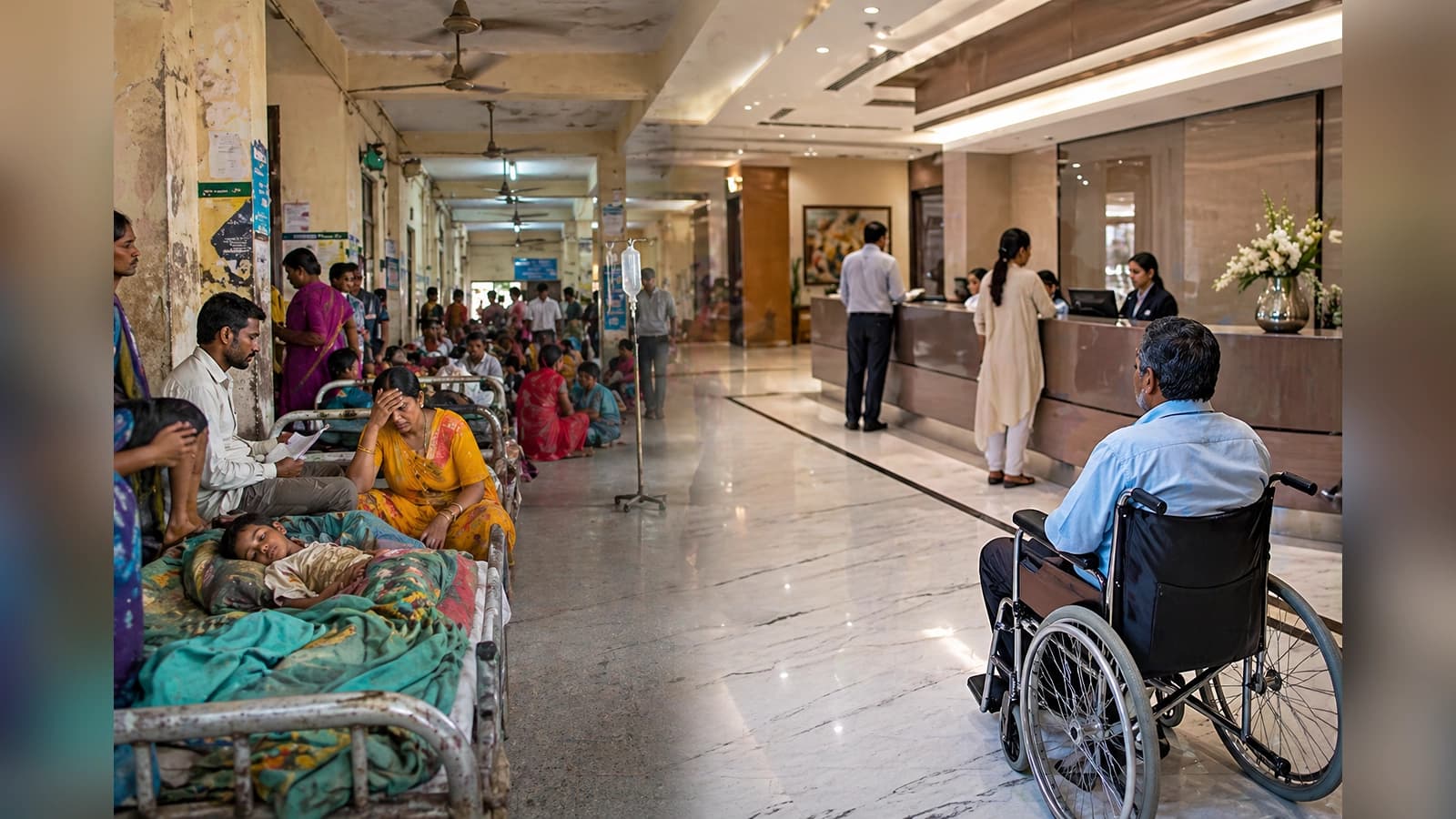
Patients wait amid overcrowded conditions inside a public hospital, reflecting the uneven burden of healthcare access and treatment costs in India.
In India, the cost of falling sick still depends heavily on where you live. A fresh reading of the National Sample Survey’s (NSS) latest health expenditure data has revealed a deep regional imbalance in what families pay for treatment. While government hospitals are expected to be the affordable safety net, patients in several northern and northeastern states are spending significantly above the national average even in public facilities. At the other end, private hospital bills are highest in a cluster of southern and frontier regions where advanced healthcare networks or geographic isolation push up costs.
The findings were recently highlighted in a report by ThePrint and are based on the government’s Household Social Consumption: Health Survey, one of India’s most important datasets on medical access, insurance and out-of-pocket expenditure.
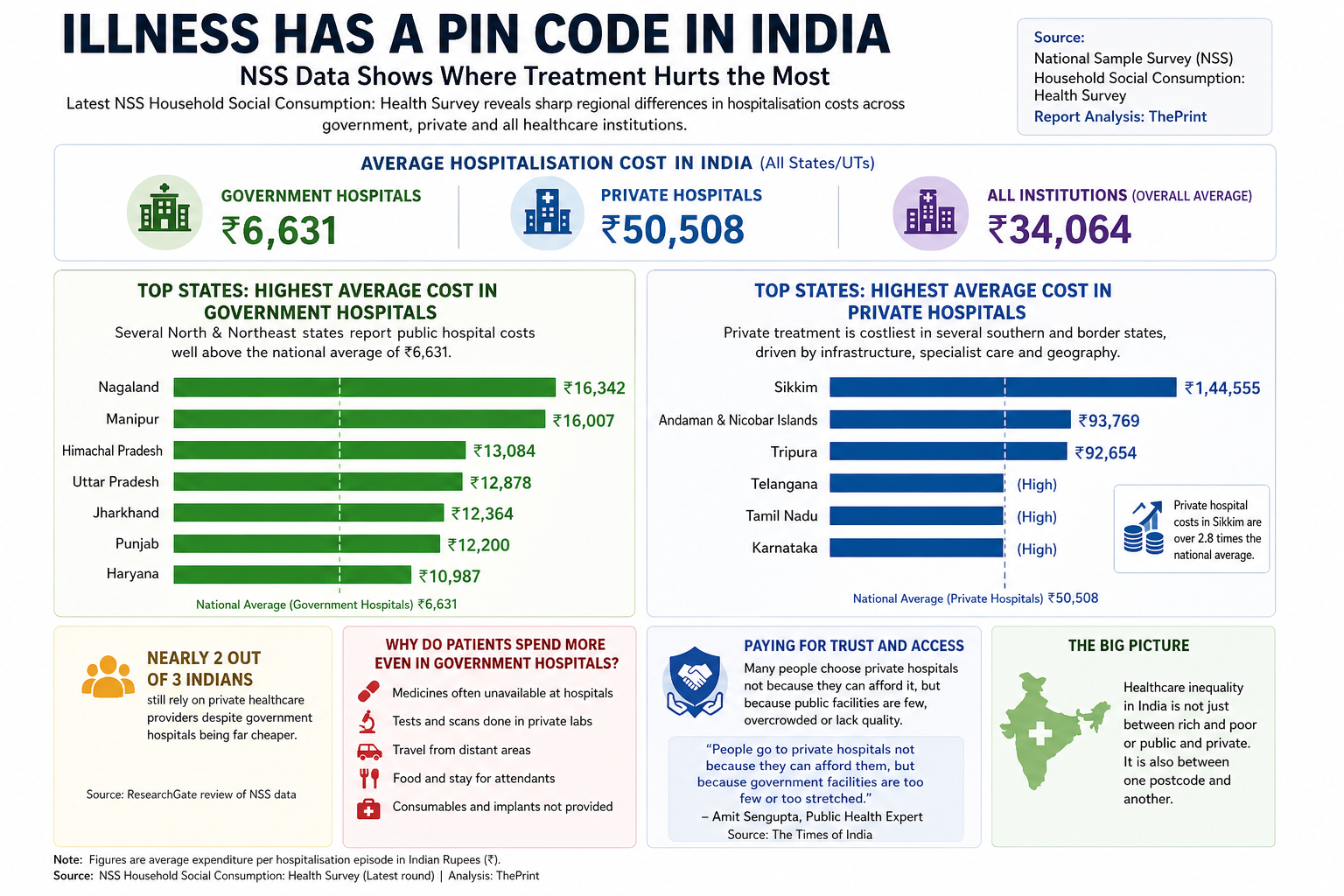
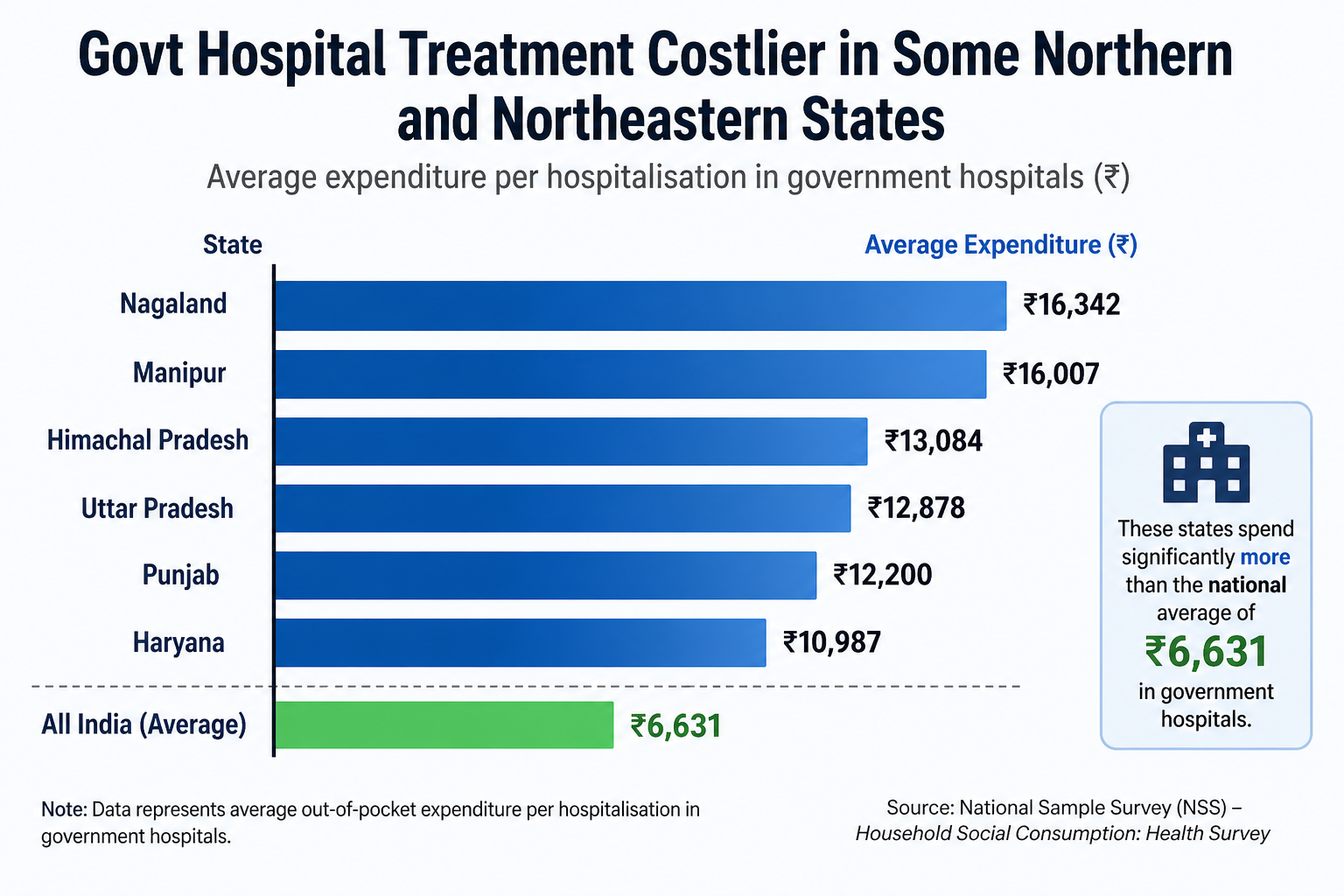
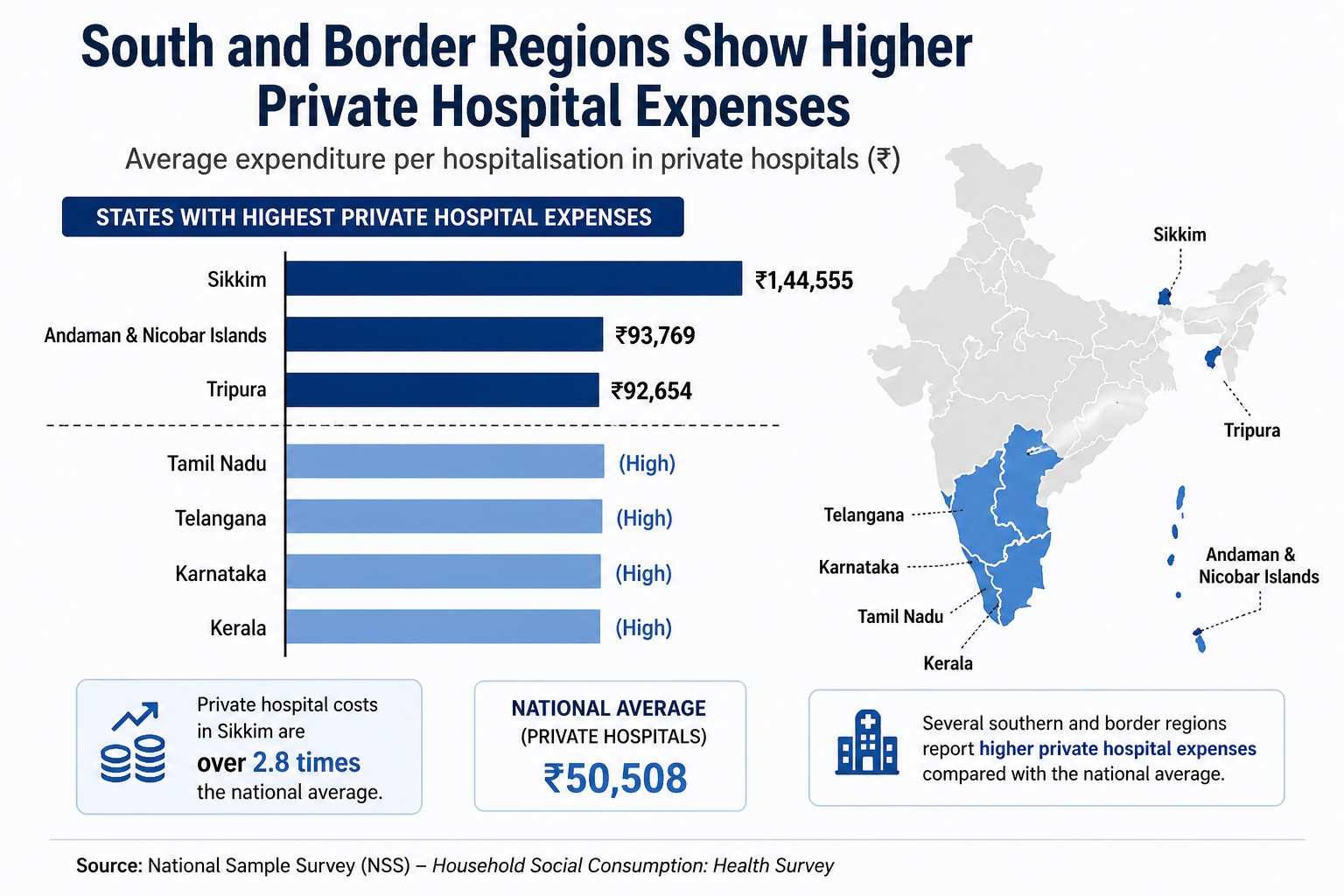
The headline number is stark: the average hospitalisation cost in a government hospital nationally stands at ₹6,631, while the average in private hospitals rises to ₹50,508. Across all institutions combined, the average is ₹34,064.
But national averages hide state-level realities.
In public hospitals, some of the highest reported patient spending came from Nagaland (₹16,342), Manipur (₹16,007), Himachal Pradesh (₹13,084), Uttar Pradesh (₹12,878), Jharkhand (₹12,364) and Punjab (₹12,200). These are places where public care is supposed to cushion families from financial shock, yet treatment often still comes with steep bills.
Health researchers say this does not necessarily mean hospital fees are high. Instead, patients often end up paying outside the system—for medicines not stocked at the hospital, scans at private labs, transport from distant towns, food for attendants, or consumables required during surgery.
That burden is felt most sharply in remote geographies.
A patient from a hill district may receive subsidised treatment, but still spend thousands reaching the hospital and staying near it. In many northeastern states, difficult terrain and limited tertiary care options can make even public treatment financially draining.
Private hospitals tell a different story.
The survey found some of the highest private hospitalisation costs in Sikkim (₹1.44 lakh), Andaman & Nicobar Islands (₹93,769) and Tripura (₹92,654), with several southern states also reporting above-average bills.
Industry experts often attribute these costs to specialist-led treatment, higher diagnostics use, premium infrastructure and dependence on private networks where public alternatives are limited or overburdened.
The deeper issue, however, is trust.
Even though government hospitals are dramatically cheaper, nearly two-thirds of Indians continue to rely on private healthcare providers. A recent academic review using NSS data found many patients avoided public facilities because they were dissatisfied with quality, faced long waiting times, or preferred a doctor or hospital they trusted.
That trust deficit has real financial consequences.
Public health expert Amit Sengupta, quoted in an earlier healthcare cost analysis, had observed that many people turn to private hospitals not because they can afford them, but because government facilities are too few or too stretched to meet demand.
Another layer of the crisis is insurance. While coverage has improved in recent years, surveys continue to show that outpatient treatment, diagnostics, medicines and repeated visits remain major household expenses—costs that many insurance schemes still do not fully absorb.
The latest NSS numbers suggest India’s healthcare challenge is no longer only about building hospitals or expanding insurance cards. It is about making treatment genuinely affordable after transport, medicines, delays and referrals are counted.
In practical terms, a family in one state may walk out of a public hospital with little expense. In another, they may leave with debt despite using the same “government” system.
That is why the new survey matters. It reminds policymakers that healthcare inequality in India is not only between rich and poor, or public and private.






.jpg&w=256&q=75)