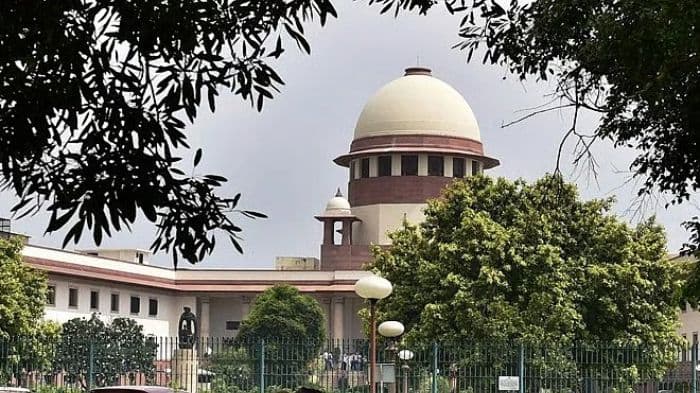
The Supreme Court of India on Feb 19 delivered a sharp rebuke to the widespread practice of political parties offering freebies to voters, saying such incentives distort governance priorities and undermine economic development.
The remarks came during hearings on a public interest petition seeking regulation of populist giveaways ahead of elections.

A bench led by Chief Justice of India DY Chandrachud observed that freebies – in the form of free electricity, subsidised goods or loan waivers – may be politically attractive, but with long-term costs that burden public finances and hamper growth.
“What may appear as a short-term electoral incentive ultimately reflects in fiscal stress and crowding out of productive expenditure,” the court said, highlighting concerns over economic sustainability.
The top court noted that constitutional goals of socio-economic development and accountability may be imperilled when political parties promise wide-ranging freebies to secure voter support.
Freebies, the bench remarked, can create unsustainable fiscal commitments that eventually impede investment in infrastructure, health, education and employment generation.
While courts have previously flagged the issue, Tuesday’s hearing took on urgency amid rising concerns about the impact of such populist measures on the economy.
The bench questioned how long-term welfare objectives could be balanced against short-term electoral strategies that prioritise freebies over structural reforms.
Petitioners argued that there is a need for a legal framework to curb misuse of public resources and ensure political accountability, particularly when fiscal pressures are already mounting in many states.
They urged the court to direct Parliament or the Election Commission of India (ECI) to formulate clear guidelines defining and curtailing the practice.
However, the Supreme Court clarified that it was not inclined to micro-manage electoral promises or issue a blanket ban on manifesto offerings. Instead, the bench signalled that responsibility lies with legislature and election authorities to frame rules that distinguish between welfare schemes and “freebie culture” that threatens economic health.
During the hearing, Chief Justice Chandrachud emphasised that fiscal prudence and long-term economic planning are essential for sustainable development.
“Government expenditure must be aligned with long-term national priorities rather than short-term populist gestures that ultimately burden citizens,” he said.
The bench also pointed to international experiences where unchecked election giveaways contributed to fiscal strain and debt escalation, cautioning India against a similar trajectory.
In recent years, the term “freebies” has been widely used in public discourse to describe electoral promises that provide immediate benefits to voters, such as free electricity units, subsidised food grains, discounted or no-fee services, loan waivers, and direct cash transfers.
Critics argue that while some welfare measures serve genuine needs, others are designed primarily for vote-catching without consideration of economic viability.
The Supreme Court’s comments are likely to add momentum to ongoing public debates on political financing, electoral promises and governance priorities.
As parties prepare for upcoming elections, the issue of freebies and its impact on public finances and development is expected to feature prominently in policy discussions.
The court has not yet indicated a timeline for further orders but urged caution and deliberation before taking any steps that could impinge upon the democratic rights of political actors to make election promises.