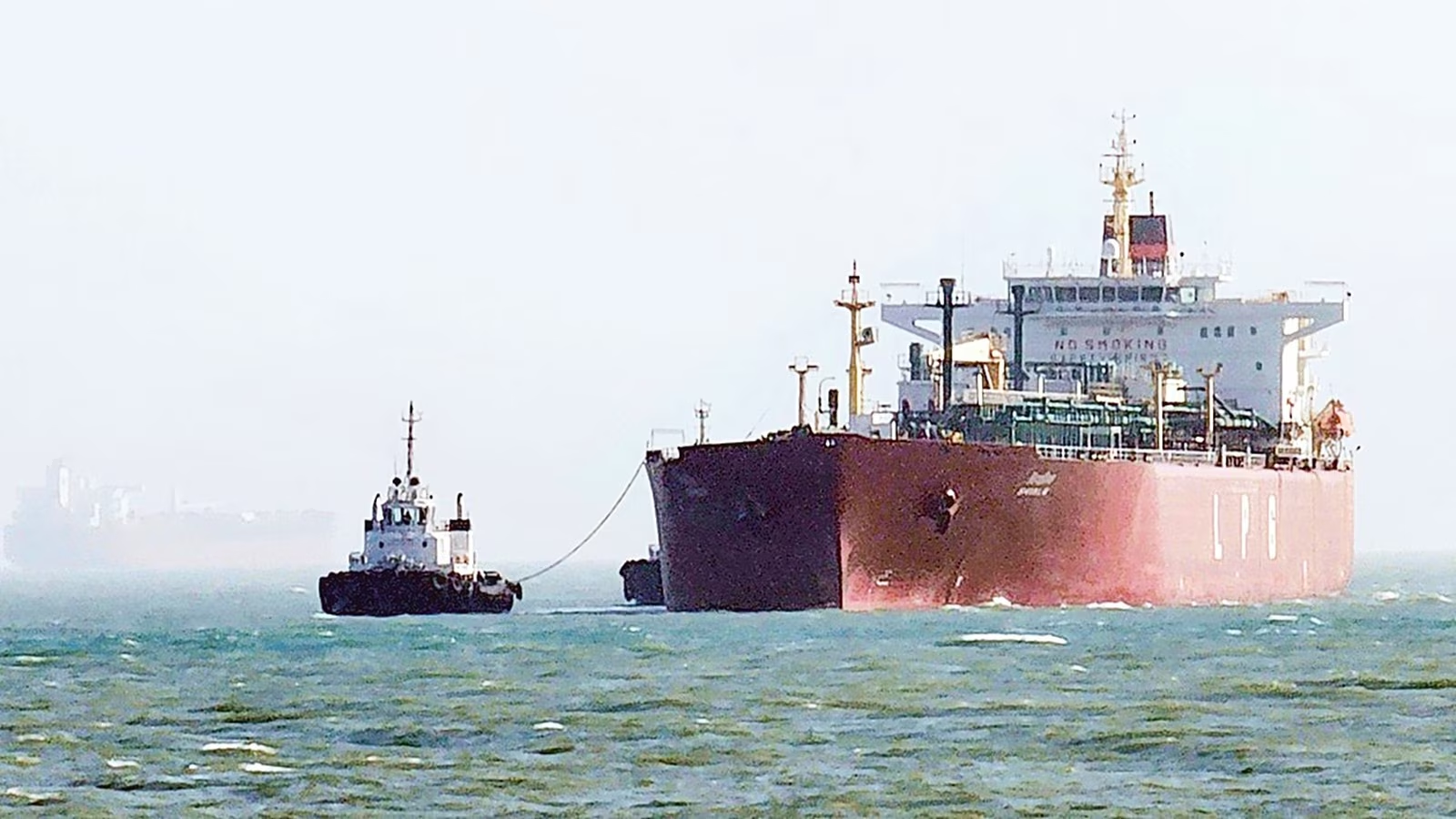
Another India-flagged liquefied petroleum gas (LPG) tanker, Green Sanvi, has successfully crossed to the eastern side of the Strait of Hormuz, marking a cautious breakthrough for Indian shipping amid ongoing tensions in West Asia.
According to ship-tracking data, the vessel—carrying around 44,000 tonnes of LPG — navigated through a designated corridor in Iran’s territorial waters on April 3 evening. The cargo accounts for roughly half a day’s worth of India’s pre-war LPG consumption, which has since dipped due to supply disruptions triggered by the conflict.

Industry experts indicate that two more India-flagged LPG carriers—Green Asha and Jag Vikram—are expected to follow suit in the coming days, offering some relief to strained supply chains.
With this transit, Green Sanvi becomes the seventh India-flagged merchant vessel to successfully navigate the volatile Strait since the outbreak of the West Asia war—all of them LPG tankers. Despite this movement, at least 17 India-flagged vessels remain stationed in the Persian Gulf, including crude oil tankers, LNG carriers, container ships, and bulk vessels.
India has been actively engaging with Iran diplomatically to secure safe passage for its ships through the strategically critical Strait of Hormuz. Vessel movement through the chokepoint has largely stalled since the conflict escalated, with Tehran exerting tight control over maritime traffic.
Iran has clarified that vessels from countries deemed non-hostile—including India—may transit the Strait in coordination with its authorities. Iranian Foreign Minister Abbas Araghchi recently stated that ships from India, China, Russia, Iraq, and Pakistan have been allowed passage, provided they adhere to specified protocols.
During its transit, Green Sanvi broadcast its identity as an Indian vessel with Indian crew—an increasingly standard practice aimed at ensuring safe passage under Iranian monitoring. The tanker followed a longer, regulated route through Iranian waters between Larak and Qeshm islands, instead of the conventional central channel, reflecting heightened security measures in the narrow maritime corridor connecting the Persian Gulf with the Arabian Sea.
Owned by MOL India, the Indian arm of Japanese shipping major Mitsui OSK Lines, Green Sanvi is a very large gas carrier (VLGC) with a deadweight capacity of nearly 50,000 tonnes. It joins six other Indian LPG tankers—Shivalik, Nanda Devi, Jag Vasant, Pine Gas, BW Elm, and BW Tyr—that have managed to cross the Strait in recent weeks.
The disruption at the Strait of Hormuz has posed a significant challenge for India’s energy security. Nearly 40% of the country’s crude oil imports, over 50% of LNG imports, and a staggering 90% of LPG imports typically pass through this route. With India consuming over 33 million tonnes of LPG annually and relying on imports for 60% of its needs, the chokepoint effectively facilitates about 54% of its total LPG consumption.
Iran, however, maintains that the Strait remains operational. In a recent statement, its foreign ministry asserted that navigation continues under “necessary measures” dictated by wartime conditions. It reiterated that non-hostile vessels complying with safety protocols can access safe passage, while ships linked to the US, Israel, and their allies remain restricted.
As geopolitical tensions continue to reshape global energy routes, each successful transit like that of Green Sanvi underscores both the fragility and resilience of India’s maritime supply lines.