


Israel has launched its deepest military incursion into Lebanon in 26 years, capturing the strategic Beaufort Castle and ordering fresh strikes on Beirut's southern suburbs.
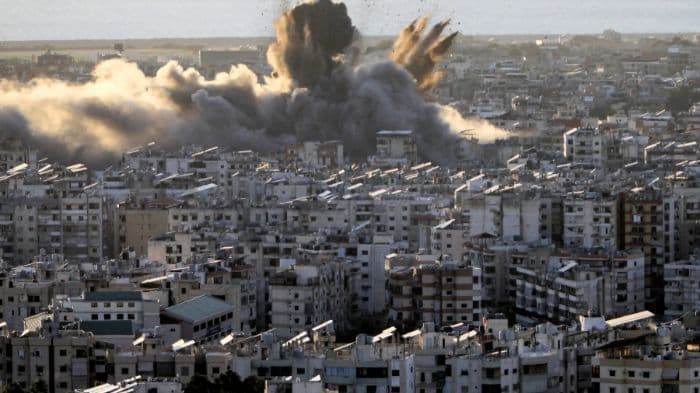
Israel's military operations in Lebanon have intensified in recent days, with Israeli forces capturing the strategic Beaufort Castle in southern Lebanon and carrying out fresh strikes on Beirut's southern suburbs, an area considered a stronghold of Hezbollah.
The developments mark one of Israel's deepest military incursions into Lebanon in decades and have renewed concerns about a broader conflict in the Middle East.

While the fighting is taking place on Lebanese territory, the conflict is primarily between Israel and Hezbollah, a powerful Lebanese armed group and political movement backed by Iran. Hezbollah is not part of the Lebanese army, but it operates extensively in southern Lebanon and has long positioned itself as a force resisting Israel.
What triggered the latest escalation?
The latest round of fighting follows months of cross-border exchanges between Israeli forces and Hezbollah. Israel has said its operations are aimed at neutralising Hezbollah's military infrastructure and preventing attacks on Israeli territory.
Hezbollah, meanwhile, has continued to launch rockets and other attacks against Israel, saying its actions are linked to regional developments and its longstanding confrontation with the Israeli state.
The recent Israeli advance into southern Lebanon and strikes on Beirut's southern suburbs represent a significant escalation beyond routine border exchanges.
Why is Beaufort Castle important?
One of the most significant developments in the current conflict has been Israel's capture of Beaufort Castle, a hilltop fortress overlooking large parts of southern Lebanon.
Because of its elevated position, the site has long held military significance. Control of the area provides strategic observation over surrounding territory and key routes in southern Lebanon.
The capture of the castle is being viewed as a symbol of how far Israeli forces have advanced into Lebanese territory during the current operation.
How did the conflict begin?
The roots of the Israel-Lebanon conflict stretch back decades.
Following the creation of Israel in 1948 and the first Arab-Israeli war, tensions persisted between Israel and several neighbouring Arab states, including Lebanon.
In the 1970s and early 1980s, Palestinian armed groups operated from southern Lebanon and carried out attacks against Israel. In response, Israel launched military operations across the border.
In 1982, Israel invaded Lebanon in a major military campaign aimed at expelling the Palestine Liberation Organization (PLO) from the country.
The rise of Hezbollah
Hezbollah emerged during the 1980s amid the Israeli occupation of parts of southern Lebanon.
Supported by Iran, the group gradually developed into a powerful military and political force. It gained support among many Lebanese Shia Muslims by portraying itself as a resistance movement against Israeli occupation.
Israel maintained a security zone in southern Lebanon for years before withdrawing its forces in 2000.
Hezbollah subsequently declared the withdrawal a victory and expanded its influence within Lebanon.
The 2006 war
The most significant conflict between Israel and Hezbollah before the current escalation occurred in 2006.
The war began after Hezbollah fighters crossed the border, attacked an Israeli patrol and captured two Israeli soldiers.
Israel responded with a large-scale air and ground campaign across Lebanon. The conflict lasted 34 days and caused widespread destruction in Lebanon while also resulting in casualties and displacement on both sides of the border.
The war ended with a United Nations-brokered ceasefire, but the underlying dispute remained unresolved.
What's at stake for Israel, Lebanon and the wider region
The Israel-Hezbollah conflict extends beyond the two sides directly involved.
Hezbollah receives support from Iran, while Israel remains one of the United States' closest allies in the region. As a result, any major escalation carries the risk of drawing in other regional actors and increasing instability across the Middle East.
For Lebanon, the conflict comes at a particularly difficult time as the country continues to grapple with economic challenges and political instability.
For Israel, Hezbollah remains one of the most heavily armed non-state groups in the region and is viewed as a significant security threat.

IIIT Ranchi student death: NHRC to examine allegations of administrative negligence and delayed medical aid
.jpg&w=256&q=75)
Karnataka introduces 7.5% sub-quota for rural government school students in professional course admissions

Dubai forum to examine AI agents’ role in journalism and digital publishing

NEET PG Counselling 2026 Round 1 registration begins Oct 12, check schedule and key dates
Groundwater and urban resilience in focus at UAEU’s international conference
IIIT Ranchi student death: NHRC to examine allegations of administrative negligence and delayed medical aid
Karnataka introduces 7.5% sub-quota for rural government school students in professional course admissions
Dubai forum to examine AI agents’ role in journalism and digital publishing
NEET PG Counselling 2026 Round 1 registration begins Oct 12, check schedule and key dates
PM Modi praises NEP impact, Tamil Nadu CM Vijay seeks ₹5,110 crore in dues

IIIT Ranchi student death: NHRC to examine allegations of administrative negligence and delayed medical aid
Karnataka introduces 7.5% sub-quota for rural government school students in professional course admissions
Dubai forum to examine AI agents’ role in journalism and digital publishing
NEET PG Counselling 2026 Round 1 registration begins Oct 12, check schedule and key dates
Groundwater and urban resilience in focus at UAEU’s international conference
IIIT Ranchi student death: NHRC to examine allegations of administrative negligence and delayed medical aid
Karnataka introduces 7.5% sub-quota for rural government school students in professional course admissions
Dubai forum to examine AI agents’ role in journalism and digital publishing
NEET PG Counselling 2026 Round 1 registration begins Oct 12, check schedule and key dates
PM Modi praises NEP impact, Tamil Nadu CM Vijay seeks ₹5,110 crore in dues
Copyright© educationpost.in 2026 All Rights Reserved.