


Commerce minister says sweeping agreement balances sensitivities, boosts investment and market access as New Delhi and Brussels move closer to a long-awaited signing.
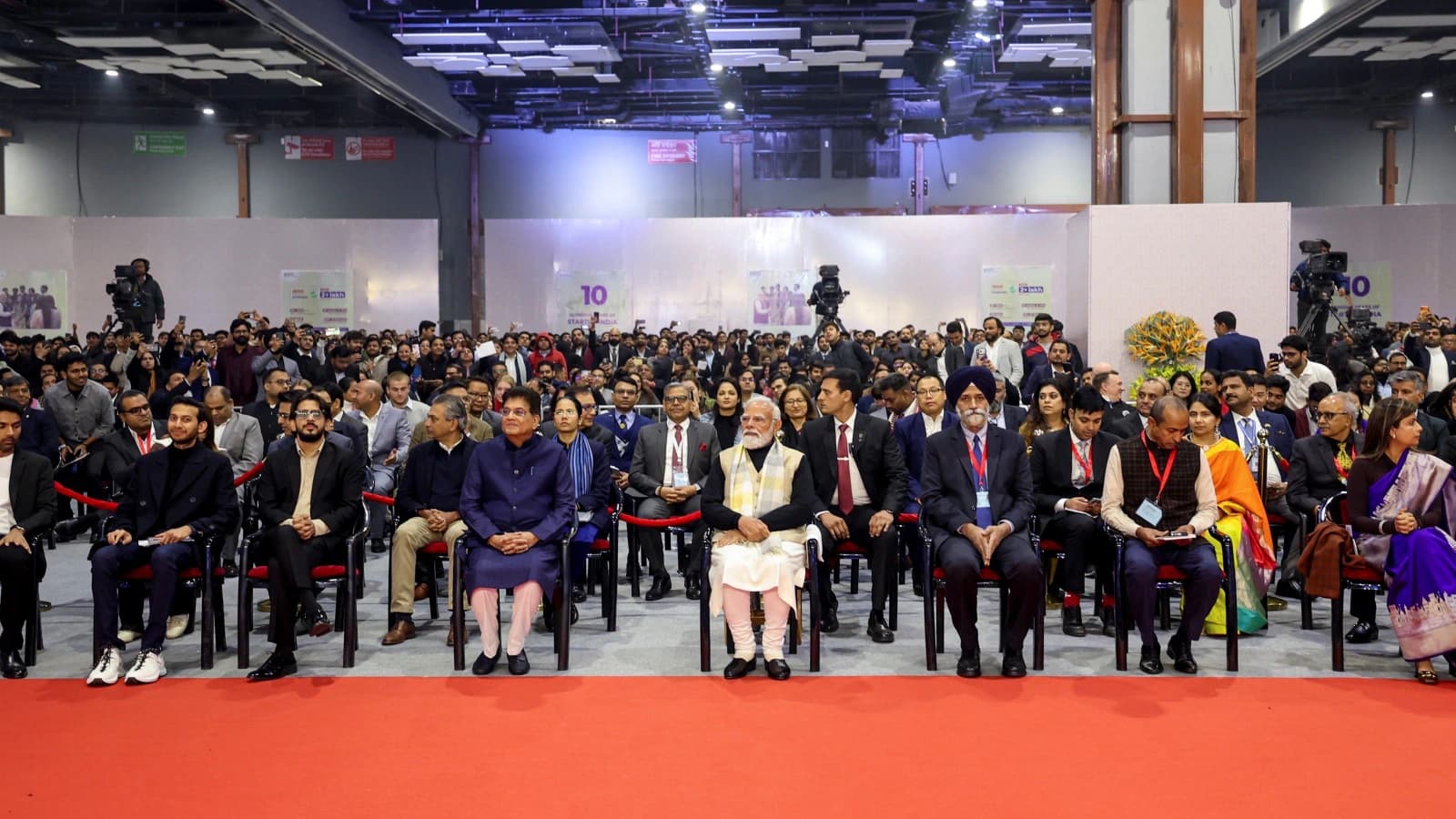
Describing the proposed India-European Union free trade agreement as the “mother of all trade deals”, Commerce and Industry Minister Piyush Goyal recently said that none of the EU’s 27 member states have raised objections to the pact, underscoring rare political consensus within the bloc on deepening economic ties with India.
The agreement, expected to be signed on January 26, will be comprehensive and carefully calibrated to protect the interests and sensitivities of both sides, Goyal said, signalling that negotiations are nearing their final stretch after years of stalled talks.

“None of the EU states, in various high-level meetings, has opposed the trade agreement with India. The deal would be the mother of all deals — the most comprehensive and mutually advantageous for both parties involved,” Goyal told reporters.
Senior officials familiar with the negotiations said New Delhi has secured favourable outcomes in priority sectors, while also offering the EU market access in areas of interest to European businesses. “India and the EU are not competitors. We have strong complementarities, which makes this a win-win partnership,” an official said.
On differences over the EU’s carbon border adjustment mechanism (CBAM), officials said India’s national interest — including concerns of farmers and domestic producers — had been factored into the negotiations, indicating that climate-linked trade barriers were being addressed through safeguards and balancing provisions.
The pact also includes discussions on a new investment-focused chapter aimed at providing long-term regulatory certainty to European investors in India’s manufacturing sector. As reported earlier, India has been negotiating terms under which 100% foreign direct investment (FDI) would be allowed in select sectors, subject to conditions such as local employment, value addition and the use of domestic raw materials.
A similar approach has been adopted in India’s recent trade agreements with Western partners. Under its deal with the UK, India permitted 100% FDI in telecom, while capping foreign investment in insurance at 74%.
In March 2024, India and the European Free Trade Association (EFTA) — comprising Iceland, Liechtenstein, Norway and Switzerland — signed a pact under which EFTA countries committed $100 billion in investments over 15 years. New Zealand has also pledged $20 billion in investments.
The India-EU trade agreement has been decades in the making. First launched in 2007, talks were suspended in 2013 before being relaunched in July 2022. Momentum has since accelerated amid shifting global trade dynamics, particularly after the Trump administration’s protectionist policies pushed major economies to diversify markets and reduce dependencies.
For India, the deal promises greater access to the EU market in labour-intensive sectors such as textiles, footwear, gems and jewellery. The EU, in turn, is seeking improved access for its automobiles, beverages and high-value manufactured goods.
Strategic considerations also loom large. Both sides share concerns over China’s dominance in critical technologies and global manufacturing. Indian industry has struggled with pricing pressures, particularly in scaling up solar manufacturing, while the EU has grown wary of over-reliance on China in key sectors.
The proposed pact aligns with the NDA government’s broader “Look West” trade strategy, which prioritizes agreements with developed economies where industrial complementarities outweigh direct competition. While negotiations with the US remain stalled, India has already sealed trade agreements with Australia, New Zealand and the UK — and now appears poised to add the EU to that list.
Brown University team joins NASA mission to study giant planets from Antarctica

Princeton marks 25 years of no-loan financial aid, says nearly 90% of graduates leave debt-free
UAE ministry dismisses viral first-term exam timetable as fake

IIT Kanpur to Establish ₹104-Crore UP Cyber Security Operations Centre

IIM Ahmedabad Summer Placements 2028: AI Startups, Fashion Brands and Top Companies Recruit Students

South Korea's student suicide toll nears 1,000 in four years, with India's figures also drawing attention

Want to explore the world without leaving your classroom? Seoul students show how

When smart glasses become cheating tools: South Korea draws tougher exam rules

Jeans out, formals in: Bihar rolls out stricter rules for government school staff

Auslan gains ground in Western Australian schools

Brown University team joins NASA mission to study giant planets from Antarctica
Princeton marks 25 years of no-loan financial aid, says nearly 90% of graduates leave debt-free
UAE ministry dismisses viral first-term exam timetable as fake
IIT Kanpur to Establish ₹104-Crore UP Cyber Security Operations Centre
IIM Ahmedabad Summer Placements 2028: AI Startups, Fashion Brands and Top Companies Recruit Students
South Korea's student suicide toll nears 1,000 in four years, with India's figures also drawing attention
Want to explore the world without leaving your classroom? Seoul students show how
When smart glasses become cheating tools: South Korea draws tougher exam rules
Jeans out, formals in: Bihar rolls out stricter rules for government school staff
Auslan gains ground in Western Australian schools
Copyright© educationpost.in 2026 All Rights Reserved.