


The two-day Pune conference brought together journalists, editors, filmmakers and policy experts to discuss misinformation, algorithm-driven news, media credibility and responsible use of artificial intelligence.
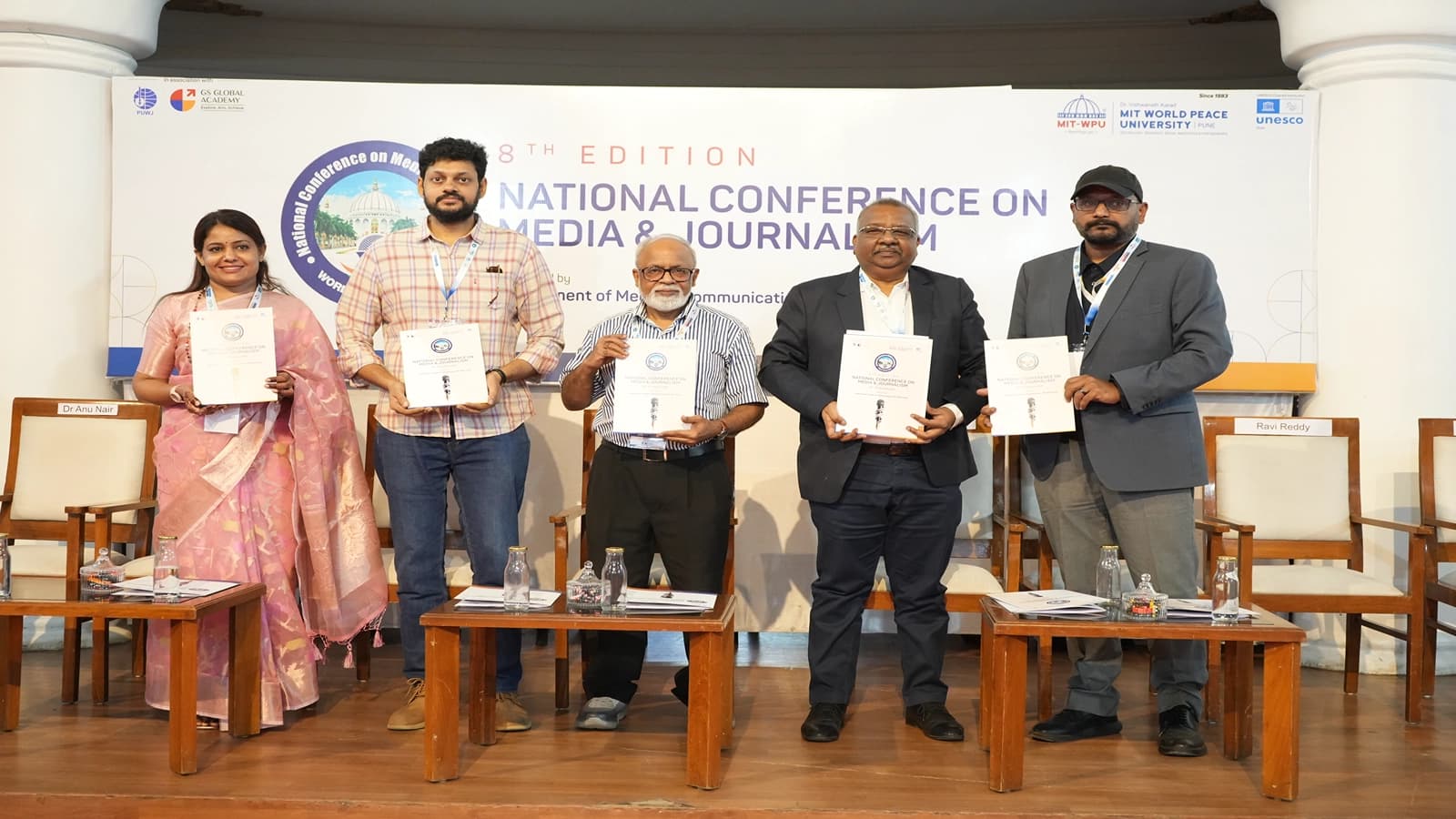
The growing influence of artificial intelligence (AI) on journalism, the spread of misinformation and the need to strengthen public trust in news emerged as major talking points at the 8th National Conference on Media and Journalism organised by MIT World Peace University (MIT-WPU).
Held on October 30 and 31, 2026, in Pune, the conference was organised by the university's Department of Media and Communication under the theme Dialogue, Inclusivity & Peace. The event brought together senior journalists, media professionals, filmmakers, legal experts, policymakers, advertising specialists and students to examine the changing role of media in the digital age.

The discussions focused on the challenges posed by algorithm-driven news distribution, AI-generated content, deepfakes and declining audience attention spans. Speakers also emphasised that journalism must prioritise accuracy, editorial responsibility and public interest over the race to publish breaking news.
Addressing delegates at the inaugural session, MIT-WPU Vice Chancellor Prof. (Dr.) Raviraja N. Seetharam highlighted the university's focus on experiential learning and curriculum innovation to prepare students for professional challenges.
Referring to the importance of responsible communication, he drew attention to the Bhagavad Gita's message about speaking truthfully, pleasantly and without causing unnecessary distress.
He emphasised that the future of journalism depends not merely on publishing information quickly but on verifying facts, maintaining credibility and ensuring that news serves society.
Dr. Abhijit Nair, Dean of the School of Liberal Arts at MIT-WPU, also underlined the importance of earning audience trust through meaningful and thoughtful communication.
The inaugural session, titled The Attention Age: Media, Algorithms and the Battle for Trust, examined how technology and changing audience behaviour are transforming news consumption.
Chief Guest Ramesh Menon, an award-winning journalist, author, documentary filmmaker and educator, spoke about the growing influence of algorithms in determining which stories reach audiences.
He pointed out that digital platforms increasingly prioritise content capable of attracting attention and engagement, raising concerns about the importance given to accuracy and public relevance.
Ravi Reddy, Resident Editor of The Hindu, Hyderabad, highlighted the importance of fact-checking in an environment where AI-generated information and deepfakes can make misleading content appear authentic.
He stressed that while artificial intelligence can assist newsroom operations, editorial decisions and human judgement must remain central to journalism.
The valedictory session, titled Voices, Visions and the Future: Reshaping Media Discourses, focused on the future direction of journalism and media communication.
Dr. Meena Sharma, Consulting Editor at News24, attended as the Chief Guest, alongside filmmaker Ashoke Viswanathan and Rajnandini Pawar, First Runner-Up at Femina Miss India.
Sharma highlighted the growing credibility challenges facing the media industry and called for greater emphasis on producing meaningful, high-quality journalism.
She also encouraged media students to develop impactful stories and take them to audiences through established news organisations as well as digital and social media platforms.
Sound designer and editor ASGK Teja shared his experience of navigating conflicting information on social media. He explained how reading a newspaper helped him access information he considered more reliable and verified.
The conference also featured four panel discussions covering journalism, cinema, democracy, advertising and emerging technologies.
Moderated by Dr. Yogesh Joshi, Metro Editor at Hindustan Times, the discussion brought together Ravi Reddy, Vishal Khandelwal, Vishakha Nikam and Abhijit Atre.
The panel examined changes in news consumption patterns, commercial pressures on news organisations and the importance of maintaining editorial independence and journalistic credibility.
Moderated by Dr. Mithila Biniwale, Assistant Professor in MIT-WPU's Department of Media and Communication, the session explored the growing role of artificial intelligence and virtual production in filmmaking.
Sound designer ASGK Teja, filmmaker Ashoke Viswanathan and actor and Film and Television Institute of India (FTII) professor Jijoy Rajagopal discussed how emerging technologies are changing film production while highlighting the continuing importance of human creativity, storytelling and technical expertise.
The discussion, moderated by Dr. Shreya Bera, Assistant Professor in the Department of Liberal Arts (English), examined the relationship between independent media, democratic institutions and public accountability.
The panel included IAS officer Mahesh R. Zagade, Priya Jain, Founder of Finology Legal; Siddhartha Benninger, Director of the Institute for Sustainable Development, CDSA; Prof. Ujjwala Barve of Tilak Maharashtra Vidyapeeth; and Naresh Bodhke of the Gokhale Institute of Politics and Economics.
Key issues included media independence, misinformation, censorship, transparency and the role of informed citizens in strengthening democracy.
Moderated by Shrikaant Iyer, Head of Content Production at HT Media (Fever 94.3), the session explored how artificial intelligence is influencing advertising, public relations and brand communication.
Belinda Dokras, Director of Network Advisory at Dentsu Creative, and Sarthak Thakur, Founder and CEO of SeeTusk Creative Agency, discussed the balance between technology-driven communication, human creativity and authenticity in building consumer trust.
The two-day conference concluded with a broader discussion on the responsibilities of journalists, media organisations and future communication professionals in an increasingly technology-driven environment.
The central message emerging from the discussions was that technological innovation must go hand in hand with editorial accountability, fact-checking and ethical reporting.
Speakers encouraged students and working professionals to place public interest, credibility and responsible storytelling above online popularity and the pressure to generate viral content.

Narayana Business School recognised by Radio City among brands driving Gujarat’s growth

NTA empanels 5,000 experts in major overhaul after NEET-UG paper leak
Odisha Laptop Scheme 2026: Rs 30,000 Assistance for 15,000 Meritorious Class 12 Students
Delhi Schools Asked to Enforce SOP for Drug-Free Campuses, Set Up Anti-Tobacco Committees
Cyclone Murasu Makes Landfall in Andhra Pradesh: Why Did It Form, What Does Its Name Mean and Which States Are Affected?
NTA empanels 5,000 experts in major overhaul after NEET-UG paper leak
Cyclone Murasu Makes Landfall in Andhra Pradesh: Why Did It Form, What Does Its Name Mean and Which States Are Affected?

When students struggle, schools must act: Gujarat introduces new mental health rules
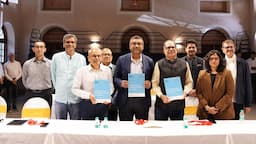
What if AI could learn from your data without taking it? India's new framework explains how
UAE schools to begin three week winter break on December 14

Narayana Business School recognised by Radio City among brands driving Gujarat’s growth
NTA empanels 5,000 experts in major overhaul after NEET-UG paper leak
Odisha Laptop Scheme 2026: Rs 30,000 Assistance for 15,000 Meritorious Class 12 Students
Delhi Schools Asked to Enforce SOP for Drug-Free Campuses, Set Up Anti-Tobacco Committees
Cyclone Murasu Makes Landfall in Andhra Pradesh: Why Did It Form, What Does Its Name Mean and Which States Are Affected?
NTA empanels 5,000 experts in major overhaul after NEET-UG paper leak
Cyclone Murasu Makes Landfall in Andhra Pradesh: Why Did It Form, What Does Its Name Mean and Which States Are Affected?
When students struggle, schools must act: Gujarat introduces new mental health rules
What if AI could learn from your data without taking it? India's new framework explains how
UAE schools to begin three week winter break on December 14
Copyright© educationpost.in 2026 All Rights Reserved.