South African schools return to court over R1.1 billion in withheld funds
School governing bodies challenge funding cuts, warning that cash-strapped institutions are struggling to meet basic needs.
Written by: Amin Masoodi5 Min Read · Updated:
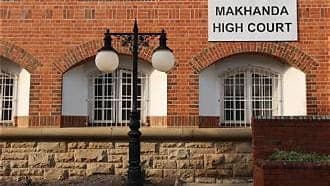
Eleven school governing bodies and the Makhanda Circle of Unity have approached the Makhanda High Court, seeking an order directing the provincial education department to release the withheld funds by March 31, 2027.
The application, submitted on November 3, is scheduled for hearing on December 3. The dispute centres on the department's decision to retain 40% of school allocations for the 2026/27 financial year, despite an earlier court settlement acknowledging that previous funding cuts were unlawful.
Schools struggle to meet basic needs
The financial consequences are already visible in schools across the province.
At Tantyi Primary School in Makhanda, where approximately 80% of parents are unemployed, families have been asked to contribute basic supplies such as toilet paper and photocopying paper because the school cannot afford them. The school owes the municipality more than R57,000 against an annual municipal allocation of just R47,600. The governing body says the department has withheld R127,000 from its budget. Parts of the school's upper floor have also been closed after sections of the roof collapsed.
The situation is equally difficult at Hoërskool PJ Olivier, where around 70% of learners do not pay school fees. Leaking roofs, an unaffordable hostel boiler and municipal arrears exceeding R1 million have added to the school's financial pressures.
How the department is spending the money
During an October 27 meeting with the department's leadership, lawyers representing the applicants were presented with a budget of R2.75 billion covering approximately 1.58 million learners.
Of this amount, the department retained around R1.1 billion for centrally managed programmes. The allocations included R469 million for the Learner Attainment Improvement Strategy, R151 million for school furniture, R129 million to support schools struggling with municipal bills and R77 million for information technology.
The learner attainment programme also includes matriculation boot camps and a R35.6-million aviation initiative run in partnership with a private flight school in Port Alfred. According to department spokesperson Mali Mtima, the aviation programme began in 2025 and enrols 25 learners annually from Grade 10. Its funding covers tuition, accommodation, catering, flight-school charges and uniforms.
With 50 learners currently enrolled, the programme's allocation amounts to approximately R712,000 per learner this year. Another R56.6 million has been earmarked for e-learning, much of it directed towards tablets for matric students. However, questions have emerged over the effectiveness of the initiative, with more than a third of the devices in a separate R686-million project reportedly still unreturned by the end of 2025.
Cecile van Schalkwyk, a senior attorney at the Legal Resources Centre (LRC), which represents the applicants, said the school governing bodies acknowledged the potential benefits of initiatives such as matric support but questioned the source of their funding.
She argued that these programmes were being financed from allocations legally intended for individual schools. Primary schools, in particular, were losing a substantial share of their budgets to initiatives primarily benefiting matric learners.
Earlier court ruling declared funding cuts unlawful
The latest legal challenge follows an August ruling in which the department agreed that withholding portions of school allocations had been unconstitutional, unlawful and invalid.
Under the August 19 court order, the department's decision to retain 33.75% of school funding in 2023/24 and 2024/25, along with reductions in per-learner allocations dating back to November 2020, was declared unlawful. The court also directed the department to submit quarterly reports outlining how it would ensure that every school received its full funding entitlement for 2027/28.
However, the settlement did not require the department to repay the money withheld in previous years. Figures cited in the legal proceedings show that the department retained R834 million in 2023/24 and R894 million in 2024/25. The amount for 2025/26 was estimated at approximately R932 million.
With another R1.1 billion withheld in the current financial year, the total reaches nearly R3.8 billion over four years. The impact is particularly severe for no-fee schools in the first three funding categories. Their annual allocation has fallen from the national target of R1,835 per learner to R1,101 after the 40% deduction.
Schools in the fourth and fifth quintiles have also faced reductions of R367.60 and R126 per learner, respectively.
Department defends centralised spending
The Eastern Cape Department of Education has defended its decision to retain funds, arguing that central procurement helps ensure more equitable access to textbooks, stationery, furniture, municipal services, digital resources and targeted learner support, particularly in rural areas.
In a written response on November 24, the department put the centrally retained amount at R1.06 billion and said its position on the latest court application would be presented through formal legal submissions. However, it acknowledged that central procurement alone did not establish compliance with the court order and that the value of goods purchased centrally did not automatically remove its legal obligation to fund schools. Asked whether a joint funding plan for 2026/27 had been prepared, the department said this had not yet been confirmed.
It also maintained that if the court directs it to release the money, it will comply, although the consequences for textbooks, furniture, municipal services and learner support would need to be assessed. National Treasury, one of the respondents, has filed notice opposing the application seeking full payment to schools by March 31, 2027, according to the LRC.
Funding crisis puts schools and learners at risk
The department has cited prolonged budget reductions, expanding responsibilities and mounting financial obligations as reasons for its funding difficulties.
According to the applicants, officials disclosed that the department was facing a R570-million overdraft repayment this year and had carried R1.6 billion in unpaid bills into the 2025/26 financial year. They also pointed to additional responsibilities, such as Grade R expansion and mother-tongue-based bilingual education, introduced without adequate funding.
The applicants said they remained willing to discuss spending priorities but maintained that deciding which programmes should receive funding was the department's responsibility. They refused to withdraw their legal challenge. Van Schalkwyk said the applicants wanted the court to require national and provincial treasuries to work with the education department on a repayment plan. The department's first progress report under the August court order is due on November 30, just three days before the December 3 hearing.
The upcoming proceedings could prove decisive in determining whether Eastern Cape schools receive their full allocations this financial year or face another prolonged wait for funding they say is essential to keep classrooms functioning.
Also read