OpenAI urges schools to train teachers as student AI use outpaces guidance
ThinkYoung survey finds 79% of teenagers use AI for schoolwork but fewer than half have received guidance, raising concerns over academic integrity, critical thinking and learning outcomes.
By Amin Masoodi · Updated
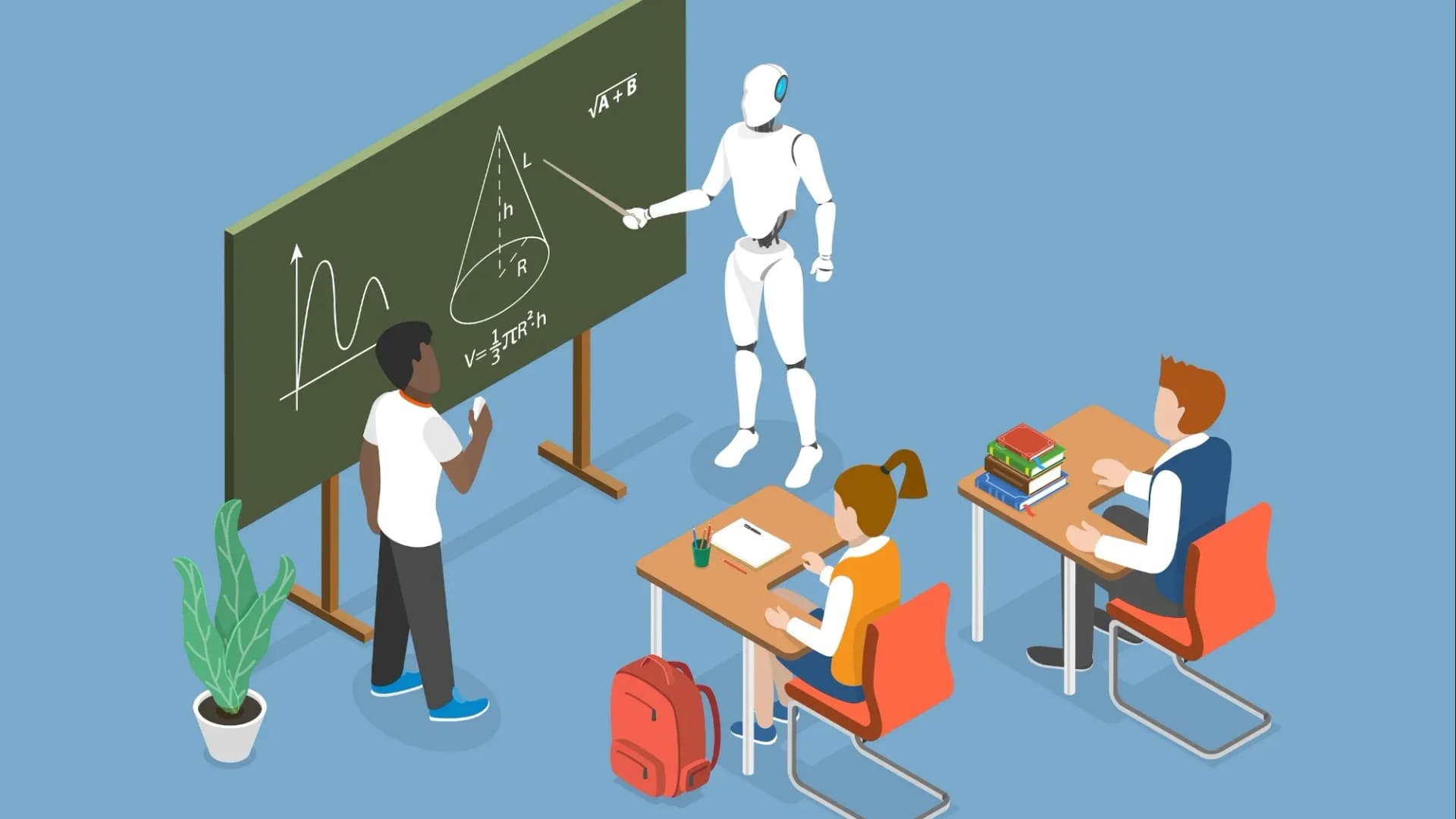
The rapid adoption of artificial intelligence (AI) by students is exposing a widening gap between classroom practices and the guidance schools provide, prompting OpenAI to call on governments and education institutions to strengthen teacher training and establish clearer rules for its use.
Research by ThinkYoung, covering 5,000 teenagers across 10 European countries, found that 79% had used AI for homework or assignments, but only 47% had been shown how to use the technology. The findings highlight the growing influence of AI on students' learning habits and the urgent need to help them distinguish between using it as a learning aid and relying on it to complete their work.
OpenAI's publication, Responsible AI in Education, draws on education partnerships in Estonia, Slovakia, Greece and Italy. It outlines priorities for teacher preparation, AI literacy and independent evaluation, while acknowledging that widespread adoption and reported time savings do not necessarily translate into better learning outcomes.
Through its Education for Countries initiative, OpenAI is working with governments to expand access to AI tools, develop literacy programmes and evaluate their effectiveness in ways that reflect local languages, curricula and education systems. George Osborne, Head of OpenAI for Countries, said the objective was to ensure AI strengthened students' ability to understand, create and work independently while giving teachers more time for creativity and individual attention.
Students embrace AI but struggle with boundaries
The ThinkYoung study, conducted between April 14 and May 15, 2026, surveyed 5,000 secondary school students aged 13 to 19 in Austria, Estonia, France, Germany, Greece, Italy, Poland, Spain, Sweden and the UK.
A separate survey covered 600 teachers across 10 countries, including Kenya and the United Arab Emirates. Researchers also conducted eight focus groups involving 52 students, parents and teachers. The findings show how deeply AI has entered students' academic routines. As many as 95% of teenagers surveyed said they had used AI tools, while school-related applications ranged from understanding difficult concepts and clarifying lessons to generating answers.
However, 26% admitted using AI to complete an assignment for them, highlighting concerns about dependence on technology rather than independent learning.
The boundaries governing its use also remain unclear. Among students who had used AI for schoolwork, only 43% said they had teacher permission the last time they used it. Another 36% said they had used it without permission, while 21% were unsure whether they were allowed to do so. The survey found that students without clear guidance were twice as likely to report asking AI to do their work as those who received guidance, at 36% compared with 18%. While the findings show an association, they do not establish that guidance alone accounts for the difference.
Another concern is students' ability to question and verify AI-generated information. Although 75% said their teachers discussed AI's opportunities and challenges, just 35% had been shown how to identify bias or incorrect information. The contradiction is also evident in students' own responses. While 88% said they added their own thoughts to AI-generated material and 74% claimed to check its accuracy, 49% acknowledged that they would simply copy what AI told them when completing homework.
Students themselves appear conscious of the need to use the technology more thoughtfully. "I think it's important that you ask AI specifically how to do things, so AI does not just give you the answer," a 15-year-old student in Belgium told researchers. Their expectations of schools are equally clear. More than half wanted teachers to explain when AI could be used for homework (55%) and help them determine whether its answers were reliable (56%).
The need for guidance was particularly pronounced among younger teenagers. Around 65% of students aged 13 to 15 wanted clearer instructions on homework use, while only 45% felt confident judging the accuracy of AI-generated information. Among those aged 18 to 19, the confidence level was 61%.
Teachers welcome time savings but fear erosion of critical thinking
Teachers are also increasingly incorporating AI into their professional routines, although concerns about its longer-term consequences remain.
Around 80% of surveyed teachers said they used AI for work-related or workload support, while 52% had used it during a class or lesson. Notably, 62% accessed the technology through personal accounts rather than accounts provided by their schools. The most common applications included preparing classroom materials and planning lessons. Saving time was identified as a major benefit by 65% of teachers, while 47% said AI helped them develop more creative and engaging teaching approaches.
However, only 14% identified increased face-to-face interaction with students as a key benefit, suggesting that the promised gains in teacher time have yet to translate clearly into more individual attention in classrooms. The obstacles are significant. Privacy and data security concerns were cited by 48% of teachers as the biggest barrier to wider adoption, followed by a lack of clear institutional guidance at 34%.
A 29-year-old teacher in the UK told researchers that wider integration of AI into education must be accompanied by organised training programmes and workshops for educators. Teachers also called for more reliable tools designed around their professional requirements, particularly lesson planning, student feedback and curriculum-specific tasks.
While 85% believed AI could support students with additional learning needs, concerns about its impact on independent thinking were considerable. The potential erosion of critical thinking emerged as the leading concern, cited by 58% of teachers. Reduced creativity, overdependence on technology and threats to academic integrity were among their other worries.
European initiatives offer lessons but learning gains remain unproven
OpenAI's country partnerships offer an insight into how education systems are attempting to manage the transition, although early results vary across countries.
Estonia's AI Leap programme, for instance, reported substantial teacher engagement. In a spring survey, 794 of 828 teachers said they used AI professionally, while 723 estimated that the technology saved them an average of 1.8 hours each week.
Student feedback on the ITI tutor, developed using ChatGPT Edu, was more mixed. Among 182 students surveyed, average satisfaction stood at 3.07 out of five. Some complained about excessive questioning, slow exchanges and a need for clearer explanations.
The feedback highlights an important distinction between making AI tools available and ensuring they genuinely improve the learning experience. Greece has introduced a framework requiring trained teacher oversight and school AI coordinators. It also prohibits fully automated assessment decisions and student profiling.
Slovakia's approach brings together its education ministry, universities and technical partner Aricoma, while Malta's AIforAll programme requires participants to complete three learning modules before receiving a free premium AI subscription. OpenAI is also emphasising independent evaluation, arguing that assessments of AI in education must be credible and transparent, including when findings are unfavourable.
The University of Tartu and Stanford's SCALE are working on the design and validation of its Learning Outcomes Measurement Suite, while the company's OpenAI Learning Lab is bringing education researchers together to examine how AI affects knowledge, independent thinking and information retention.
Clear rules and stronger AI literacy emerge as priorities
The ThinkYoung findings point to a need for schools to move beyond general discussions about AI and establish practical rules governing its use.
The organisation recommends age-appropriate policies explaining when students can use AI for homework, revision, classroom activities and assessments, and when its use should be restricted or avoided altogether. It also calls for AI literacy to become part of the curriculum, with students taught how to identify inaccurate information, recognise bias and question AI-generated responses.
Teacher training, meanwhile, should go beyond introducing digital tools and equip educators to guide students in using AI responsibly across different subjects. Parents and carers should also receive practical information about school expectations, data privacy and responsible use.
For assessments where AI is permitted, ThinkYoung recommends asking students to document their objectives, prompts, AI-generated responses and accuracy checks. Assessment should reward reasoning, understanding and the ability to critically evaluate information rather than focusing exclusively on the final submission. The broader message emerging from the research is that restricting access to AI or encouraging its adoption without adequate preparation will not address the challenges facing education.
As students increasingly turn to AI for academic support, schools face a more fundamental task: ensuring that technology strengthens curiosity, independent thinking and creativity rather than replacing the very learning processes education is meant to develop.
Also read