


A new report estimates that international students who graduated in 2024 could contribute $1.7 trillion to host economies over their working lives, highlighting the economic value of retaining overseas talent after university.
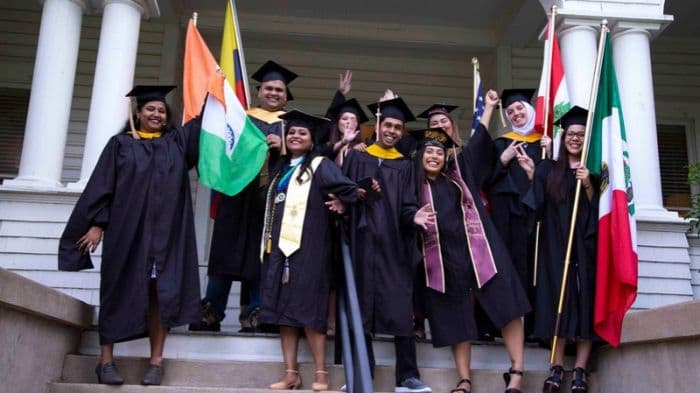
Image for Representation
International students who graduated in 2024 are projected to contribute around US$1.7 trillion to the economies of their study destinations over their working lives, with the US, UK, Canada and Australia accounting for approximately US$1 trillion of that amount, according to a new report by Studyportals and Cambridge IELTS.
The report, Talent Beyond Borders, examines the economic contribution of international graduates after they leave university and enter the workforce. Unlike estimates that focus primarily on tuition fees and student spending during their studies, the research considers the value graduates generate through their careers in host countries.

The four major study destinations are expected to account for nearly 60% of the projected lifetime contribution of the 2024 graduating cohort. The report estimates that these countries host around 35% of the world's international students, underlining their position as major beneficiaries of internationally educated talent.
Canada records highest graduate retention among major destinations
The report categorises international graduates into three groups based on their post-study destinations. Around 41% remain in the country where they studied, 35% return to their home countries, and 24% move to a third country for work.
Canada has the highest graduate retention rate among the destinations highlighted in the report, with 66% of international graduates staying to work after completing their studies.
The corresponding figures are 53% for Australia and 49.4% for Germany. These differences suggest that the economic contribution of international education depends not only on attracting students but also on whether graduates remain in the workforce after graduation.
The report estimates the lifetime economic contribution of graduates from the 2024 cohort at approximately US$358.6 billion for the US, US$331.4 billion for Canada, US$185.7 billion for the UK and US$123.3 billion for Australia. These are projections rather than actual revenue already generated.
International graduates help address skills shortages
The research also highlights the role of international graduates in sectors facing workforce shortages. Among the 2024 international graduates in engineering and technology, 59% were classified as staying in their study destination.
The corresponding share was 56% for computer science and information technology and 48% for medicine and health.
Their contribution extends beyond employment and economic output. International graduates can support research, entrepreneurship, professional networks and knowledge exchange between countries. Those who return home may also bring back skills and international connections acquired during their studies abroad.
For India, the findings raise questions about both the benefits of overseas education and the movement of skilled graduates after completing their degrees. Graduates who return can contribute their expertise and international experience to their home country, while those who remain abroad may help address workforce needs in their destination countries.
The report's estimates are based on graduate-outcome data alongside international student mobility, economic productivity and migration data. Its findings offer a longer-term perspective on international education, although projected lifetime economic contributions should not be interpreted as direct government revenue or as a measure of the full social value of overseas study.
The research was developed by Studyportals and Cambridge IELTS as part of the Talent Beyond Borders project, which examines what international students go on to do after graduation and how their careers contribute to economies and communities across borders.

International graduates could contribute $1 trillion to US, UK, Canada and Australia

NEET UG Stray Vacancy Result 2026: MBBS Seat Allotted at AIR 11.90 Lakh; Check Closing Ranks

Telangana to Implement 25% RTE Quota in Private Schools for EWS and Disadvantaged Children

Could smarter energy solutions make data centres more sustainable?

Cambridge and AstraZeneca extend joint PhD programme for three years
Could smarter energy solutions make data centres more sustainable?
Cambridge and AstraZeneca extend joint PhD programme for three years

China shuts three Tibetan schools, raising fears for language and cultural identity

CCPA reports 3,940 delistings in crackdown on online sale of explosive substances

UGC seeks governors’ intervention as 82 Tamil Nadu institutions face 150 fee-refund complaints

International graduates could contribute $1 trillion to US, UK, Canada and Australia
NEET UG Stray Vacancy Result 2026: MBBS Seat Allotted at AIR 11.90 Lakh; Check Closing Ranks
Telangana to Implement 25% RTE Quota in Private Schools for EWS and Disadvantaged Children
Could smarter energy solutions make data centres more sustainable?
Cambridge and AstraZeneca extend joint PhD programme for three years
Could smarter energy solutions make data centres more sustainable?
Cambridge and AstraZeneca extend joint PhD programme for three years
China shuts three Tibetan schools, raising fears for language and cultural identity
CCPA reports 3,940 delistings in crackdown on online sale of explosive substances
UGC seeks governors’ intervention as 82 Tamil Nadu institutions face 150 fee-refund complaints
Copyright© educationpost.in 2026 All Rights Reserved.