ICC issues landmark arrest warrants over Taliban’s ban on girls’ education
The International Criminal Court’s landmark arrest warrants recognise systematic exclusion of women and girls from education as a crime against humanity.
Written by: Amin Masoodi5 Min Read · Updated:
The International Criminal Court (ICC) has taken a landmark step towards holding Taliban officials accountable for the systematic denial of fundamental rights to women and girls in Afghanistan, issuing arrest warrants against two former education ministers over their alleged role in enforcing discriminatory policies.
The court recently issued arrest warrants against Habibullah Agha, former Minister of Education, and Neda Mohammad Nadim, former Minister of Higher Education, accusing them of contributing to policies that deprived women and girls of basic freedoms, including their right to education.
The decision represents a significant development in international justice, recognising that the systematic exclusion of women and girls from education can constitute a crime against humanity when carried out as part of a broader campaign of gender-based persecution. For educators, teachers' organisations and human rights advocates worldwide, the ruling carries implications far beyond Afghanistan. It reinforces the principle that access to education is a fundamental right and that those responsible for systematically denying it could face international criminal accountability.
Over 2 million girls denied education
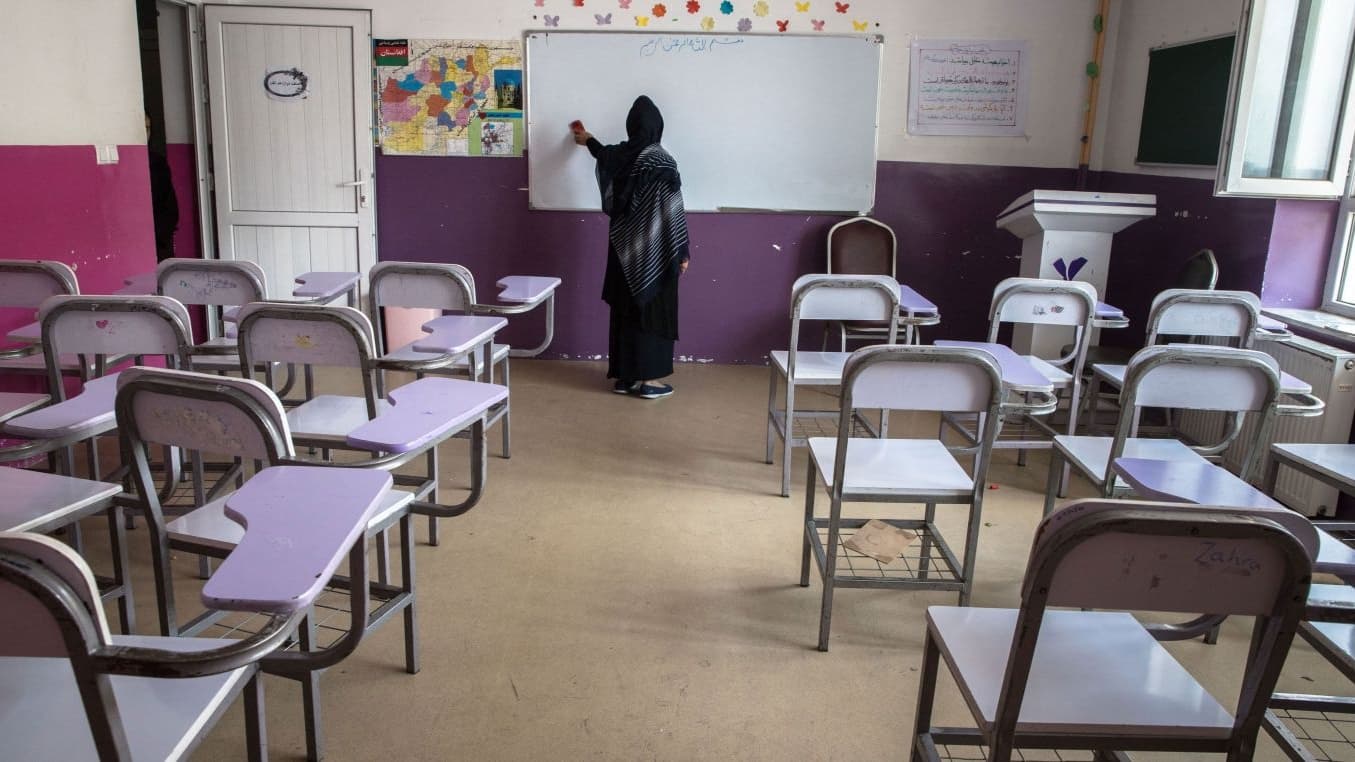
Five years after the Taliban returned to power, Afghanistan remains the only country in the world where girls and women are officially prohibited from pursuing secondary and higher education.
Since 2021, more than 2 million girls have been denied access to education beyond primary school, creating a deepening crisis with consequences for an entire generation. The restrictions extend well beyond classrooms. Women and girls face sweeping limitations on employment, freedom of movement without a male guardian, access to public spaces and participation in public life.
The closure of schools and universities has also heightened their vulnerability to child marriage, child labour and gender-based violence, while increasing the risk of long-term economic and social exclusion. The consequences could prove devastating for Afghanistan's future. The country faces the prospect of losing thousands of women teachers and healthcare professionals in the coming years, further weakening essential public services and restricting women's access to education and healthcare.
The ICC proceedings also form part of a wider investigation into alleged gender-based persecution by Taliban leaders. Earlier arrest warrants targeted Supreme Leader Haibatullah Akhundzada and Chief Justice Abdul Hakim Haqqani over alleged crimes against humanity involving persecution on gender and political grounds.
International court faces growing political pressure
The Afghanistan proceedings come at a time when the ICC is facing mounting political pressure over its investigations into alleged international crimes in different parts of the world.
Judges, prosecutors and other Court officials have faced sanctions, travel restrictions, intimidation and public criticism, particularly over investigations and arrest warrants concerning Palestine and Ukraine. The United States has imposed sanctions on ICC officials in response to the Court's investigations and arrest warrants concerning Israeli officials over alleged violations linked to military operations in Gaza. Israel and Russia have also rejected or challenged the Court's jurisdiction in cases involving their nationals and officials.
These developments have raised concerns about the independence of international judicial institutions and their ability to pursue accountability without political interference. The European Union and several member states have reaffirmed their support for the ICC. In a prominent show of solidarity, the European Parliament awarded the 2026 Sakharov Prize for Freedom of Thought to the Court and its officials on October 22.
Describing the ICC as a cornerstone of international justice, the European Parliament called for stronger protection of judges, prosecutors and staff against intimidation, sanctions and political pressure. The Sakharov Prize has previously recognised prominent advocates of human rights and fundamental freedoms, including Malala Yousafzai, who received the award in 2013 for her campaign for girls' education. She went on to receive the Nobel Peace Prize in 2014 alongside Indian child rights activist Kailash Satyarthi.
Afghanistan case highlights wider accountability efforts
The ICC's action against Taliban officials is part of a broader international effort to address serious violations of international law.
In Ukraine, the Court issued arrest warrants against Russian President Vladimir Putin and Maria Lvova-Belova over allegations involving the unlawful deportation and transfer of Ukrainian children from occupied territories to Russia. More than 40 ICC member states referred the situation for investigation.
The Court has also pursued proceedings relating to the conflict in Palestine. In 2024, ICC prosecutors sought arrest warrants against senior Hamas and Israeli leaders over alleged crimes, including hostage-taking, attacks against civilians and the use of starvation as a method of warfare.
These cases have intensified international debate over the Court's authority, jurisdiction and ability to enforce international law against powerful political and military figures.
Why similar action against Iran remains difficult
The Afghanistan proceedings have also prompted questions about whether the ICC could pursue comparable cases involving alleged violations of women's rights in Iran.
However, a significant legal obstacle remains: Iran is not a party to the Rome Statute, the treaty establishing the ICC. Consequently, the Court does not automatically have jurisdiction over crimes allegedly committed on Iranian territory. Such proceedings could become possible if Iran accepted the Court's jurisdiction or if the United Nations Security Council referred the situation to the ICC. In the absence of these conditions, human rights advocates have continued to explore alternative accountability mechanisms, including UN investigations and national courts exercising universal jurisdiction.
A defining message for the global education community
For teachers, education unions and human rights organisations, the ICC's Afghanistan decision sends a powerful message: systematically denying people access to education is not simply an attack on individual learners but an assault on entire communities and their future.
The ruling strengthens international recognition that the right to education must be protected, particularly for women and girls facing institutionalised discrimination. As education continues to come under attack in conflict zones and political crises, the proceedings against Taliban officials underline the importance of ensuring that those responsible for systematic persecution cannot evade accountability.
The case could also establish an important precedent for recognising the denial of education as part of crimes against humanity, reinforcing the principle that no government should be permitted to strip an entire section of its population of the right to learn.
Also read