


The University of Oxford researchers were recognised for work in genetics, computational mathematics and the philosophy of physics. Each prize is worth £100,000 and can be used to advance the recipient’s research.
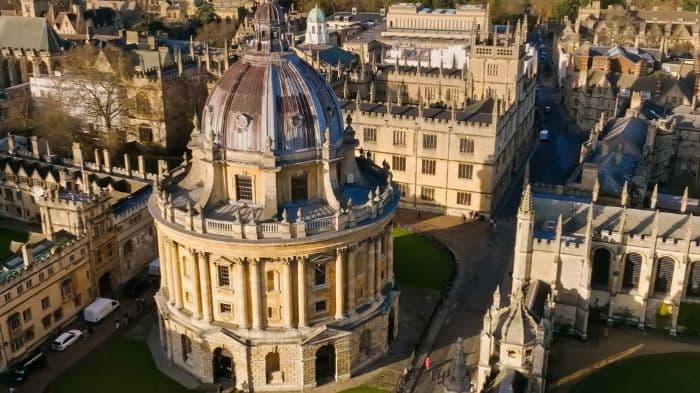
Three researchers at the University of Oxford have received 2026 Philip Leverhulme Prizes, recognising work in biological sciences, mathematics and statistics, and philosophy and theology.
The researchers were selected from more than 400 nominations. The awards are part of a national programme run by the Leverhulme Trust, which announced 30 prize winners across six subject areas this year. Each recipient receives £100,000 to support research.

Dr Anjali Hinch of Oxford’s William Dunn School of Pathology received a prize in biological sciences for her research into genome biology and genetics, particularly the processes that shape genetic variation and genome stability.
Her work examines meiosis, the specialised process through which eggs and sperm are formed. Her research has investigated how genetic recombination occurs and how DNA repair can introduce mutations, with implications for understanding inheritance, reproduction and evolution.
Dr Kaibo Hu of Oxford’s Mathematical Institute was recognised in mathematics and statistics for his work on numerical analysis and computational methods used to model complex physical systems.
His research focuses on mathematical techniques that help computer simulations preserve important structures and properties of the systems being studied. These methods have applications in areas including fluid dynamics, materials, magnetic plasmas and numerical relativity.
Professor James Read of Oxford’s Faculty of Philosophy received a prize for his work in the philosophy of physics. His research examines the conceptual and philosophical questions raised by modern physical theories, including relativity and quantum gravity.
With the prize funding, Read plans to investigate fermionic quantum fields, which are central to the mathematical description of matter.
Funding offers flexibility for future research
The Philip Leverhulme Prizes recognise researchers whose work has already attracted international recognition and whose future careers show exceptional promise. The £100,000 award can be used for any purpose that advances the recipient’s research, giving winners flexibility to pursue new questions and develop their work.
Hinch said the funding would offer her team the freedom to explore new scientific questions. Hu said it would help him develop mathematical methods and bring researchers together through collaborative visits and lectures. Read said the award would allow him to focus on questions about the nature of matter and the foundations of physics.
The prizes commemorate Philip, the third Viscount Leverhulme, and his contribution to the work of the Leverhulme Trust. The 2026 awards cover biological sciences, history, law, mathematics and statistics, philosophy and theology, and sociology and social policy.

Why Were the Meeting Records Made Public?

Significance of the Fifth Plenum

Major Security Breaches and the Role of Artificial Intelligence

Legal Provisions and Guardian Liability
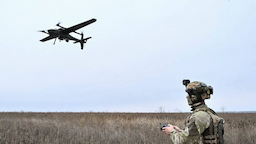
The Role of Satellite Networks in Ukraine’s War

Will AI Become Compulsory in Indian Schools? What NCERT’s New Curriculum Means
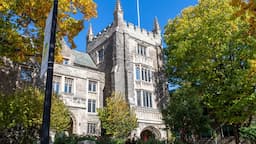
McMaster University researcher wins $250,000 fellowship to advance bone implant research
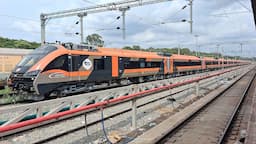
Vande Bharat Sleeper Train: Varanasi–New Delhi Route Approved, Check Route, Timings and Stops

DA Hike 2026: Centre Approves 3% Increase, Allowance Rises to 63%
Haryana Listed 500 CHEERAG Seats at School After Recognition Withdrawal, Records Show

Why Were the Meeting Records Made Public?
Significance of the Fifth Plenum
Major Security Breaches and the Role of Artificial Intelligence
Legal Provisions and Guardian Liability
The Role of Satellite Networks in Ukraine’s War
Will AI Become Compulsory in Indian Schools? What NCERT’s New Curriculum Means
McMaster University researcher wins $250,000 fellowship to advance bone implant research
Vande Bharat Sleeper Train: Varanasi–New Delhi Route Approved, Check Route, Timings and Stops
DA Hike 2026: Centre Approves 3% Increase, Allowance Rises to 63%
Haryana Listed 500 CHEERAG Seats at School After Recognition Withdrawal, Records Show
Copyright© educationpost.in 2026 All Rights Reserved.