Central European University forced out by Orbán eyes return to Budapest
University sees an opportunity to expand its Hungarian presence under the country’s new government, offering a potential boost to academic freedom and democratic renewal.
By Amin Masoodi · Updated

Central European University (CEU), which was forced to move most of its operations from Hungary to Austria under former prime minister Viktor Orbán, is considering expanding its presence in Budapest, signalling renewed confidence in the country’s democratic future.
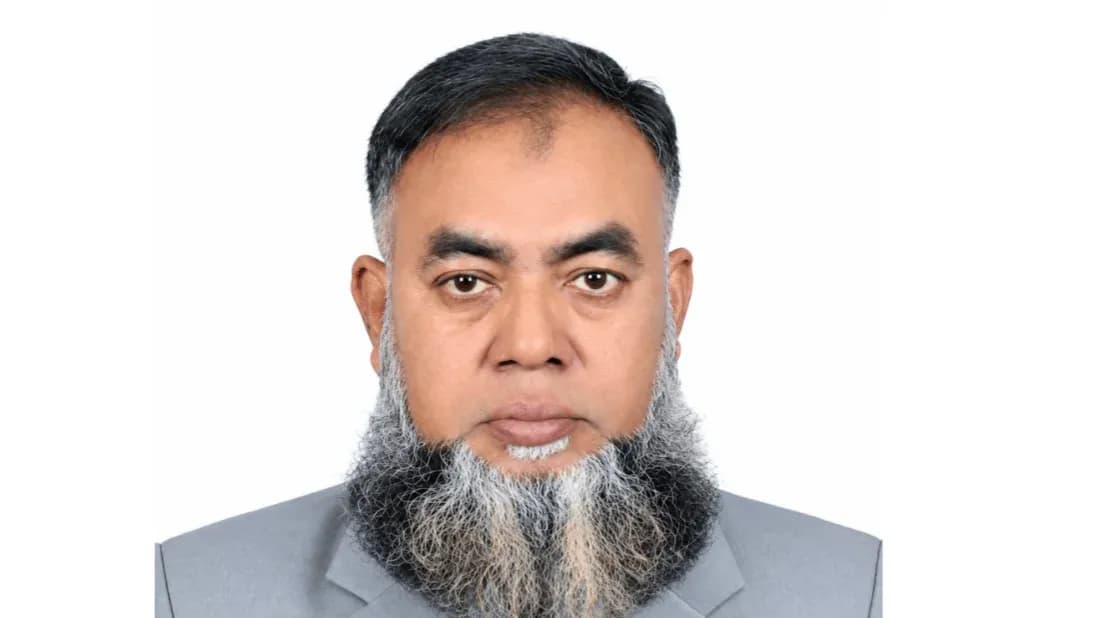
Carsten Q Schneider, the university’s interim president and rector, said CEU was interested in strengthening its programmes in the Hungarian capital, provided any expansion preserved the quality of education and the student experience. Although formal discussions with Hungary’s new government have yet to begin, Schneider indicated that both sides were open to engagement. “Our hand is reaching out, their hand is reaching out – it is just that they have many things to do,” he was quoted as saying by The Guardian.
The prospect of a renewed relationship comes after Péter Magyar’s landslide election victory in April, which ended Orbán’s long rule and raised expectations of sweeping reforms, including efforts to restore academic freedom, tackle corruption and rebuild democratic institutions. Founded in 1991 by Hungarian-American financier and philanthropist George Soros, CEU was established to promote democratic values and academic freedom across Central and Eastern Europe. However, its operations in Hungary came under increasing pressure after Orbán’s government introduced legislation widely viewed as targeting the institution.
The university was forced to shift its main academic activities to Vienna in 2019 after being prevented from awarding degrees in Budapest. Although the European Union’s top court struck down the controversial legislation, known as Lex CEU, in 2020, ruling that it violated the EU Charter of Fundamental Rights, the judgment came too late to reverse the university’s relocation.
CEU continues to maintain a presence in Budapest, employing 312 staff members, largely in administrative roles. However, most of its 476 staff members and all its teaching activities are now based in Vienna.
Schneider said restoring and expanding the university’s status in Budapest could become a powerful symbol of academic freedom and institutional resilience. However, he stressed that any move would depend on goodwill and independent funding rather than financial support or influence from the Hungarian government.
Describing CEU as a major asset to Hungary, he said the university was not seeking preferential treatment. “We don’t want special treatment. We are a great asset, so let’s work out something,” he said. Despite its interest in strengthening its Hungarian presence, CEU has no plans to move its operations wholesale back to Budapest. Schneider said the university was thriving in Vienna and that any expansion would have to protect academic standards and ensure students could access programmes across both campuses without logistical difficulties.
For instance, students combining subjects such as economics and history should not be required to travel more than 200 kilometres between Budapest and Vienna to complete their studies. CEU specialises in social sciences, law and humanities and has more than 1,400 students from 103 countries, most enrolled in master's and doctoral programmes.
Schneider also highlighted changing student demographics, noting that US students now form the university’s largest master's student group, accounting for 10% of the cohort for the first time in its history. The university has recorded an increase in applications from the US since Donald Trump returned to the White House and launched a campaign against several leading universities, involving funding cuts and efforts to influence institutional policies.
The developments have also prompted wider discussions among academics about protecting university autonomy and academic freedom in an increasingly polarised political environment.
Schneider said he had held informal conversations with US academics about responding to pressure from right-wing populist movements, warning universities against underestimating the political strategies directed at them.
“Don’t be naive for a second. These people have a plan, so it’s not by accident that they attack universities. They want to have cultural hegemony,” he said. However, he acknowledged that populist movements had also drawn attention to genuine concerns, including the tendency of some universities to reproduce existing social and economic elites.
For institutions facing political interference, Schneider said building alliances with other universities, students, alumni and parents was essential. He also stressed the need to defend academic disciplines that had become targets of political attacks, including gender studies. Reflecting on CEU’s struggle in Hungary, he recalled the mass demonstrations in Budapest in 2017, when tens of thousands of people took to the streets to defend the university against government restrictions.
He described the public support as “one of the most humbling experiences” of his life. Schneider, a German political scientist specialising in democracy and political transitions, believes Hungary now has an opportunity to demonstrate how a country can recover from years of illiberal rule.
He said Magyar had succeeded in turning Orbán’s own political machinery against him, adding that his experience in defeating one of Europe’s most influential populist leaders could prove valuable. However, he cautioned that bringing down an increasingly authoritarian political system and building a functioning democracy required different skills. “The people and skills that you need to bring a non-democratic regime down are not the same and sometimes the opposite of what it takes to establish a democracy,” he said.
The central question, he added, was whether Magyar possessed the political vision and institutional understanding needed to rebuild liberal democracy for the 21st century. Schneider suggested Hungary could emerge as the world's first “post-illiberal democracy”, potentially offering a model for countries seeking to restore democratic institutions after years of populist rule.
Yet he acknowledged that such an outcome was far from guaranteed. Hungary's difficult economic circumstances and the future direction of Magyar's Tisza party could complicate the transition. The real test, he suggested, would come when the new government begins losing public support and internal divisions emerge.
Would Magyar then allow a competitive multiparty democracy to flourish, even if it meant facing electoral defeat? That question, Schneider said, remains unanswered. For CEU, however, the possibility of rebuilding its presence in Budapest represents more than an institutional opportunity. It offers a chance to reconnect with the city from which it was forced to retreat and to assess whether Hungary is ready to make academic freedom a cornerstone of its democratic renewal.
Also read