South Korea tightens Suneung security after AI cheating scandal, what can India learn?
South Korea deploys 8,400 additional supervisors, introduces device inspections and tougher penalties as concerns grow over hidden cameras, wireless communication and AI-assisted malpractice in competitive examinations.
Written by: Pragya Kumari · Updated:
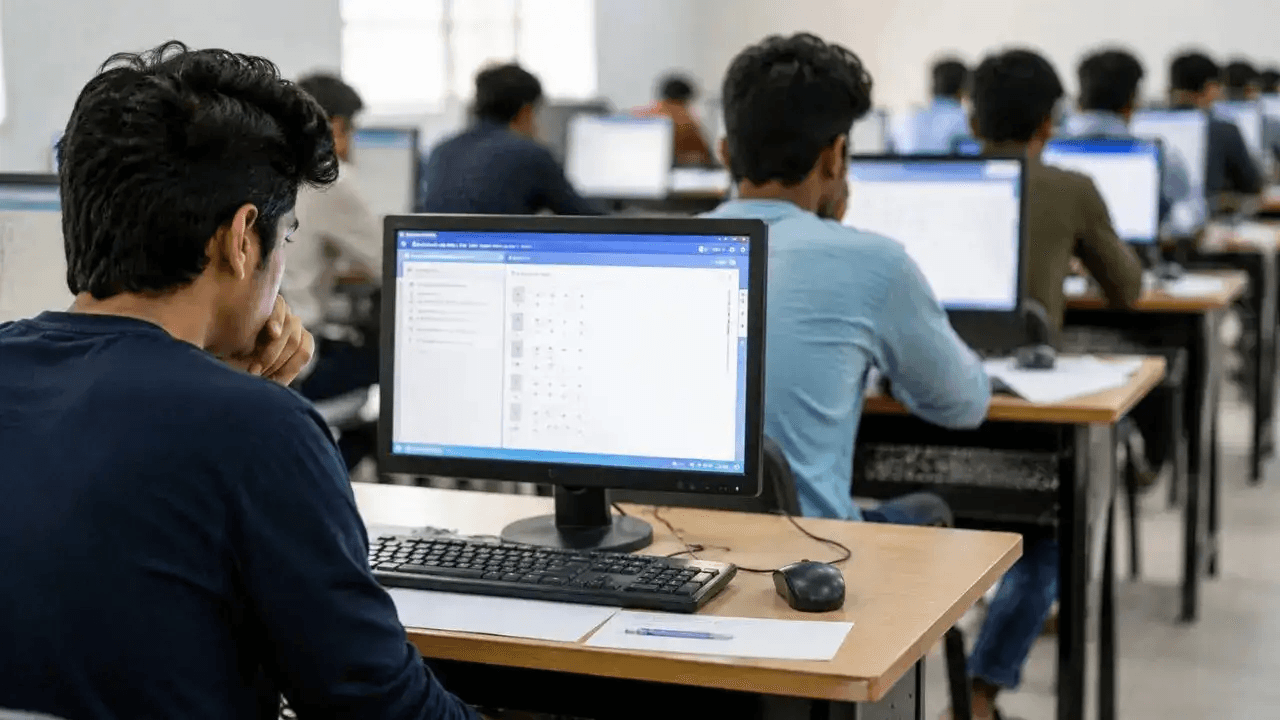
South Korea has introduced stricter security arrangements for its annual university entrance examination, Suneung, after a cheating scandal involving the use of hidden cameras, smartphones and artificial intelligence (AI) tools raised concerns about the credibility of the country's examination system.
More than 5.5 lakh students are expected to take the College Scholastic Ability Test (CSAT) on Nov 19 at approximately 1,300 examination centers nationwide. The eight-hour examination covers subjects including Korean and mathematics and plays a crucial role in determining admission to prestigious universities.
The revised anti-cheating arrangements include inspections of candidates' glasses, checks of clothing buttons and restrictions on personal stationery. Authorities have also deployed approximately 8,400 additional personnel to strengthen surveillance at examination centers.
The measures were introduced after the highest scorer in South Korea's national tax accountant examination admitted to using a concealed microcamera and AI assistance to obtain answers. The incident has triggered widespread debate about examination integrity and the growing challenges posed by technology-enabled cheating.
At an examination center in central Seoul, several students expressed concern about the new restrictions and the possibility of being suspected of unfair practices despite following examination rules.
"Now, I wonder if it would have been better to postpone the exam altogether, and come up with a proper plan," said high-school student Kwak Yoo-Min. He had initially planned to wear clothes with buttons but chose a T-shirt instead because he feared that supervisors might suspect him of cheating.
Jang San, another high-school student appearing for the examination, said he hoped every candidate would approach the test fairly and honestly.
The controversy has also affected students who have spent months preparing for the examination. An 18-year-old Jang said the cheating incident had raised concerns about whether genuine academic effort would receive fair recognition.
"I had worked hard and thought I was doing just as well as everyone else," said 18-year-old Jang. "But all that effort could potentially go to waste because someone uses AI just once."
The South Korean government has announced tougher penalties for candidates caught cheating. The disqualification period has been extended from one year to 10 years, and offenders could also face criminal proceedings.
President Lee Jae Myung also called for financial incentives to encourage people to report examination malpractice. In a post on X, he proposed rewards of at least 100 million won ($75,040) for individuals who report cheating attempts.
Authorities have additionally introduced measures to identify electronic devices that candidates might secretly carry into examination halls. At 8:30 am on Nov 19, emergency alerts were sent to mobile phones across the country, causing the devices to ring at maximum volume to help detect any unauthorized phones inside examination venues.
The Education Ministry later confirmed that 22 smartphones had been confiscated from candidates at examination centers. Authorities will investigate whether the devices were being used for cheating.
South Korea has also made several administrative arrangements to ensure that candidates can take the examination without external disruptions. Financial markets opened an hour later than usual on Thursday, while aircraft departures were suspended for 35 minutes during the English listening section to prevent noise from disturbing students.
Police vehicles were also kept on standby across the country to transport candidates who risked arriving late at their examination centers.
What are South Korea's new anti-cheating measures for Suneung 2026?
South Korea has expanded its examination surveillance system, introducing additional checks on candidates' clothing, accessories and electronic devices ahead of the November 19 College Scholastic Ability Test.
Under the revised arrangements, candidates wearing glasses must place them on their desks for inspection before entering examination halls. Supervisors will examine the frames for concealed cameras and other smart technology that could be used to record examination questions.
Authorities will also inspect candidates' clothing, particularly sleeves, collars and shirt buttons, to identify hidden recording equipment. Stickers will be placed over shirt buttons to prevent candidates from concealing microcameras in them.
Candidates have been advised to avoid wearing clothes with buttons to reduce the possibility of unnecessary suspicion during security checks.
The government has also increased the number of personnel assigned to examination security. Approximately 8,400 additional supervisors will be deployed across examination centers, according to Reuters.
Of these, around 1,800 personnel will concentrate on identifying concealed smart devices, while another 6,600 will monitor corridors and areas outside examination rooms.
Candidates are prohibited from carrying smartphones, smartwatches, smart glasses and other camera-equipped devices into examination halls. These restrictions are intended to prevent the unauthorized recording, transmission and processing of examination questions.
Supervisors will also use metal detectors to check candidates suspected of concealing electronic equipment. The government is examining further ways to restrict wireless communication during the examination.
However, temporarily blocking telecommunications signals across examination centers remains a complicated option. Legal restrictions on electronic signal jamming and the possibility of disrupting communications in surrounding areas have created challenges for implementing such a system.
Another measure involves cooperation with companies operating AI chatbots. The government has secured their assistance in investigations into suspected examination malpractice, including cases in which candidates might photograph questions and submit them to AI platforms to obtain answers.
The expanded surveillance system is intended to prevent candidates from using increasingly sophisticated technology to gain an unfair advantage in competitive examinations.
What triggered South Korea's examination cheating crackdown?
The immediate reason behind the stricter arrangements was a cheating scandal involving 34-year-old Han Won-seok, who secured the highest score in South Korea's national tax accountant examination.
Han admitted to using a concealed microcamera, a smartphone and generative AI tools to obtain answers during the examination.
According to reports, he photographed examination questions using the hidden camera and submitted the images to an AI tool. He then accessed the answers through his smartphone.
His performance attracted attention because he secured exceptionally high marks in both stages of the examination.
Han scored 397.5 out of 400 in the first-stage multiple-choice examination held in April. He subsequently obtained 663 out of 800 in the second-stage essay examination conducted in July.
His admission prompted questions about the effectiveness of existing examination security arrangements and the ability of authorities to detect technology-assisted cheating.
The incident also raised concerns about the use of generative AI in competitive examinations, particularly when candidates can potentially use concealed recording devices to capture questions and obtain automated answers.
The controversy has intensified scrutiny of South Korea's examination-based education system, where performance in competitive tests can have a substantial influence on university admissions and future career opportunities.
How does South Korea's Suneung compare with NEET-UG and JEE Main in India?
South Korea's Suneung and India's national-level entrance examinations are high-stakes tests that determine students' opportunities to enter prestigious educational institutions.
More than 5.5 lakh candidates are expected to appear for South Korea's 2026 College Scholastic Ability Test. India's National Eligibility cum Entrance Test for Undergraduate (NEET-UG) and Joint Entrance Examination (JEE Main) attract substantially larger candidate populations.
According to the 2026 examination figures, nearly 20 lakh candidates appeared for NEET-UG, while more than 15 lakh unique candidates took JEE Main across its two sessions.
The comparison highlights the scale of India's national-level entrance examinations alongside South Korea's university admission test.
Examination | Candidates appeared in 2026 |
| South Korea Suneung (expected) | More than 5.5 lakh |
| NEET-UG | 19,99,895 |
| JEE Main (unique candidates) | 15,38,468 |
India's competitive entrance examinations have also faced repeated allegations and reported cases of unfair means (UFM). These include impersonation, question paper leaks, unauthorized access to examination material and the use of electronic devices inside examination centers.
The National Testing Agency (NTA), which conducts examinations such as NEET-UG and JEE Main, has periodically reported instances of candidates attempting to bypass examination security arrangements.
Such incidents have increased the focus on examination monitoring, candidate verification and the prevention of technology-assisted malpractice.
A recent case in Jammu and Kashmir has also highlighted the challenges of preventing electronic communication-based cheating in competitive examinations.
Police arrested 14 people, including examination candidates and alleged facilitators, for attempting to help candidates cheat in the Jammu and Kashmir Services Selection Board (JKSSB) Finance Assistant examination.
According to the police, the group allegedly planned to use electronic communication devices to transmit answers to candidates inside examination halls.
Investigators seized eight small wireless sets, 22 mobile phones and other electronic equipment. Police claimed that the operation was intercepted before answers could be transmitted to candidates appearing for the examination.
The incident reflects how examination malpractice can involve networks of candidates and alleged facilitators, rather than being limited to individual attempts to use prohibited devices.
Why does South Korea make extensive arrangements for Suneung?
South Korea's College Scholastic Ability Test is considered one of the country's most consequential academic examinations. Performance in Suneung can influence admission to leading universities, making the examination particularly important for students seeking competitive academic and professional opportunities.
The government makes extensive administrative arrangements every year to ensure candidates can reach their examination centers and complete the test without unnecessary disruptions.
Traffic management is a major part of these preparations. Office hours and financial market operations are adjusted to reduce congestion and help students arrive at their designated venues on time.
Air traffic is also regulated during the English listening section. Aircraft are not permitted to take off for 35 minutes during the relevant period to minimize noise that could interfere with candidates' concentration.
Police personnel and vehicles remain available across the country to assist students who are running late. Officers can transport candidates to examination centers to prevent them from missing the test because of travel-related delays.
These arrangements demonstrate the importance attached to Suneung in South Korea, where the examination is treated as a nationwide event requiring coordination between educational authorities, transport agencies, financial institutions and law enforcement agencies.
Despite calls from some lawmakers to postpone this year's examination until stronger anti-cheating arrangements could be implemented, Education Minister Choi Kyo-jin rejected the proposal.
He said delaying the examination would create greater disruption for students, who had already prepared for the scheduled test.
The government has therefore proceeded with the Nov 19 examination while introducing additional security checks and stricter penalties to address concerns about cheating and protect the credibility of South Korea's university entrance system.
Also read