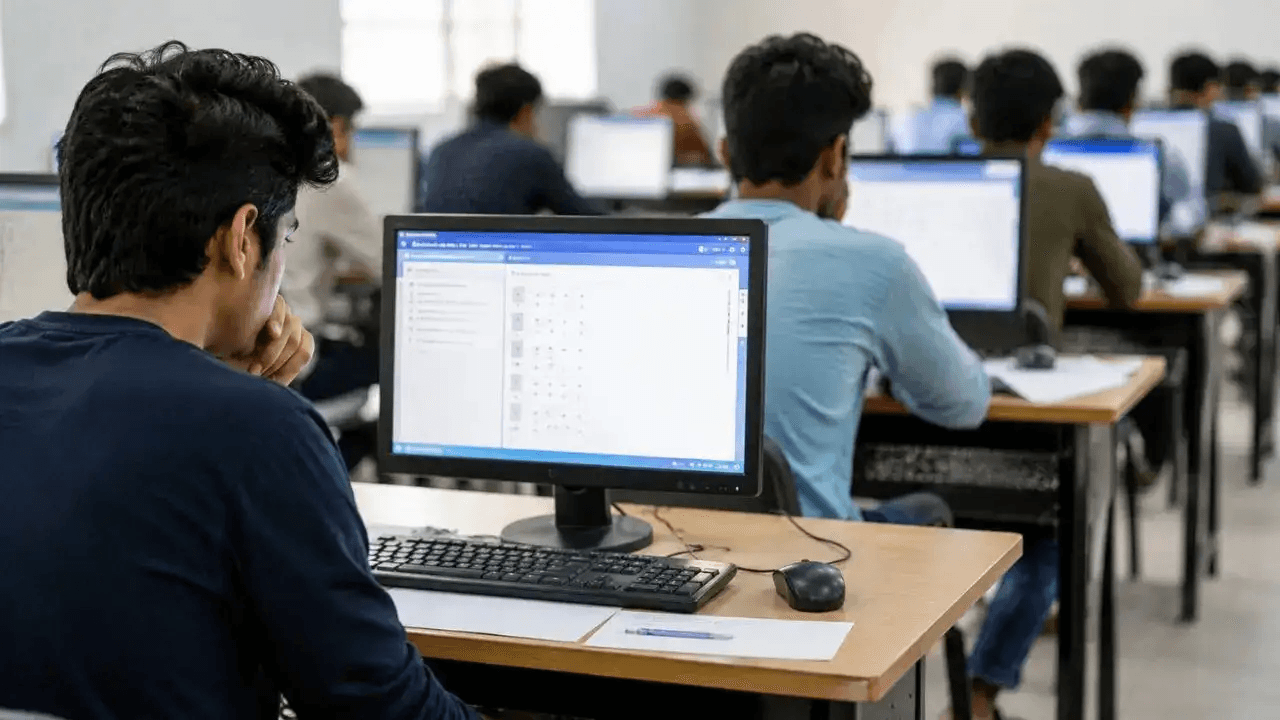
China expands AI education in schools: Can technology solve teacher shortages without weakening critical thinking?
The nationwide initiative includes AI-powered lessons, robotics training and teacher development, with schools experimenting with personalized instruction while addressing concerns over student assessment, privacy and technology dependence.
By Pragya Kumari · Updated
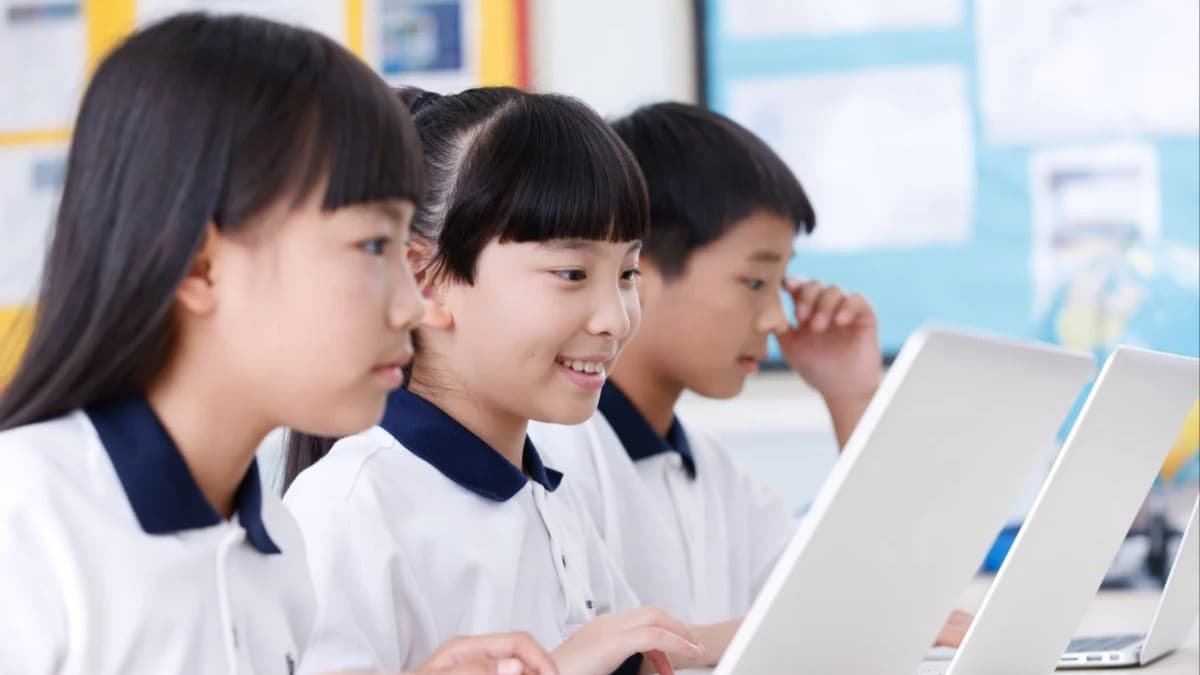
China is rapidly integrating artificial intelligence (AI) into school education, with students building applications, learning through AI-powered lessons and experimenting with robotics as the country works toward making AI literacy universal among schoolchildren by 2030.
From elite private schools in Beijing to rural institutions in Anhui province, AI is increasingly being used to transform classroom teaching, personalize learning and address shortages of qualified teachers.
However, the nationwide push is also raising concerns about students becoming overly dependent on technology, weakening independent thinking and developing learning habits centered on quick answers rather than deeper understanding.
A 13-year-old student at Beijing New Talent Academy, Peng Gaodi, has already developed more than 200 applications using AI. His projects include a homework submission platform and a secondhand marketplace.
The student also pitches his ideas to real investors, admires entrepreneur Elon Musk and hopes to become a computer scientist.
At the school, other students are learning to program humanoid robots for soccer, participating in coding workshops and practicing on flight simulators. Posters across the 30-acre (12-hectare) boarding school campus encourage students to "create a virtual world in five minutes with AI vibe coding."
Peng said AI has changed the way he approaches academic challenges and seeks help with difficult subjects.
"In the past, if I couldn't solve a problem at home, I'd have to call my teacher, which increases their workload," Peng said. "But now I can just ask AI to help me learn better. It noticeably improved my learning efficiency."
Access granted to Reuters at the Beijing New Talent Academy, which charges $39,000 annually and has more than 2,000 students, offered a glimpse into China's growing investment in AI-based education.
The institution has developed its own digital innovation curriculum covering AI, robotics and programming. It has also created a classroom AI model incorporating features from popular Chinese AI systems.
The school represents one of the most advanced examples of China's broader effort to introduce artificial intelligence into classrooms across the country.
With nearly 200 million students enrolled in primary and secondary education, China is conducting one of the world's largest experiments in AI-assisted learning.
The technology is increasingly becoming part of teaching practices, educational infrastructure and student assessment across different regions.
China aims to make AI literacy universal among school students by 2030
China has set a national objective of ensuring that schoolchildren develop AI literacy by 2030. Government guidelines outline a gradual learning pathway based on students' age and educational levels.
Younger students are expected to understand basic AI concepts, while older learners will progress toward using advanced tools and applying critical-thinking skills to complex projects.
The country's education strategy reflects its ambition to strengthen technological capabilities and prepare students for an economy increasingly shaped by artificial intelligence.
China also views AI education as an important component of its economic development and technological competition with the United States. Early exposure to emerging technologies is expected to encourage homegrown innovation and support future breakthroughs.
A weeks-long Reuters investigation examined school visits, interviews with more than a dozen educators, parents and experts, and over 100 academic papers and government procurement records.
The investigation found that China's AI education expansion is extensive but uneven. Schools are adopting different approaches, with limited agreement on what AI literacy should include, how it should be taught or how student progress should be measured.
China vs US: Government pushes AI education through nationwide policies
China's state-led approach to AI education is moving faster than comparable initiatives in many Western countries.
President Xi Jinping has described AI education as fundamental to educational reform, reflecting the government's emphasis on preparing students for technological changes.
By comparison, the United States relies on decentralized and nonbinding guidance. It also lacks dedicated funding and nationwide state-level teacher standards for AI education, according to Stanford University's 2026 AI Index.
A Reuters review of provincial "AI+ education" policy blueprints found extensive government coordination across China. Nearly half of the country's provinces and municipalities have introduced binding plans for integrating AI into education.
Different regions are adopting specific targets and approaches based on their educational priorities.
- Shanghai: The city has mandated at least 30 hours of annual AI skills instruction for each grade.
- Beijing: The municipal government plans to introduce AI into student health monitoring and establish 100 AI pilot demonstration schools.
- Ningxia and Gansu: These regions plan to incorporate AI literacy directly into high-stakes school entrance examinations by 2027.
The policy documents also indicate that AI applications are expanding beyond conventional coding lessons and digital tutoring.
In Guizhou, authorities are integrating facial recognition and behavioral analysis into classrooms. Shanghai is deploying AI systems for monitoring students' mental and physical health.
Yunnan has plans to equip 14,000 classrooms with systems that record and analyze lessons using AI.
These developments are turning Chinese schools into large-scale testing grounds for emerging educational technologies, while raising questions about student privacy, surveillance and the impact of automated monitoring.
How Chinese schools are using AI to improve classroom learning
The implementation of AI education differs considerably across Chinese schools. Some institutions encourage students to create applications and experiment with emerging technologies, while others use AI to address shortages of educational resources.
Educators are also trying to determine how artificial intelligence can support learning without reinforcing rote-learning practices that China's policymakers want to move away from.
Ted Mo Chen, chief of staff at Chinese education technology startup ClassIn, said schools were adopting the technology at different levels of effectiveness.
"Implementation is all over the place," Chen said, adding that few schools he had visited had integrated AI into their curriculum effectively.
China's Ministry of Education did not respond to a request for comment.
AI-powered classrooms help rural Chinese schools address teacher shortages
While Beijing's affluent schools are introducing advanced technology and robotics projects, institutions in rural China are using AI to address a different challenge: the shortage of qualified teachers.
At Funan County Qinqing High School in rural Anhui province, approximately 4,000 students are learning core subjects through AI-generated lessons.
Most of the school's students are children of migrant workers, according to headmaster Yang Tianliang.
The institution uses personalized lessons delivered through tablets, with AI agents asking students questions instead of immediately providing answers when they encounter difficulties.
The approach is intended to encourage learners to think through problems and develop their understanding rather than simply receive solutions.
"An AI agent doesn't suffer from fatigue, and it never makes a student feel stupid for asking a basic question," Yang said.
The school uses AI models developed by Chinese technology companies, including Alibaba's Qwen, ByteDance and Z.AI.
These systems generate educational text, images, interactive lessons and videos for classroom use.
Yang said the institution had also introduced small-group projects to encourage interaction among students and improve collaborative learning.
He credited the AI-based teaching approach with helping increase university admission rates from below 60% to 90% in recent years.
However, Reuters could not independently verify the figures. Yang estimated that at least 200 other schools across China were experimenting with similar AI-based educational systems.
An Alibaba spokesperson said the company's open-source AI models and Cloud for Youth Programme provide students with direct access to AI tools and educational resources.
The use of AI at Funan County Qinqing High School illustrates how the technology is being adopted beyond well-funded urban institutions.
For rural schools, AI-powered lessons could help address gaps in teaching resources and provide students with access to personalized academic support.
China expands AI courses, commits millions to classroom technology
China's Ministry of Education has encouraged schools to introduce AI courses, train teachers and establish pilot programs since 2024.
The approach is designed to gradually introduce artificial intelligence across different stages of school education.
Primary school students are introduced to basic AI tools and concepts. Older students learn how AI systems operate and use them for increasingly advanced projects.
A Reuters review of more than 100 government procurement documents found that authorities had committed at least $31 million over the past year to AI classroom equipment, teacher training and educational platforms.
The actual investment is likely to be considerably higher because spending is distributed across thousands of local budgets and has not been officially consolidated.
Consultancy iResearch estimates that China's spending on education digitalization reached just under $83 billion in 2025.
Generative AI projects accounted for 46% of AI-related education procurement, according to the consultancy.
The spending reflects the growing role of artificial intelligence in China's education infrastructure, from classroom equipment and digital learning platforms to teacher development and student support systems.
AI education in China faces challenges over student learning outcomes
Despite the rapid expansion of AI education, China has yet to establish a standardized framework for measuring AI literacy among school students.
The absence of common assessment standards has allowed schools to experiment with different teaching methods, but it has also made it difficult to evaluate the effectiveness of these initiatives.
Selena Guo, portfolio lead at research firm China Policy, highlighted the lack of established assessment mechanisms for evaluating students' AI competencies.
"Mature, widely adopted assessment rubrics for compulsory school-level AI competency are still being built," Guo said.
Research examining the impact of artificial intelligence on children's education has also produced mixed findings. While some studies indicate short-term academic improvements, others raise concerns about students' long-term intellectual development.
A recent study involving nearly 27,000 Chinese teenagers found that AI adoption was associated with an 18% increase in homework scores.
However, the same research reported a 20% decline in monthly examination scores within six months. The largest declines were recorded in social science subjects.
Another nationwide survey conducted in China this year covered more than 320,000 students. It identified educational benefits associated with AI use but also highlighted concerns about technology dependence and declining independent thinking.
The survey found that students using AI at least three times a week demonstrated lower memory, comprehension, analytical and creative skills than those using it less frequently.
These findings do not establish that AI use directly caused the decline in students' cognitive abilities. However, they reinforce concerns among educators about a phenomenon known as cognitive outsourcing.
Cognitive outsourcing occurs when students increasingly delegate mental tasks, problem-solving and information processing to technology instead of developing those abilities independently.
Chen from ClassIn warned that excessive reliance on AI could prevent children from developing their own reasoning abilities.
Children's thinking processes could be "completely bypassed" if schools failed to stop them from depending on AI for quick answers, he cautioned.
Chinese academic research reviewed by Reuters also suggested that students in rural areas could be particularly vulnerable to cognitive outsourcing and device addiction.
The findings have intensified discussions about how schools can introduce AI without allowing technology to replace essential learning processes.
AI in schools: Teachers and parents seek balance between technology and independent thinking
As artificial intelligence becomes more common in Chinese classrooms, some educators and parents are developing safeguards to ensure that students continue to think independently.
At Beijing New Talent Academy, Peng Gaodi said he tries to solve coding problems on his own before turning to AI for assistance.
Rather than asking the technology to provide complete solutions, he seeks hints that can help him understand difficult concepts.
He also said using AI has helped deepen his understanding of mathematics. "I think AI is a tool that helps me, not something I depend on."
His approach reflects an effort to use artificial intelligence as a learning assistant rather than a substitute for independent problem-solving.
Parents are also introducing rules to ensure that children understand the concepts behind AI-generated answers.
Rita Luan, a Beijing parent whose 11-year-old daughter attends a leading public school in the capital, said she was concerned about ensuring that AI improves learning instead of allowing students to take shortcuts.
She said her daughter's school primarily teaches AI concepts rather than focusing on practical applications.
To supplement classroom instruction, Luan introduces her daughter to ByteDance's Doubao chatbot at home under close supervision.
She teaches her how to frame prompts and interact with the chatbot while ensuring that she first attempts academic problems independently.
Luan follows a specific rule when her daughter encounters difficult mathematics questions. She must spend 15 minutes trying to solve the problem before seeking help from AI.
The parent also revisits the same question several days later and asks her daughter to solve it without technological assistance.
This helps establish whether the child has understood the method used to reach the answer rather than simply memorized an AI-generated solution.
"The point is to make sure she actually digested the solution," she said.
Can China's AI education model balance innovation and critical thinking?
China's expansion of AI education highlights the growing importance governments are placing on preparing school students for an increasingly technology-driven future.
The country's approach combines classroom AI instruction, robotics, personalized learning platforms, teacher training and large-scale investment in educational technology.
However, the rapid adoption of these systems has also exposed challenges related to assessment standards, student privacy, technology dependence and independent thinking.
While AI-powered learning could help address teacher shortages and improve access to educational resources, its effectiveness will depend on how schools integrate the technology into teaching practices.
The experience of Chinese schools also highlights an important question for education systems worldwide: how can students learn to use artificial intelligence effectively without becoming dependent on it?
For China, achieving universal AI literacy by 2030 will involve more than introducing technology into classrooms. It will also require developing teaching standards and assessment methods that ensure students retain the ability to analyze, question and solve problems independently.
Also read