Pakistan-China education partnerships open new pathways for student and faculty exchanges
The initiatives cover technical training in green energy, nursing, robotics and e-commerce, alongside faculty development, Chinese language program and industry-linked employment opportunities across emerging sectors.
Written by: Pragya Kumari5 Min Read · Updated:
Pakistan and China are expanding cooperation in higher education, vocational training and professional skills development through a series of agreements and joint initiatives aimed at creating more opportunities for students, faculty members and young professionals.
The partnerships include international academic qualifications, technical training, student exchanges and employment-oriented programs across several sectors.
The latest developments also involve the establishment of specialized training centers and joint institutions to strengthen links between educational organizations and industries in both countries.
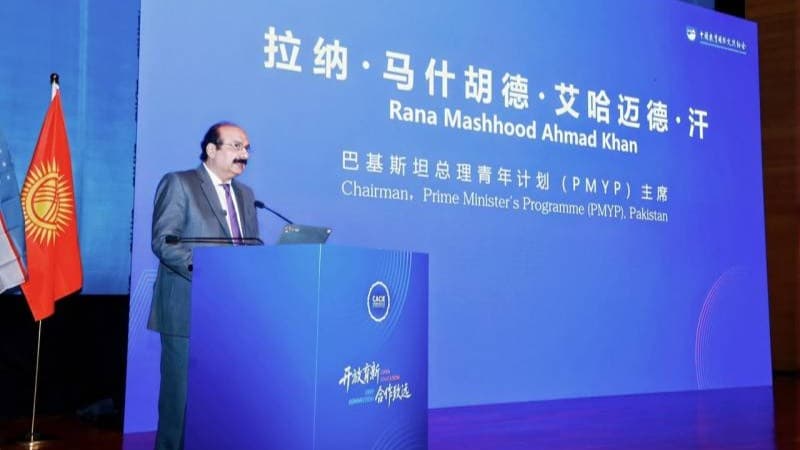
Pakistan secured 11 cooperation agreements with Chinese institutions and advanced 14 joint education and skills development projects during a weeklong visit to China by Prime Minister's Youth Programme (PMYP) Chairman Rana Mashhood Ahmad Khan from Oct 27 to Nov 3.
The country recorded the highest number of signings among participating nations at the 27th China Annual Conference and Expo for International Education (CACIE 2026), according to a press release received here.
The agreements were signed or witnessed by Mashhood and cover several academic and employment-oriented fields. These include mechatronics, green energy, mobile communications, nursing, modern agriculture, cross-border e-commerce and internationally recognized skills certification.
Of the 11 agreements, three directly involve the Prime Minister's Youth Programme. These partnerships were established with the China Global Professional and Technical Certification Center, Jilin Electronic Information Vocational and Technical College, and Peili Vocational College.
The other eight agreements involve Pakistani educational and technical institutions working with Chinese vocational organizations. These include the University of Lahore, Ghazi University, NUTECH Karachi, Preston Institute of Management Science and Technology, and Punjab Technical Education and Vocational Training Authority (TEVTA).
14 joint projects to expand technical education and training
Alongside the agreements, the visit resulted in the launch or announcement of 14 collaborative education and skills initiatives. These projects are intended to develop specialized training facilities and strengthen institutional cooperation between the two countries.
The initiatives include an International Nursing Talent Training Base, a Cross-Border E-Commerce Talent Training Base, Pakistan Tiangong College and a Joint Teacher Training Centre.
New cooperation committees focusing on industrial robotics and electronic information engineering are also part of the proposed initiatives. These bodies are expected to support collaboration in technical education and help align training programs with emerging industrial requirements.
The partnerships cover areas where specialized technical knowledge and professional qualifications are increasingly important. They also seek to connect academic learning with practical skills required by employers across different industries.
China college trains 10 Pakistani faculty members
The education partnerships have already recorded progress in faculty development and student exchange programs. Jilin Electronic Information Vocational and Technical College has trained 10 Pakistani faculty members as part of its cooperation with Pakistan.
The Chinese institution is also scheduled to admit 15 Pakistani students to its Chinese language program in November. The initiative will provide another route for academic exchange and help strengthen educational links between institutions in both countries.
Faculty training and student enrollment form part of the wider cooperation framework, which aims to expand international learning opportunities and professional development for Pakistani participants.
Pakistan, China and partners launch green energy training initiative
Pakistan has also joined China and other international partners to establish a collaborative platform for renewable energy skills development.
The International Green Power Talent Development Base was jointly launched with the China Electricity Council, Thailand's Office of the Vocational Education Commission and TANG International Education Group.
The initiative is intended to promote international cooperation in green energy training and support the development of a skilled workforce for the renewable energy sector.
Its participation also extends the education partnership beyond bilateral cooperation, bringing institutions from Pakistan, China and Thailand together to work on technical and vocational skills development.
Railway training and employment opportunities under ML-1 project
Discussions during Mashhood's visit also extended to technical training and employment opportunities connected with Pakistan's railway modernization plans.
China Railway Group Secretary Han Hui travelled to Pakistan after holding discussions with the PMYP chairman. His visit was aimed at initiating practical work on training and employment opportunities associated with the Main Line-I (ML-1) railway upgrade.
The proposed cooperation is linked to the technical workforce requirements of the railway project. It is also expected to connect vocational training with infrastructure development and industrial needs.
PMYP chairman highlights industry-linked vocational education
Addressing the Belt and Road International Forum on Industry-Education Cooperation, Mashhood highlighted the importance of connecting vocational education with the requirements of industries.
He emphasized expanding joint academic programs, introducing internationally recognized certifications and improving the professional capabilities of vocational instructors.
His remarks focused on strengthening cooperation between educational institutions and industry partners. The approach is intended to make technical training more relevant to employment requirements while expanding access to professional qualifications.
Mashhood also met Pakistan's Ambassador to China Ali Asad Gillani and senior officials at the Pakistani Embassy to discuss institutional support for education partnerships and the implementation of cooperation agreements.
Separate discussions with Thailand's Office of the Vocational Education Commission focused on expanding technical education and vocational training collaboration among countries participating in the Belt and Road initiative.
PMYP China Secretariat to coordinate agreements
To support the implementation of the partnerships, the Prime Minister's Youth Programme has established a China Secretariat at the Beijing headquarters of TANG International Education Group.
The secretariat will coordinate activities between government departments, educational institutions and industry partners. Its responsibilities will include facilitating cooperation and supporting the implementation of the agreements and joint projects.
The arrangements are expected to strengthen educational ties between Pakistan and China while expanding access to technical training, international qualifications and professional development.
Through the partnerships, Pakistani students, faculty members and skilled workers are expected to gain additional opportunities for international exposure, specialized training and employment pathways.
The initiatives also seek to strengthen institutional cooperation and connect education with the changing requirements of the global workforce.
Also read