


Flights and trains delayed as hazardous air quality forces authorities to enforce toughest pollution controls.
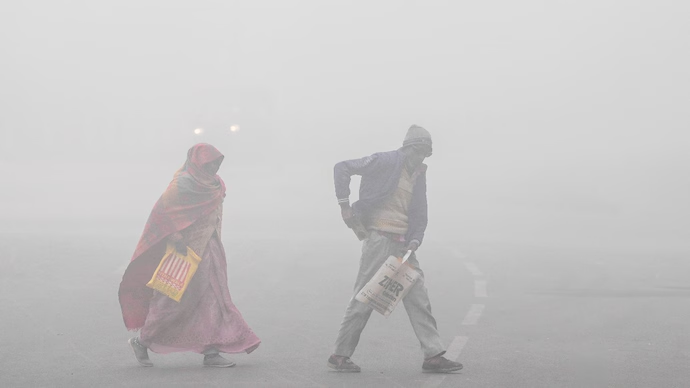
Dense, suffocating fog blanketed Delhi-NCR on January 18, plunging visibility to zero and bringing air and rail travel to a near standstill amid a relentless cold wave. The city shivered through a minimum temperature of 5.3°C well below seasonal norms, while the Air Quality Index (AQI) soared to a hazardous 439, choking the capital under a toxic haze.
At Safdarjung, visibility was completely wiped out, forcing airlines including Air India and IndiGo to warn travelers of widespread delays. Flight operations at Indira Gandhi International Airport faced a staggering 35% delay in departures and 27% in arrivals, with trains bearing the brunt as dozens suffered delays stretching up to 12 hours.

Premier services like the Rajdhani, Duronto, and Garib Rath Express were among those severely disrupted.
The Commission for Air Quality Management (CAQM) responded swiftly, imposing the strictest GRAP-IV pollution curbs—measures reserved for the gravest smog crises—to combat the escalating health hazard.
Experts cited a deadly combination of meteorological factors including a western disturbance and stagnant weather conditions that trapped pollutants in the capital’s atmosphere, worsening the already severe air quality.
Despite a slight warming trend during the day, winter nights remain biting cold as Delhi’s temperatures linger below those of northern hill stations like Shimla and Dharamshala. Beyond Delhi-NCR, dense fog plunged cities such as Bareilly, Lucknow, and Kushinagar into near-zero visibility, amplifying travel chaos across northern India.
With hazardous smog choking the city’s air and transportation snarled, residents brace for continued disruption amid one of the harshest winter spells in recent memory.

UAE schools tighten photo rules to protect children’s privacy
.avif&w=256&q=75)
UNC settles 18 federal probes under Trump administration deal

82% of Indian students worry AI may be weakening deep learning, HP survey finds

Delhi Police may seek further custody of CJP leaders Saurav Das, Ashutosh Ranka

SBI probes data leak after personal details in 3,897 customer records surface on dark web
Delhi Police may seek further custody of CJP leaders Saurav Das, Ashutosh Ranka
SBI probes data leak after personal details in 3,897 customer records surface on dark web

Sharjah schools set boundaries for AI use in homework and exams

Former MIT scientist wins $6 million defamation verdict in misconduct dispute

McMahon highlights Trump’s push to return education powers to states

UAE schools tighten photo rules to protect children’s privacy
UNC settles 18 federal probes under Trump administration deal
82% of Indian students worry AI may be weakening deep learning, HP survey finds
Delhi Police may seek further custody of CJP leaders Saurav Das, Ashutosh Ranka
SBI probes data leak after personal details in 3,897 customer records surface on dark web
Delhi Police may seek further custody of CJP leaders Saurav Das, Ashutosh Ranka
SBI probes data leak after personal details in 3,897 customer records surface on dark web
Sharjah schools set boundaries for AI use in homework and exams
Former MIT scientist wins $6 million defamation verdict in misconduct dispute
McMahon highlights Trump’s push to return education powers to states
Copyright© educationpost.in 2026 All Rights Reserved.