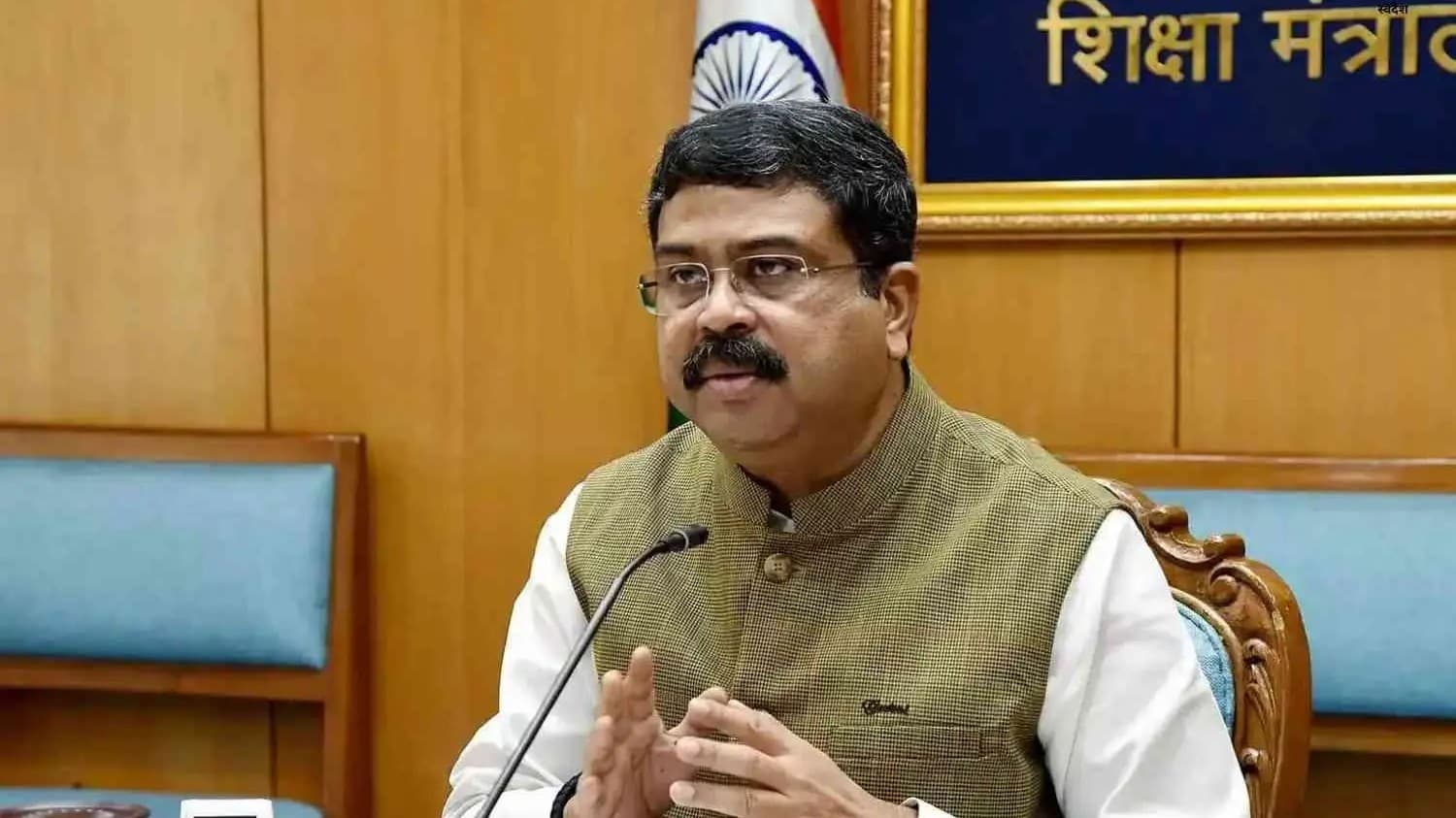
Union Education Minister Dharmendra Pradhan has addressed rising concerns over the University Grants Commission’s 2026 equity regulations, assuring students, faculty, and critics that the rules “will not lead to discrimination, and no one can misuse the law.”
The minister’s statement, shared on social media by a leading news agency, comes amid widespread protests on campuses and online against the regulations.

“I want to very humbly clarify that no one will be discriminated against or oppressed by new UGC rules. The law will not be misused by anyone,” Pradhan said.
He added, “Whether it's UGC, central government, or state government, it will be our responsibility not to let it be misused.”
Pradhan emphasized that the regulations have been formulated within the framework of the Indian Constitution and under Supreme Court guidance, ensuring protection against any form of discrimination.
The rules, notified on Jan 13, 2026, require higher education institutions to establish Equal Opportunity Centres, Equity Committees, grievance redressal systems, and 24/7 helplines to address caste-based and other forms of discrimination.
The government says these measures aim to create safer, more inclusive learning environments for all students and strengthen anti-discrimination frameworks.
Critics, however, have raised concerns about vague definitions, lack of procedural clarity, and potential misuse against general category students.
Protests have taken place in Delhi, Uttar Pradesh, Rajasthan, and Bihar, and a Public Interest Litigation challenging the regulations has been filed in the Supreme Court.
Legal experts are divided on the issue. Senior Advocate Indira Jaising, representing petitioners in earlier proceedings, defended the regulations, saying, “I don’t see what the cause of complaint is. On the contrary, petitioners have been complaining that the rules still do not adequately protect SC/ST students. The new regulations have expanded their reach even to private universities. They follow the general mandate of Article 15 of the Constitution. The criticism is certainly misplaced.”
Conversely, Advocate Neeraj Singh, a petitioner challenging the regulations, argued, “The grounds of challenge are that the classification made by the UGC is exclusionary and hostile towards SC, ST, and OBC communities. It is violative of Articles 14, 15, and 21 of the Constitution.”
He is seeking a declaration that Provision 3 of the regulations be struck down as ultra vires.
Advocate TK Nayak said the regulations are open to judicial review but noted that courts usually intervene only on constitutional grounds.
He called the guidelines “a necessary and overdue intervention” and said making equity mechanisms mandatory sends a strong signal that discrimination on campuses must be addressed as a governance responsibility.
Nayak added that effective implementation will require procedural clarity, neutral oversight, and clear definitions to distinguish between systemic discrimination and interpersonal conflicts.
The Supreme Court has now agreed to hear a plea challenging the regulations, with Chief Justice Surya Kant and Justice Joymalya Bagchi noting concerns that the definition of caste-based discrimination excludes individuals from the general category.
The new regulations require all higher education institutions to form equity committees with members from OBC, SC, ST, persons with disabilities, and women.
The 2026 regulations replace the largely advisory 2012 framework, aiming to strengthen grievance redressal and promote equity across higher education.
Meanwhile, student groups and organizations continue to demand a rollback, intensifying the nationwide debate over fairness, inclusion, and constitutional compliance.