Tensions between Kuki-Zo and Naga groups flared anew in Manipur’s Kangpokpi district after houses were set ablaze and a key inter-district road was blockaded, underscoring the fragile calm in the hill state.
The unrest escalated on January 26 when several Kuki-Zo houses were burned in K Songlung (Part-II) village. A faction of the Zeliangrong United Front, a Naga insurgent group, claimed responsibility, alleging the structures were linked to illegal poppy cultivation.

The arson unfolded amid a two-week blockade imposed by Naga villagers on a road used by Kuki-Zo residents to travel between Kangpokpi and Churachandpur—two Kuki-Zo-majority districts.
The road, built after ethnic violence erupted in Manipur, bypasses Meitei-majority valley areas and has emerged as the epicentre of fresh friction, with both sides accusing each other of encroaching on ancestral land.
Seeking to defuse tensions, leaders of the United Naga Council (UNC) and the Kuki Inpi Manipur (KIM) met in Churachandpur on January 27 and issued a joint statement “unequivocally” condemning the burning of homes and appealing for restraint. The two apex bodies urged the public to maintain peace and warned against rumours and propaganda that could inflame hostilities.
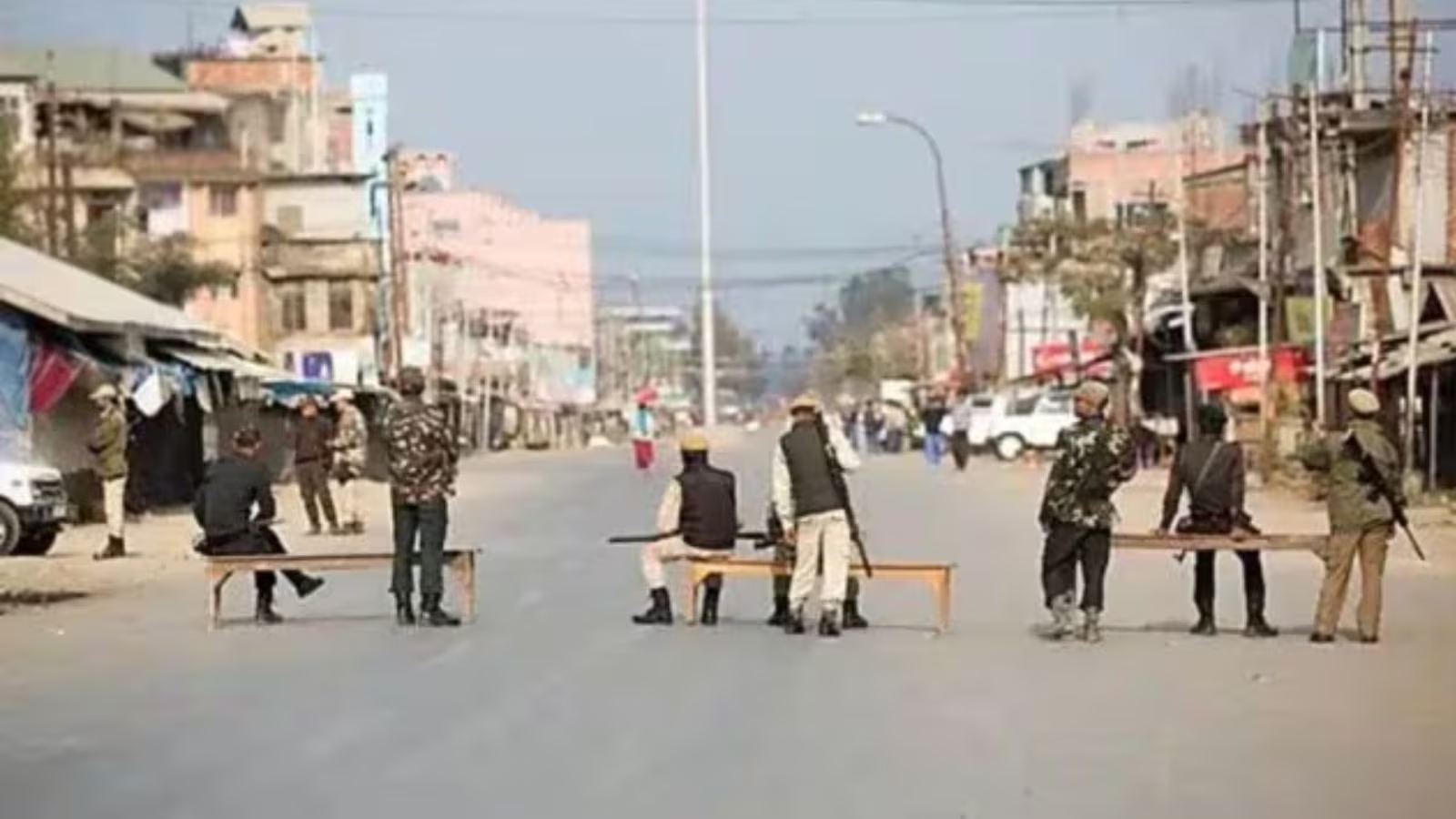
However, the ground situation remained volatile. The Committee on Tribal Unity (COTU), a Kuki-Zo civil society group in Kangpokpi, announced a 24-hour district shutdown from midnight, while the Foothills Naga Coordination Committee (FNCC) said the road blockade would continue.
Naga groups argue the road was built illegally through their ancestral land without consent, while Kuki-Zo leaders allege the blockade and recent attacks are part of a coordinated attempt to destabilise their villages. With core disputes over land and movement unresolved, leaders on both sides concede that preventing further escalation is now the immediate priority.






.jpg&w=256&q=75)
.jpg&w=256&q=75)