


A candidate with a reported 50% locomotor disability says his UGC-NET examination ended after three hours, denying him compensatory time. Earlier complaints reveal similar disputes.
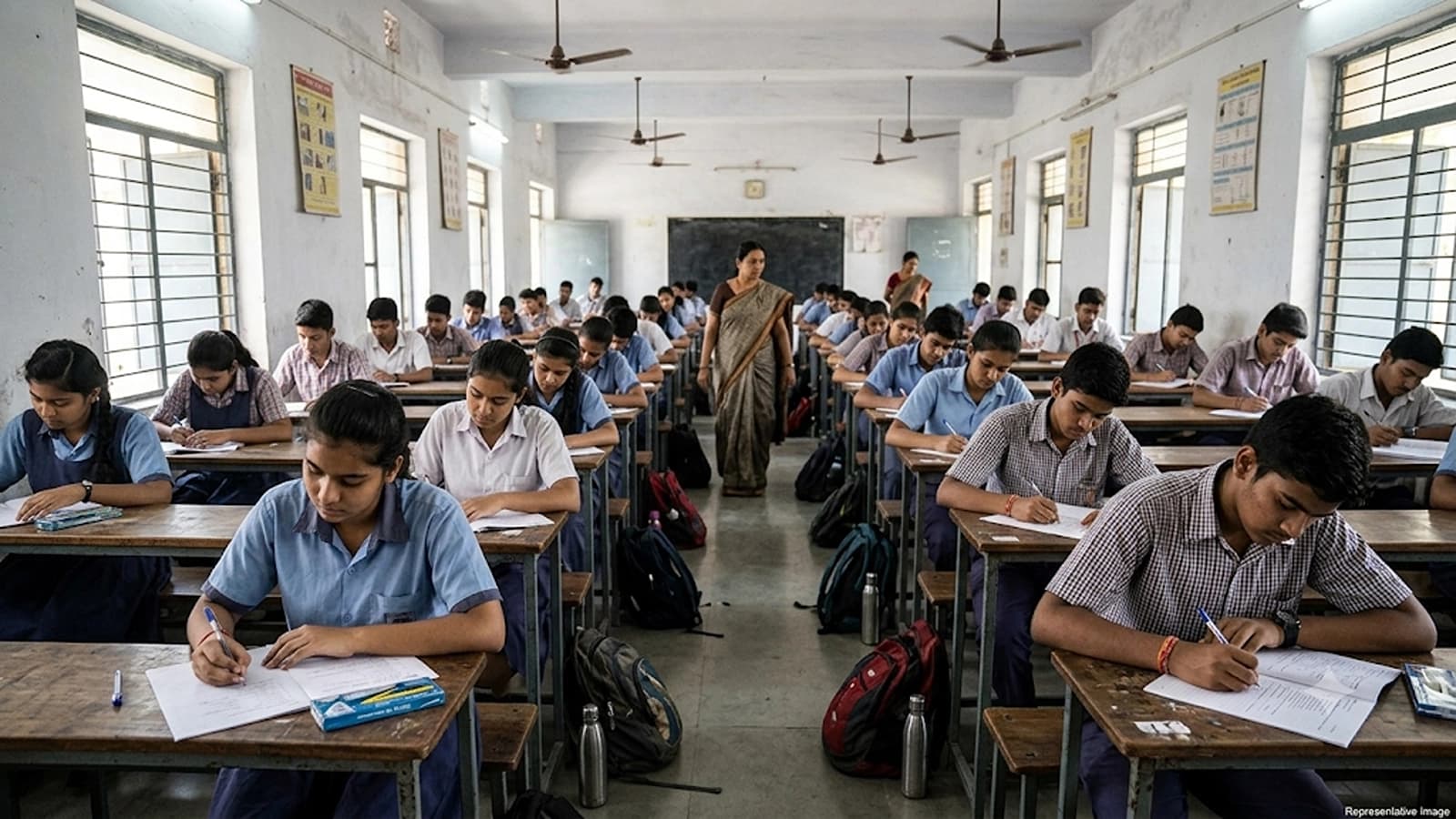
A UGC-NET candidate has alleged that his computer-based examination ended before he received the additional time he claims he was entitled to under disability guidelines.
A UGC-NET candidate has approached the Chief Commissioner for Persons with Disabilities, alleging that his computer-based examination ended automatically after three hours, denying him an additional hour of compensatory time that he claims he was entitled to under disability-accommodation rules.
The complaint, filed by Maroof Ali against the National Testing Agency (NTA), was taken up during a preliminary hearing on August 12, 2026. According to the official proceedings, Ali stated that he had a 50% locomotor disability affecting his right lower limb and that the examination system logged him out before he could use the additional time.

The proceedings, made public through an order dated August 25, record that the alleged loss of time adversely affected his examination performance. However, the commissioner did not determine whether the NTA had violated the applicable guidelines or whether Ali had fulfilled the documentation requirements for compensatory time.
The case raises questions about how disability-related examination accommodations are recorded, activated and verified during computer-based tests conducted by the agency.
What happened during the hearing?
According to the two-page proceedings in Case No. CCPD-OF-0046/1041/2026, Ali appeared before the disability commissioner's office on August 12. NTA was represented by Pravesh Agarwal, identified in the order as a young professional.
During the hearing, the commissioner sought clarification on whether Ali had specifically requested compensatory time while submitting his application and whether the necessary medical certificate or supporting documents had been provided.
NTA's representative informed the commissioner that the officials concerned were unavailable because of a meeting and requested an adjournment.
Deputy Chief Commissioner Vikas Trivedi subsequently asked the agency to submit a written explanation addressing three points: whether Ali had requested additional time in his application, whether NTA had recognised his stated disability and whether the supporting medical documents established difficulty in writing or writing at the required speed.
The agency was asked to provide its written response, along with relevant records, within five working days. Ali was to be given an opportunity to respond within two days of receiving NTA's submission.
The commissioner indicated that further action would be considered after examining the written representations.
The published order does not include Ali's original application form, admit card, disability certificate, computer-system logs or NTA's substantive explanation. It therefore establishes that a formal complaint was heard, but does not independently establish that the examination software wrongly terminated his session.
What do the UGC-NET rules say about compensatory time?
The UGC-NET June 2026 information bulletin specifies a three-hour examination and incorporates the government's guidelines issued on August 29, 2018, for candidates with benchmark disabilities, along with the August 10, 2022, guidelines for other candidates with specified disabilities who experience difficulty writing.
Under these provisions, eligible candidates may receive compensatory time of at least 20 minutes for every hour of examination, amounting to one additional hour for a three-hour test. Eligible candidates with benchmark disabilities can receive this accommodation even if they do not use a scribe.
However, eligibility is not determined by disability percentage alone. The guidelines distinguish between certain disability categories and other conditions for which medical certification of writing limitations may be required.
In Ali's case, the available proceedings do not establish whether his right-leg disability affected his ability to write at the required speed or whether the relevant certificate was submitted. These were precisely the issues on which the commissioner requested NTA's explanation.
The bulletin also requires candidates to ensure that their disability-related information is correctly entered in the application process, making the original registration records central to determining what happened.
Earlier cases involving NTA and candidates with disabilities
Ali's complaint is not the first time disability accommodations in examinations conducted by NTA have been questioned. In November 2021, the Supreme Court considered the case of Avni Prakash, a NEET candidate with dysgraphia who had been denied an additional hour during the examination.
The court found that she had been wrongfully deprived of compensatory time despite being entitled to it under the applicable rules. While declining to order a fresh examination, it NTA to consider measures to remedy the injustice within one week and improve its examination procedures. The judgment also called for regular training of examination personnel to ensure that candidates receive reasonable accommodations.
Another case involved Professor Miranda Tomkinson, a candidate with deafblindness who sought a Braille question paper for UGC-NET. His difficulties were reported by EdexLive in March 2023. In proceedings concluded in August 2025, the Chief Commissioner for Persons with Disabilities recorded that NTA had not initially responded despite repeated reminders. During the hearings, the agency explained that computer-based examinations lacked the technical mechanism required to provide Braille support.
The commissioner recommended strengthening examination-accessibility guidelines and directed the Department of Empowerment of Persons with Disabilities to submit an action-taken report within three months. A more recent dispute reached the Delhi High Court. In January 2026, the court directed NTA to provide Hoor Anisbhai Jinwala, a candidate with complete blindness, a computer equipped with screen-reading software for the June 2026 UGC-NET examination.
The court's order followed a petition seeking accessible examination materials and facilities. NTA submitted that providing specialised software involved technical complexities. The court nevertheless directed the agency to arrange compatible screen-reading software for the candidate and provide a scribe as additional support.
A separate case concerning compensatory time reached the Calcutta High Court in September 2026. Jayanta Pramanik challenged the denial of additional time during a NEET-UG re-examination. NTA maintained that he had not produced the required disability certificate at the examination centre.
The court acknowledged that Pramanik possessed a benchmark disability certificate and had received compensatory time in an earlier examination that was subsequently cancelled. However, it found that the relevant examination instructions required documentary compliance and that his later admit card did not establish eligibility for the additional time. The petition was dismissed.
Unlike the Avni Prakash case, therefore, the court did not find grounds to grant relief. Together, these cases illustrate different points of dispute: the failure to provide an accommodation, the accessibility of examination technology and whether a candidate has satisfied the documentation requirements.
Parliamentary panel calls for stronger safeguards
The concerns have also reached Parliament. In its 382nd report, presented on October 9, 2026, the Department-related Parliamentary Standing Committee on Education, Women, Children, Youth and Sports recommended that NTA develop a dedicated examination protocol for students with disabilities.
The committee called for accessible examination centres, appropriate scribe arrangements, compensatory time, accessible digital platforms and a dedicated grievance-redressal mechanism.
Its recommendations also covered better training of examination personnel and clearer procedures for addressing candidates' complaints.
The report gives wider institutional context to the questions raised in Ali's proceedings, although it does not make findings about his individual case.
The outcome of Ali's complaint remains unclear. A review of the publicly accessible September and October 2026 orders did not identify a subsequent decision under his name or case number.
It has therefore not been independently established whether NTA submitted the requested explanation, whether the commissioner issued further directions or whether Ali received any remedy.
The unresolved issue is whether the alleged loss of examination time resulted from an error in the computer-based testing system, a failure to activate an approved accommodation or an eligibility requirement that had not been fulfilled. Those possibilities cannot be distinguished without the candidate's application records and NTA's examination logs.
For candidates competing for eligibility for teaching and research opportunities, such disputes raise a practical accountability question: whether an examination authority can identify and correct an accommodation-related error before the results and selection processes make an effective remedy difficult.

The objective should be to make education investable without making learning transactional
UGC-NET 2026: Candidate alleges denial of extra exam time, disability commissioner seeks NTA explanation
ISRO URSC Recruitment 2026: Applications open for 61 posts, check eligibility

Gold Prices Fall by Rs 646 to Rs 1.43 Lakh per 10 Grams Amid Weak Demand

Jamia Millia Islamia alleges overnight vandalism as students’ union protest enters day 16
The objective should be to make education investable without making learning transactional
UGC-NET 2026: Candidate alleges denial of extra exam time, disability commissioner seeks NTA explanation
Gold Prices Fall by Rs 646 to Rs 1.43 Lakh per 10 Grams Amid Weak Demand

Cyclone Arnab Explained: Landfall, Affected States, Wind Speed and How It Formed
South Africa study finds university mentors boost school pupils’ confidence

The objective should be to make education investable without making learning transactional
UGC-NET 2026: Candidate alleges denial of extra exam time, disability commissioner seeks NTA explanation
ISRO URSC Recruitment 2026: Applications open for 61 posts, check eligibility
Gold Prices Fall by Rs 646 to Rs 1.43 Lakh per 10 Grams Amid Weak Demand
Jamia Millia Islamia alleges overnight vandalism as students’ union protest enters day 16
The objective should be to make education investable without making learning transactional
UGC-NET 2026: Candidate alleges denial of extra exam time, disability commissioner seeks NTA explanation
Gold Prices Fall by Rs 646 to Rs 1.43 Lakh per 10 Grams Amid Weak Demand
Cyclone Arnab Explained: Landfall, Affected States, Wind Speed and How It Formed
South Africa study finds university mentors boost school pupils’ confidence
Copyright© educationpost.in 2026 All Rights Reserved.