


The panel also seeks greater accountability to Parliament, permanent staffing, age and attempt limits, a registry of blacklisted vendors, and secure government-run examination centers to restore public confidence.
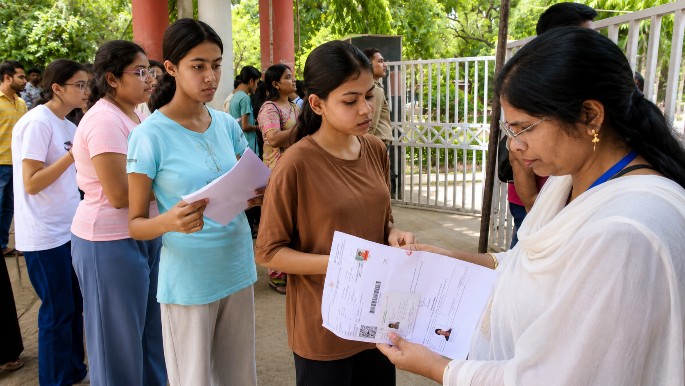
A parliamentary committee has recommended a series of reforms to strengthen the National Testing Agency (NTA), including a possible two-stage format for the National Eligibility cum Entrance Test (NEET) Undergraduate (UG), a shift toward computer-based testing (CBT), and greater accountability to Parliament.
The Parliamentary Committee on Education, Women, Children, Youth and Sports, in its report titled “Reforms and Strengthening of NTA,” called for a legislative framework to make the agency accountable to both Houses of Parliament.

It said public confidence in examinations conducted by the NTA was a matter of social justice and national integrity, particularly after the cancellation of NEET UG 2026 following allegations of a paper leak.
In its detailed recommendations, the committee emphasized that restoring trust in national-level examinations would require stronger security protocols, permanent staffing, improved examination infrastructure, a comprehensive question bank, and transparent communication with stakeholders. It also called for greater use of government-owned examination centers and reduced dependence on private facilities.
“The education department may introduce appropriate parliamentary framework that ensures NTA's accountability to Parliament.”
The committee acknowledged the agency's past efforts to improve its functioning but said further reforms were necessary to safeguard the credibility of examinations conducted on a large scale.
The NTA cancelled the NEET UG 2026 examination on May 12 after it was conducted on May 3, amid allegations of a paper leak. The committee said the cancellation highlighted the need to strengthen the agency's systems and ensure that examination-related vulnerabilities were addressed.
“Organised networks that profit from examination fraud are adaptive and resourceful, and will always seek the weakest link in the chain. The NTA therefore needs adequate staff, robust security protocols, clear accountability mechanisms, and digitalisation of operations and examinations to ensure that it stays ahead of any challenges,” said the panel.
Two-stage NEET UG examination under consideration
One of the committee's key recommendations is for the NTA to examine the feasibility of introducing a two-stage examination process for NEET UG and other large-scale competitive examinations.
NEET UG currently functions as a single-stage entrance examination for candidates seeking admission to undergraduate medical and related courses, including Bachelor of Medicine and Bachelor of Surgery (MBBS), Bachelor of Dental Surgery (BDS), nursing, and AYUSH programs. The examination caters to more than 22 lakh candidates, who compete for seats across different disciplines.
The committee noted that the Civil Services Examination follows a multi-stage selection process to screen candidates, whereas NEET UG combines applicants seeking admission to different medical and allied fields in a single examination.
It suggested that the NTA consider a similar preliminary-and-main examination structure, with a common screening test followed by specialized examinations for individual courses.
"The Committee is of the view that NTA should examine the feasibility of a two-stage format for its large examinations, such as having a common prelims examination for all medical streams while conducting specialised mains stage for specific courses, so that a candidate seeking nursing or AYUSH is tested and ranked apart from one seeking admission to MBBS, reducing avoidable competition," the panel suggested.
Under the proposed arrangement, all candidates would initially appear for a common preliminary examination covering the medical streams. Candidates would then take specialized main examinations aligned with their intended courses, such as MBBS, dentistry, nursing, or AYUSH.
The committee said this approach could help ensure that candidates are assessed and ranked according to their chosen disciplines rather than being placed in direct competition across different fields. It asked the NTA to examine the feasibility of the proposed structure before deciding how it could be implemented.
The recommendation is intended to address the differences between the academic pathways pursued by candidates seeking admission to different medical and allied health programs while reducing avoidable competition.
Shift to computer-based testing and government-owned centers
The parliamentary panel also recommended moving examinations toward the computer-based testing model instead of relying on pen-and-paper examinations. It called for greater involvement of government-owned and operated examination centers, alongside a reduction in the NTA's dependence on private centers.
The committee said a stronger examination infrastructure would be necessary to address security vulnerabilities and reduce opportunities for organized examination fraud. It called for a concrete implementation plan for secure government CBT centers as part of the broader reform process.
The proposed shift would require the NTA to strengthen its digital infrastructure and examination operations while ensuring that centers are equipped to conduct large-scale examinations securely. The committee's recommendations also emphasized the need for adequate staffing and clearly defined accountability mechanisms to support the transition.
The panel said the agency needed to remain prepared for organized networks that attempt to exploit weaknesses in examination systems. It linked the need for better technology and stronger security arrangements with the broader objective of protecting the credibility of national entrance examinations.
Question banks recommended as long-term safeguard against paper leaks
To reduce the risk of question paper leaks, the committee recommended that the NTA invest in building a large, diverse, and continuously updated question bank. It said relying on repeated question sets or commissioning new papers from examiners every year could create vulnerabilities in the examination process.
“The Committee notes that investment in question banks is the most viable defense against paper leaks in the long-run. The repeated use of the same question sets or the practice of having examiners set new question papers every year can be a risk to the integrity of the examination process,” the parliamentary body noted.
The committee said a comprehensive question bank would allow the agency to generate examination papers without disclosing the questions in advance to individual question setters. It recommended that the NTA develop a system in which papers could be prepared dynamically using questions drawn from a broad and regularly updated repository.
“The Committee, therefore, is of the view that NTA should invest in building a large, diverse, and continuously updated question bank which can be drawn on to set papers without the advance knowledge of the question-setters,” the panel added.
The committee also called for the involvement of experts from leading educational institutions, including the Indian Institutes of Technology (IITs), the All India Institute of Medical Sciences (AIIMS), and the Indian Institutes of Management (IIMs), in developing question banks and managing translations.
It said the agency should rely on qualified experts with relevant subject knowledge and ensure that examination papers are translated accurately. The recommendations covered both the preparation of questions and the translation process, recognizing their importance in maintaining the quality and integrity of examinations conducted across languages.
The report also called for a formal system to verify the backgrounds and professional records of experts before they are engaged by the NTA. The agency should assess their integrity and identify potential conflicts of interest that could compromise examination security.
“The NTA must also develop a system to check the track record of said experts to establish their integrity and to rule out any conflict of interest (e.g., owners or faculty of private coaching centers, family members giving the exam, etc.) before recruiting them,” the report “Reforms and Strengthening of NTA” noted.
According to the committee, checks on experts' professional backgrounds and possible conflicts of interest should form part of the process for selecting those responsible for preparing and translating examination papers.
Late-arriving candidates may be allowed to take examinations
The parliamentary committee also recommended a change in the NTA's examination-day procedures, suggesting that candidates who arrive late at examination centers should be allowed to take their tests after submitting a formal undertaking.
The proposal seeks to provide a mechanism for dealing with late arrivals while requiring candidates to record an undertaking before being permitted to sit for the examination. The recommendation was included alongside broader measures intended to improve examination administration.
The report did not specify the detailed conditions under which late-arriving candidates should be admitted, but asked the agency to consider the proposed arrangement as part of its administrative reforms.
Review of age and attempt limits for major examinations
The committee also called on the government to examine whether reasonable age limits and restrictions on the number of attempts should be introduced for major examinations, including NEET UG.
During its deliberations, the panel was informed that NEET UG currently has no limit on the number of attempts a candidate can make and no effective upper age limit. It noted that this had resulted in instances of candidates above the age of 70 appearing for the examination.
The committee recommended that the Ministry of Education consult the Ministry of Health and Family Welfare and other relevant stakeholders to assess the feasibility of introducing reasonable age and attempt limits for major examinations. It proposed that the University Grants Commission National Eligibility Test (UGC-NET) could be exempted from such restrictions.
“The Committee recommends that the Ministry explore, alongside the Ministry of Health & Family Welfare and all other relevant stakeholders, possibilities of reasonable age limits and reasonable attempt limits to all major examinations, including the NEET-UG. The Committee notes that an exception to this rule may be made only for the UGC-NET,” it said.
The recommendation calls for further examination of eligibility conditions rather than specifying a particular upper age limit or maximum number of attempts. The committee said the matter should be considered in consultation with the relevant ministries and stakeholders before any decision is taken.
National registry of blacklisted examination vendors
As part of its proposed measures to strengthen examination security, the committee recommended that the NTA establish and maintain a National Registry of blacklisted examination vendors.
The proposed registry would provide a formal mechanism for recording vendors that have been blacklisted in connection with examination-related services. The recommendation forms part of the committee's broader call for stronger safeguards and greater accountability across the examination process.
The panel also stressed the importance of ensuring that the agency has the institutional capacity to identify and address weaknesses in the systems used to conduct national examinations.
Permanent staffing and specialized expertise at NTA
The committee raised concerns over staffing shortages at the NTA and called for the agency to recruit permanent employees rather than relying primarily on officers deputed from other government departments.
According to the report, the NTA has 39 sanctioned positions, of which only 23 officers were in position and working on deputation.
The committee described the resulting shortfall as a 41% vacancy rate and noted that all 39 permanent posts in the agency were currently being filled through deputation arrangements.
“The Committee notes that of the 39 sanctioned positions in the NTA, only 23 officers are currently in position and on deputation to the NTA,” the report said.
The committee said the agency should recruit its own officers on a permanent basis, with particular emphasis on professionals with specialized expertise in psychometrics, examination security, digital infrastructure, data analytics, and examination logistics.
It noted that these areas required dedicated expertise to support the preparation and administration of large-scale examinations, protect examination systems, and improve the agency's operational capacity.
The panel also clarified that the 16 posts under the Central Staffing Scheme should serve as an additional layer of senior leadership rather than substitute for the specialized knowledge required to run the agency's core operations.
“The 16 posts under the Central Staffing Scheme should be treated as a supplementary layer of senior leadership, not as a substitute for domain expertise,” the panel said.
The recommendation calls for a staffing structure that combines senior administrative leadership with permanent personnel who have the technical and operational skills needed to manage examinations securely and efficiently.
Rebuilding public trust through transparency and accountability
Beyond structural and operational reforms, the committee emphasized the need to rebuild public confidence in examinations conducted by the NTA. It said the responsibility for protecting examination integrity should extend throughout the system, from the agency's Director General to invigilators working at examination centers.
The panel said officials involved in conducting examinations should view themselves as custodians of examination integrity rather than merely employees carrying out assigned duties. It called for consistent, transparent, and two-way communication with stakeholders to rebuild trust in the examination process.
The committee's recommendations collectively call for changes to examination formats, question paper preparation, staffing, infrastructure, eligibility rules, and vendor management. It said the NTA would need adequate personnel, stronger security protocols, clear accountability mechanisms, and greater digitalization to respond to emerging challenges.
The proposed legislative framework would establish a formal basis for holding the agency accountable to Parliament, while the operational recommendations seek to address vulnerabilities in the conduct of competitive examinations.
The committee's report follows the cancellation of NEET UG 2026 and calls for further improvements to the NTA's functioning. Its recommendations include a possible two-stage examination model, computer-based testing, secure government-operated centers, continuously updated question banks, expert verification procedures, a registry of blacklisted vendors, and permanent recruitment of specialized staff.
The panel said restoring confidence in national examinations would require sustained improvements across the examination system, with accountability and security treated as central responsibilities rather than isolated administrative concerns.

Haryana Listed 500 CHEERAG Seats at School After Recognition Withdrawal, Records Show

South Africa suspends principal over exam denial linked to unpaid fees

Asaram Misses Parole Deadline: Jodhpur Police Register FIR After Late Return to Jail

Canada invests $25.8 million to expand independent schools

Jawaharlal Nehru Fellowship offers ₹1 lakh monthly stipend for two years; check eligibility
Haryana Listed 500 CHEERAG Seats at School After Recognition Withdrawal, Records Show
Asaram Misses Parole Deadline: Jodhpur Police Register FIR After Late Return to Jail

The objective should be to make education investable without making learning transactional

UGC-NET 2026: Candidate alleges denial of extra exam time, disability commissioner seeks NTA explanation

Gold Prices Fall by Rs 646 to Rs 1.43 Lakh per 10 Grams Amid Weak Demand

Haryana Listed 500 CHEERAG Seats at School After Recognition Withdrawal, Records Show
South Africa suspends principal over exam denial linked to unpaid fees
Asaram Misses Parole Deadline: Jodhpur Police Register FIR After Late Return to Jail
Canada invests $25.8 million to expand independent schools
Jawaharlal Nehru Fellowship offers ₹1 lakh monthly stipend for two years; check eligibility
Haryana Listed 500 CHEERAG Seats at School After Recognition Withdrawal, Records Show
Asaram Misses Parole Deadline: Jodhpur Police Register FIR After Late Return to Jail
The objective should be to make education investable without making learning transactional
UGC-NET 2026: Candidate alleges denial of extra exam time, disability commissioner seeks NTA explanation
Gold Prices Fall by Rs 646 to Rs 1.43 Lakh per 10 Grams Amid Weak Demand
Copyright© educationpost.in 2026 All Rights Reserved.