India strengthens emergency plans for students overseas after multiple global crises
The move follows recent evacuation challenges during global conflicts, with officials seeking faster emergency coordination, improved communication, and better support systems for students facing crises overseas.
Pragya Kumari11 May 2026 12:20
The Ministry of External Affairs (MEA) has begun a large-scale awareness campaign asking Indian students studying overseas to voluntarily register with Indian embassies and high commissions, as the government works to build a more accurate database of Indians living abroad for education.
The initiative follows multiple international crises in recent years, including the Russia-Ukraine war, tensions involving Iran and Israel, civil conflicts in Sudan, and diplomatic strains in countries such as Canada and China, where Indian students required urgent support, evacuation assistance, or emergency coordination.
Officials said the absence of a centralized and updated student database has created operational challenges during rescue and evacuation missions, especially when thousands of students had to contact Indian missions simultaneously during emergencies.
Why the Government Wants Student Registration
India has one of the world’s largest outbound student populations. According to government estimates and international education data, more than 1.3 million Indian students are currently studying abroad across universities, medical colleges, and research institutions.
Despite these numbers, there is no mandatory system requiring Indian students to officially register with the government before traveling overseas for higher education.
At present, authorities largely depend on visa statistics released by foreign governments and approximate data collected by Indian missions abroad.
Officials believe voluntary registration with embassies can significantly improve communication during wars, natural disasters, political unrest, terror incidents, or sudden diplomatic crises.
According to officials, registered students can also receive timely advisories related to:
• Local laws and regulations • Visa and immigration issues • Documentation support • Emergency evacuations • Safety advisories • Cultural and language assistance
MADAD Portal and Low Participation
The MEA had earlier launched the MADAD portal in 2015 as a grievance redressal and voluntary registration platform for Indians living abroad, including students. However, participation has remained limited over the years.
According to ministry data, only around 41,000 students have registered on the platform so far, despite over a million Indians studying overseas.
Officials are now considering either revamping the existing MADAD portal or introducing a separate digital platform specifically designed for Indian students and professionals moving abroad.
Countries Under Focus
The current awareness campaign is focused on countries with large Indian student populations as well as emerging destinations attracting Indian medical and technical students.
The countries include:
Major Student Destinations
Emerging Education Hubs
United States
Georgia
Canada
Kyrgyzstan
Germany
Uzbekistan
China
Armenia
Malaysia
Kazakhstan
Officials said many Indian students are increasingly choosing Central Asian and Eastern European countries for affordable medical education, making embassy coordination more important in those regions.
Georgia Becomes a Key Focus Area
Georgia has emerged as one of the major destinations for Indian medical students in recent years. According to estimates, nearly 23,000 Indian nationals, mostly medical students, currently live in and around Tbilisi.
India recently appointed Amit Mishra as its first full-time ambassador to Georgia. The Indian mission there has already started outreach programs with universities and student groups.
“We have held several meetings and sessions with student groups and educational institutions over the past one month,” Mishra said from Tbilisi.
Officials said the embassy has also been addressing issues related to visa deadlines, documentation problems, academic compliance, and legal awareness among students.
Some students reportedly missed visa renewal timelines or faced administrative complications because of limited awareness about local regulations.
Global Conflicts That Affected Indian Students
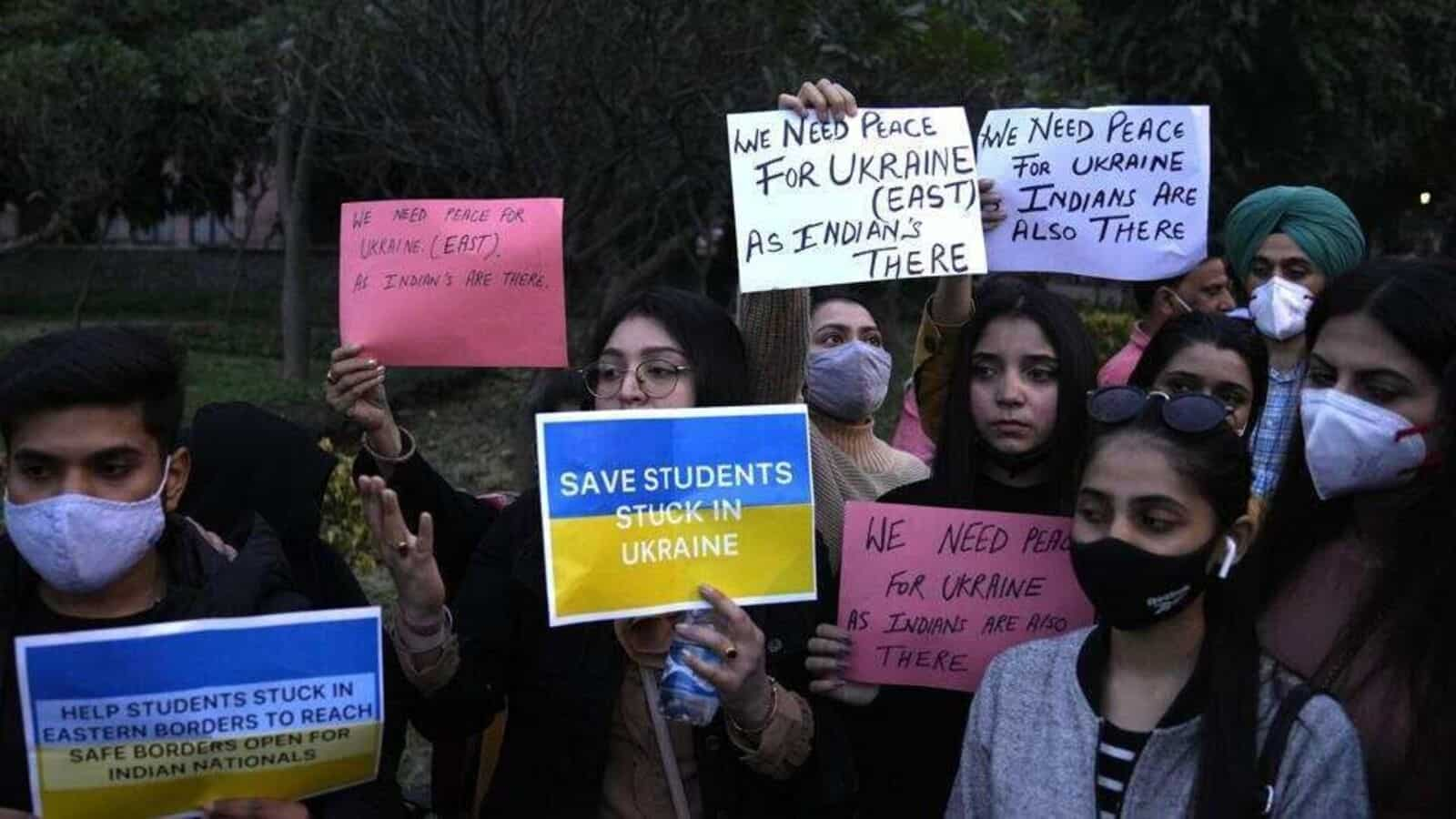
Over the last few years, multiple global conflicts and geopolitical crises have directly affected Indian students abroad. The Russia-Ukraine war remains one of the largest disruptions faced by Indian students in recent history.
Around 20,000 to 23,000 Indian students, mostly pursuing MBBS degrees, were studying in Ukraine when Russia launched its invasion in February 2022.
Thousands had to shelter in bunkers, metro stations, and basements before evacuation operations began. One Indian student, Naveen Shekharappa, lost his life during shelling in Kharkiv.
The Indian government launched Operation Ganga to evacuate stranded citizens through neighboring countries, including Poland, Romania, Hungary, and Slovakia.
Many students later struggled with:
• Academic disruptions • Transfer of credits • Licensing uncertainty • Financial losses ranging from ₹15 lakh to ₹40 lakh • Mental health stress and trauma
Conflict Impact on Indian Students Abroad
Conflict / Crisis
Estimated Indians Affected
Key Impact
Russia-Ukraine War
20,000–23,000 students
Medical education disruption, evacuation
Israel-Hamas Conflict
Several thousand students and researchers
University shutdowns, safety concerns
Sudan Civil Conflict
Hundreds of students
Emergency evacuation
China Border Tensions + COVID restrictions
23,000+ students
Long inability to return to campuses
Canada Diplomatic Tensions
427,000+ Indian students indirectly affected
Visa delays and uncertainty
COVID-19 Pandemic
750,000+ globally affected
Border closures, online learning disruption
Impact of Middle East Tensions
The Israel-Hamas conflict and broader regional tensions involving Iran also affected Indian students in West Asia.
Indian embassies in Israel and Iran had issued advisories asking students to register themselves for coordination and emergency communication.
Many universities temporarily suspended classes or shifted to online teaching during periods of military escalation.
Students reported anxiety, movement restrictions, and uncertainty regarding exams and internships.
Challenges in Canada and China
Diplomatic tensions between India and Canada also created concerns among Indian students regarding visa processing, immigration pathways, and safety.
Canada hosts one of the world’s largest Indian student populations, with over 427,000 Indian students studying there in 2023.
Meanwhile, strict COVID-era restrictions and India-China tensions prevented more than 23,000 Indian students from returning to Chinese universities for nearly two to three years.
Medical students particularly faced challenges related to internships, practical training, and licensing requirements.
Registration Rates Remain Very Low
Officials acknowledged that voluntary registration levels remain extremely low in many countries, sometimes below 10% of the actual Indian student population.
Indian missions have repeatedly issued advisories encouraging students to register, especially during conflict situations or security alerts.
“This will help the mission and posts remain in close contact with Indian citizens and provide necessary support in case of any emergency or untoward incident,” an earlier advisory issued by the Indian mission in Canada had said.
Shift in Student Preferences
Global instability has also started influencing the choices of Indian students planning higher education abroad.
According to education sector trends, many students are now prioritizing:
• Safer countries • Stable immigration policies • Lower geopolitical risks • Better healthcare infrastructure • Stronger embassy support systems
Several students are shifting preference toward destinations in Europe, the UAE, and parts of Southeast Asia instead of conflict-prone or politically uncertain regions.
Officials said the government’s latest outreach effort is intended not only to strengthen emergency preparedness but also to improve long-term engagement and support for Indian students living abroad.







.jpg&w=256&q=75)





.jpg&w=256&q=75)
