


The projects, led by faculty and students across five Stanford schools, examined approaches ranging from virtual reality field trips for hospitalised children to student-led road safety investigations and culturally grounded learning activities.
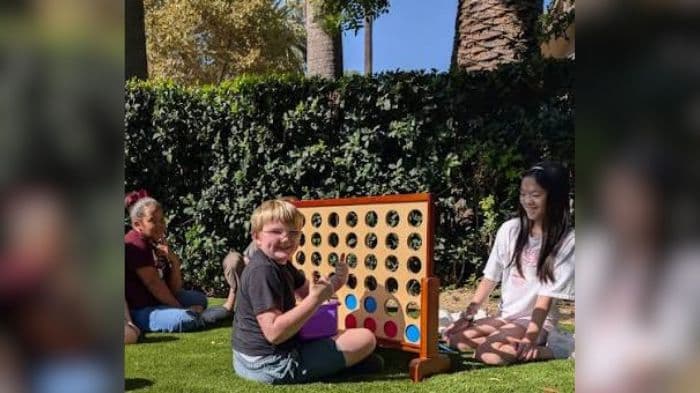
Stanford University has funded 21 projects to examine how joyful learning experiences can shape education, bringing together researchers, teachers, families and community partners to explore the role of curiosity, creativity and discovery in learning.
The projects were supported through a seed-grant programme run by the Stanford Accelerator for Learning, an interdisciplinary initiative housed at Stanford Graduate School of Education. Faculty members and students from five Stanford schools worked with educators, school districts and community organisations on activities designed for different age groups and learning environments.

The initiative sought to understand what makes learning joyful and how such experiences can be assessed. Stanford researchers distinguish this approach from simply making school entertaining. Instead, they describe joyful learning as experiences that encourage wonder, curiosity, creative participation and a sustained interest in learning.
Brigid Barron, a professor at Stanford Graduate School of Education and faculty lead for the grant programme, said her interest in the subject grew during the COVID-19 pandemic, when she observed moments of curiosity, collaboration and engagement alongside the disruption and stress experienced by learners.
The programme also aimed to develop ways of evaluating joyful learning without reducing it to whether students simply enjoyed an activity.
Virtual reality brings coral reefs into hospital classrooms
One of the projects, called Wonders of the World (WOW), focused on children receiving hospital care whose education may be interrupted by illness and treatment.
Led by Thomas Caruso of Stanford University School of Medicine, the project combined a virtual reality field trip to a coral reef in Palau with a hands-on science experiment. The team wanted to explore whether an immersive learning experience could improve a child's day in hospital while also supporting engagement with science.
Researchers assessed participants before and after the activity, asking about their well-being, emotional state, sense of awe and knowledge of the subject.
The project involved 58 patients aged between five and 17. Stanford reported that every indicator measured by the researchers increased after the virtual and hands-on experience.
Faith Collins, an education technology coordinator at the Stanford Chariot Program, said the team designed the activity to combine the virtual visit with a practical experiment. Another project researcher, Kathy Ho, said approximately 97% of the patients responded by saying “Wow” during the experience.
The findings offer an example of how interactive activities can be used to maintain children's engagement with learning in settings outside conventional classrooms. However, the Stanford account does not describe the project as a controlled trial establishing that virtual reality improves educational outcomes.
Students investigate safer routes to school
Another initiative, Our Voice, worked with the San Mateo County Office of Education to involve students in collecting and analysing information about routes to school.
The project followed a traffic accident near a school in which a teacher had died, making road safety a subject of particular concern for the local community.
Fifth-grade students began by drawing their neighbourhoods and marking their journeys to school. They then worked with anonymised, aggregated classroom data to identify patterns and draw conclusions about road safety.
The students subsequently presented their findings six times to the school board and two city councils, taking the investigation beyond the classroom.
Researcher Ankita Kaulberg said the project encouraged students to use what they had learned to advocate for changes in their communities. The experience combined practical investigation, teamwork and civic participation, showing how classroom activities can connect learning with issues that affect students' everyday lives.
Researchers examine how learning experiences affect communities
The 21 projects covered different subjects, age groups and student populations. Another initiative developed a board-game kit incorporating cultural elements for children from Central Asian immigrant communities in Northern California.
Across the projects, the researchers also examined how joyful learning could involve people beyond students, including teachers, caregivers and local communities.
Barron said the effects of such experiences could extend beyond individual learners by encouraging shared creativity and engagement. She added that several grant recipients would continue exploring ways to design and evaluate effective joyful learning experiences.
The seed-grant programme has concluded, but Stanford researchers say the broader research agenda remains relevant as education systems respond to artificial intelligence, climate change and other global challenges.
Barron said future work would need to examine how learning environments can encourage people to remain curious and develop the capacity to address complex problems together.

US higher education groups warn defence bill could restrict international research partnerships
West Bengal: ABVP to Organise Self-Defence Training for Female Students Across Campuses from November 14
NIOS Exam Fraud: Seven Arrested in Assam's Tinsukia Over Alleged Cheating Racket
MP Board Dummy Admit Card 2027 Released for Classes 10, 12; Schools Can Make Corrections by December 31
Canada retains annual target of 150,000 new international students through 2029

Odisha expands postgraduate medical education with 318 additional seats

CSIR-UGC NET December 2026 registration deadline extended, apply by Nov 9
XAT 2027 introduces new exam rules, adds 17 B-schools to associate network
Delhi-NCR schools up to Class 5 to shift to hybrid mode amid rising pollution
CA Foundation result 2026 out, Kansika and Mahek Gupta jointly secure AIR 1

US higher education groups warn defence bill could restrict international research partnerships
West Bengal: ABVP to Organise Self-Defence Training for Female Students Across Campuses from November 14
NIOS Exam Fraud: Seven Arrested in Assam's Tinsukia Over Alleged Cheating Racket
MP Board Dummy Admit Card 2027 Released for Classes 10, 12; Schools Can Make Corrections by December 31
Canada retains annual target of 150,000 new international students through 2029
Odisha expands postgraduate medical education with 318 additional seats
CSIR-UGC NET December 2026 registration deadline extended, apply by Nov 9
XAT 2027 introduces new exam rules, adds 17 B-schools to associate network
Delhi-NCR schools up to Class 5 to shift to hybrid mode amid rising pollution
CA Foundation result 2026 out, Kansika and Mahek Gupta jointly secure AIR 1
Copyright© educationpost.in 2026 All Rights Reserved.