


Delhi Technological University student Kush Garg secured the national award for developing an AI-powered IoT device to help neurodivergent children navigate everyday interactions more independently.
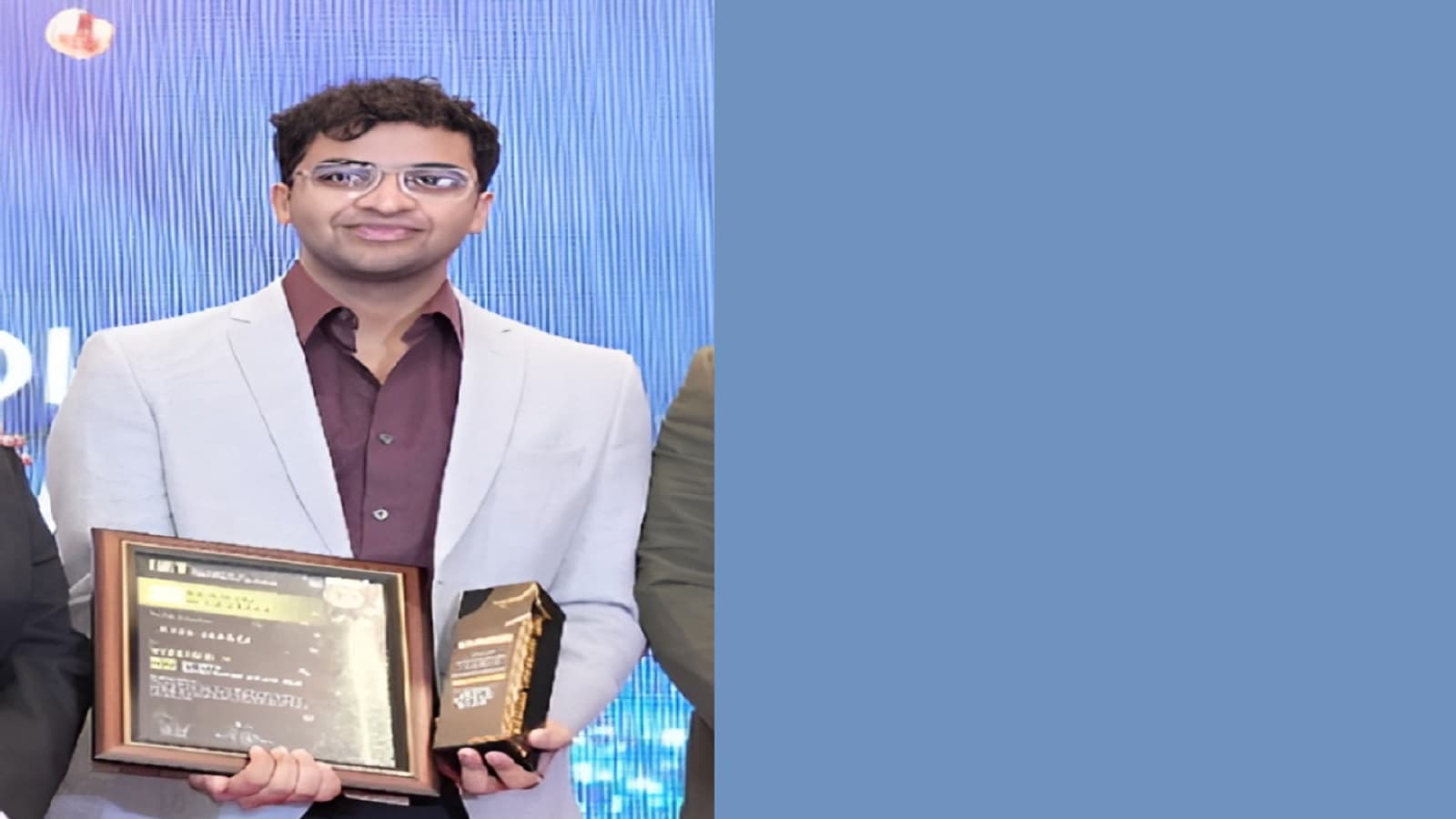
A student from Delhi Technological University (DTU) has won the 10th IET India Scholarship Award for developing an artificial intelligence-based device aimed at helping neurodivergent children manage everyday social situations. Kush Garg was selected as the national winner from 48,761 engineering students who applied for the 2026 edition of the scholarship programme, according to a report published on October 12, 2026.

The Tribune
+1
The innovation focuses on making daily activities more accessible for children who may experience differences in communication, social interaction or information processing. The device is designed to offer context-sensitive assistance in situations such as ordering food at a café, shopping for groceries, using public transport and following conversations in a classroom.
The project combines artificial intelligence (AI), the Internet of Things (IoT) and sensor-based inputs to deliver assistance that reflects the situation around the child. According to the published report, the system considers the child’s activities, individual preferences, challenges and surrounding social cues to provide support when required.
The Tribune
The project was developed in response to the challenge, “Technical Solutions for Integration of Neurodivergent Children into Society.” Its central aim is to help children understand social situations, respond appropriately and participate more confidently in everyday activities.
The reported design focuses on practical assistance in real-world settings. However, the published information does not establish whether the device is commercially available or has undergone independent clinical or effectiveness testing.
The national competition also recognised two other engineering students for their performance.
First runner-up: Omkar Jadhav from the Indian Institute of Space Science and Technology.
Second runner-up: V. Avinash from BIT Mesra.
The 10th edition of the IET India Scholarship Award increased its total scholarship prize pool from ₹10 lakh to ₹20 lakh in 2026. The programme evaluates undergraduate engineering students on academic performance, innovation, leadership and their ability to apply engineering knowledge to real-world problems.
The Tribune
+1
Ajay Salariya, India Awards and Scholarships Manager at the Institution of Engineering and Technology (IET), highlighted the importance of developing technology that addresses genuine human needs.
The award recognises engineering projects that combine technical capability with practical applications. Garg’s device stood out for applying AI and IoT to a challenge involving social participation and everyday independence for neurodivergent children.
The Tribune
The IET is a professional engineering organisation that supports engineering education, professional development, innovation and knowledge-sharing. Its India Scholarship Award provides undergraduate engineering students with a platform to demonstrate their technical abilities and problem-solving skills. The organisation's official India website lists the scholarship among its engineering awards and scholarship initiatives.
india.theiet.org
+1
The recognition of Garg’s project illustrates how engineering students are exploring applications of emerging technologies beyond conventional industrial uses. Solutions designed around accessibility and individual needs may help create more inclusive everyday environments, although their real-world impact depends on further development, testing and implementation.
SRM Univ AP expands research footprint with 20 faculty members named to World’s Top 2% Scientists list

SSC GD Constable Result 2026 Declared at ssc.gov.in; Check Roll Numbers in Merit List PDF

Scottish universities warned over espionage risks linked to Chinese research institute

DTU Student Kush Garg Wins IET India Scholarship for AI Device Supporting Neurodivergent Children

Utkal University tightens security after late-night explosions ahead of student polls
Utkal University tightens security after late-night explosions ahead of student polls
IET India Scholarship Award 2026: DTU’s Kush Garg wins top honor for AI device for neurodivergent children
Erasmus Days 2026 celebrates international learning and skills for the future

US universities phase out blue-light emergency phones, raising campus safety concerns

HPU power tussle: Himachal High Court stays Chancellor’s order assigning VC duties to other officials

SRM Univ AP expands research footprint with 20 faculty members named to World’s Top 2% Scientists list
SSC GD Constable Result 2026 Declared at ssc.gov.in; Check Roll Numbers in Merit List PDF
Scottish universities warned over espionage risks linked to Chinese research institute
DTU Student Kush Garg Wins IET India Scholarship for AI Device Supporting Neurodivergent Children
Utkal University tightens security after late-night explosions ahead of student polls
Utkal University tightens security after late-night explosions ahead of student polls
IET India Scholarship Award 2026: DTU’s Kush Garg wins top honor for AI device for neurodivergent children
Erasmus Days 2026 celebrates international learning and skills for the future
US universities phase out blue-light emergency phones, raising campus safety concerns
HPU power tussle: Himachal High Court stays Chancellor’s order assigning VC duties to other officials
Copyright© educationpost.in 2026 All Rights Reserved.