


Education funding is set to fall by more than 5% in 2027 as Russia plans a record 17.1 trillion ruble defence budget amid the ongoing Ukraine war.
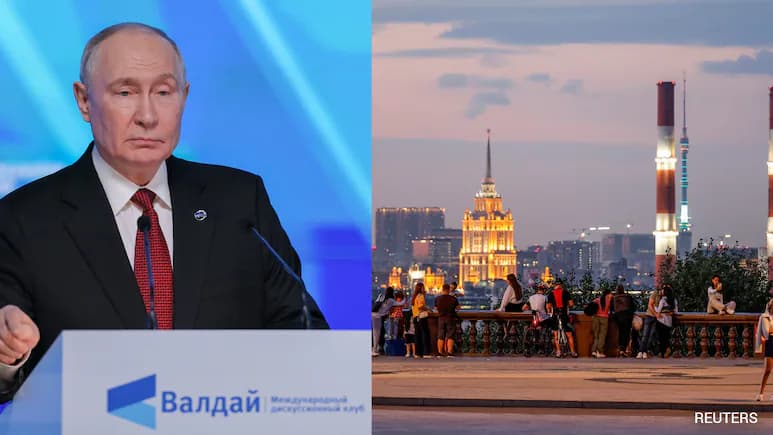
Russia is preparing to channel a growing share of its budget into defence next year, while cutting planned spending on education, healthcare and social programmes as the financial burden of the Ukraine war continues to mount.
Draft budget documents submitted to Russia's lower house of parliament show that defence spending is set to reach a record 17.1 trillion rubles ($204 billion) in 2027, about 26% higher than the previous forecast for the year.

The proposed shift comes as the war enters its fifth year, with Russia and Ukraine continuing intensive long-range strikes and Moscow carrying out frequent air attacks on Kyiv.
Defence spending is projected to account for more than one-third of Russia's total government expenditure in 2027. The amount would also exceed the combined spending planned for healthcare, education and social welfare, according to the draft budget.
Although the government forecasts defence spending will decline in 2028 and 2029, Russia has repeatedly exceeded earlier long-term defence spending projections since launching its full-scale offensive against Ukraine.
Alexander Kolyandr, a senior fellow at the Center for European Policy Analysis, said the publicly released figures may not represent the final defence bill because actual military expenditure is classified.
"The published totals are merely an opening bid in the negotiation between the finance ministry and the security establishment," he said in an article last week.
The proposed increase in military spending is accompanied by reductions across several civilian sectors.
Planned spending on healthcare and education is set to fall by more than 5% each compared with the original plans for 2027, while funding for social programmes is projected to decline by more than 6%.
One of the sharpest reductions involves the federal government's anti-cancer programme, which is set to receive around 97% less than its originally budgeted funding, according to the documents.
Russia's Finance Minister Anton Siluanov has described defence and social welfare as priorities. But the budget figures indicate that several non-military programmes will face tighter funding.
"The government is cutting back on civil servant pay and reducing their numbers, while slashing infrastructure projects, including construction and roadwork," columnist Boris Grozovsky wrote for Important Stories.
With spending pressures rising, the government has also proposed tax increases.
Among the measures under consideration are higher rates on bank deposits and property sales, aimed at generating additional revenue as Moscow tries to manage the growing cost of the war and other government commitments.
Russia has recorded a budget deficit every year since launching its Ukraine offensive.
The draft budget puts the 2027 deficit at about 5.4 trillion rubles ($64.4 billion), more than 70% above the 3.2 trillion ruble deficit projected for the same year in last year's plans.
State debt is expected to rise above 20% of GDP in 2027. While that remains relatively low by international standards, it is above the level Russia's Finance Ministry had previously described as safe.
The government also expects borrowing in 2027 to be about 43% higher than originally planned last year.
For households and businesses that depend on public spending, the choices in the budget could have consequences beyond the battlefield.
"There's not enough money," Grozovsky said, describing the government's approach as a signal that public funds will increasingly be reserved for areas considered essential.
The draft budget still requires approval from Russia's lower house of parliament before becoming law.
.webp&w=256&q=75)
Abu Dhabi aims to bring 2,000 Emirati teachers into private schools within five years

Budget Support to Strengthen Carbon Capture Research and Infrastructure
.jfif&w=256&q=75)
Trump Administration Retains Leverage Through Sanctions Act
New Questions on Digital Platform Employment from January
.jfif&w=256&q=75)
Husband’s Responsibility Does Not Extend to Married, Able-Bodied Brother
Abu Dhabi aims to bring 2,000 Emirati teachers into private schools within five years
.jpg&w=256&q=75)
Australian schools record thousands of student sexual misconduct reports as child safety concerns grow
.jpg&w=256&q=75)
Egypt insists international schools include Arabic, history in final scores

China’s Chery unveils AI companion robot designed to ease loneliness
.jpg&w=256&q=75)
New Zealand reforms could leave more students without school qualifications

Abu Dhabi aims to bring 2,000 Emirati teachers into private schools within five years
Budget Support to Strengthen Carbon Capture Research and Infrastructure
Trump Administration Retains Leverage Through Sanctions Act
New Questions on Digital Platform Employment from January
Husband’s Responsibility Does Not Extend to Married, Able-Bodied Brother
Abu Dhabi aims to bring 2,000 Emirati teachers into private schools within five years
Australian schools record thousands of student sexual misconduct reports as child safety concerns grow
Egypt insists international schools include Arabic, history in final scores
China’s Chery unveils AI companion robot designed to ease loneliness
New Zealand reforms could leave more students without school qualifications
Copyright© educationpost.in 2026 All Rights Reserved.