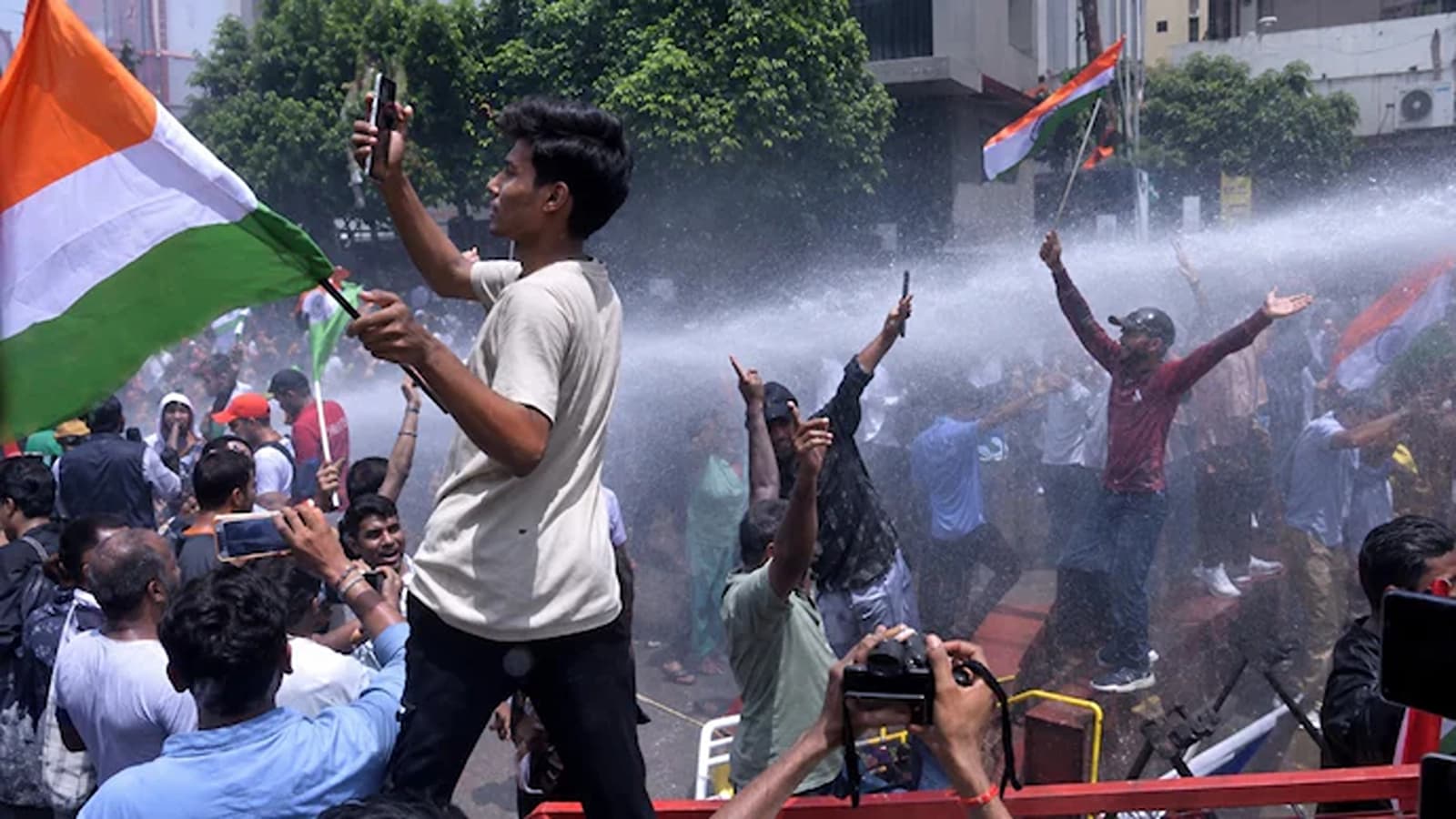
Hundreds of students and government-job aspirants clashed with police in Patna on Tuesday after a weekslong agitation over recruitment examinations and alleged irregularities escalated into a march toward the Bihar chief minister’s residence.
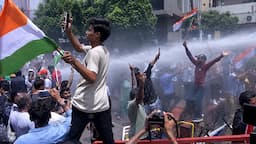
Police used water cannons to disperse protesters after some demonstrators pushed through barricades at Dak Bungalow crossing. Several protesters were detained, according to police and media reports. The march had begun at Gandhi Maidan and was headed toward Raj Bhavan and the chief minister’s residence.

The immediate demands have centred on the 70th Bihar Public Service Commission examination and the fourth phase of the Teacher Recruitment Examination, or TRE-4. But the broader agitation includes demands concerning the Bihar Staff Selection Commission, Sub-Inspector recruitment and the appointment of assistant professors in state universities.
How the latest protest began
The current phase of the agitation gathered momentum in August at Patna’s Gardanibagh, a designated protest area. Teaching-job aspirants, university guest faculty and PhD holders began separate but adjacent demonstrations, raising demands about recruitment examinations, vacancies and higher-education appointments.
Teaching aspirants initially focused heavily on the delay in announcing the fourth phase of the Teacher Recruitment Examination. On Aug. 18, protesters gave the government 24 hours to issue the TRE-4 notification and threatened to gherao the education minister’s residence if their demand was not met. They also demanded a single-tier examination, transparency in recruitment and action against people they alleged had obtained jobs through corrupt practices.
The BPSC subsequently issued the TRE-4 notification for 32,388 teaching posts, with applications scheduled from Sept. 1 to Sept. 30. The announcement did not end the protest because aspirants said several of their other demands remained unresolved.
Among those demands are a single-stage TRE-4 examination, removal of negative marking, transparency in BSSC recruitment and equal opportunity for Hindi-medium candidates. Protesters have also called for action over alleged irregularities in other recruitment examinations.
Why the 70th BPSC exam is part of the protest
The dispute over the 70th BPSC Combined Competitive Examination dates back to December 2024.
The preliminary examination was held Dec. 13, 2024, at hundreds of centres across Bihar. At the Bapu Pariksha Parisar centre in Patna, candidates protested after disruptions involving the distribution of question papers. The BPSC cancelled the examination at that centre and subsequently conducted a re-examination for the affected candidates on Jan. 4, 2025.
Candidates demanding a broader re-examination argued that limiting the retest to one centre did not address their concerns about the integrity of the examination. They also raised concerns about normalisation of marks and alleged irregularities at other centres. The BPSC has denied that the entire examination was compromised by a paper leak.
The dispute continued through 2025 and into 2026. Protesters are now again demanding cancellation of the 70th BPSC examination and a fresh examination, citing alleged irregularities and concerns over the recruitment process.
Why teacher recruitment has become another flashpoint
The TRE-4 dispute is also rooted in problems from earlier recruitment cycles.
TRE-2, conducted in 2023, involved more than 1.2 lakh advertised teaching posts. A later court proceeding recorded that 1,22,286 posts had been advertised and about 94,000 candidates had been declared successful, while vacancies remained to be filled.
TRE-3 was announced with 87,774 vacancies. Its March 2024 examination was cancelled after evidence of a question-paper leak emerged. The examination was subsequently conducted again in July 2024. Aspirants later protested over vacancies that remained after the recruitment process and demanded supplementary results.
That history has contributed to the mistrust surrounding TRE-4. Even after the government announced more than 32,000 posts for the fourth phase, candidates continued to demand changes to the examination format and greater transparency.
The separate PhD and guest-faculty protest
The Gardanibagh agitation also includes PhD holders, research scholars and university guest faculty whose demands are focused on higher-education recruitment.
They have demanded implementation of the UGC Regulations 2018, including Table 3A, in assistant-professor appointments, an increase in the maximum age limit for applicants to 55, regularisation of assistant-professor appointments and implementation of a domicile policy.
The group has also raised concerns over recruitment rules and appointments in Bihar's universities. Some members have been on hunger strikes during the agitation.
On Aug. 22, protesters from this group marched toward Lok Bhavan. Police stopped them near R-Golumber after barricades were breached, and several protesters were detained following what officials described as the use of mild force.
Why the protest continued after TRE-4 was announced
For the teacher aspirants, the publication of the TRE-4 notification addressed one part of the dispute but not the larger set of demands.
Student leaders continued to seek a single-tier examination rather than a two-stage process, removal of negative marking and greater transparency in recruitment. They also sought action concerning alleged malpractice in other examinations.
The protesters have argued that repeated delays, changes in recruitment rules and previous examination controversies have reduced confidence in the recruitment system. Those are the protesters’ claims; they do not by themselves establish wrongdoing by the examination authorities.
What happened before Tuesday's confrontation
The confrontation on Aug. 25 followed several attempts by protesters to take their demands beyond the Gardanibagh protest site.
On Aug. 22, a march toward Lok Bhavan ended with a police-protester confrontation and detentions. Protesters subsequently announced plans for a larger march on Aug. 25, including a proposed gherao of the chief minister’s residence if the government did not engage with them.
Political leaders also became involved. RJD leader and Bihar Assembly Leader of Opposition Tejashwi Yadav visited the protesters and expressed support for their demand for a transparent recruitment system. His party has backed the agitation. Fourteen student and youth organisations have also extended support.
The Bihar government, meanwhile, said it had addressed many of the concerns and remained willing to engage with students. Police officials said discussions had taken place and that several demands had been accepted, while protesters maintained that key issues remained unresolved.
The BPSC official's remark
Tensions also rose after BPSC Examination Controller Rajesh Kumar Singh responded to questions about allegations of irregularities with the Hindi proverb, “Haathi chale bazaar, kutta bhaunke hazaar.”
The remark was criticised as dismissive of protesters. The Bihar government subsequently ordered Singh's suspension, according to reports.
The episode added another point of contention between the protesters and the authorities at a time when negotiations were already strained.
Why police used water cannons
On Tuesday morning, a large group of students and job aspirants gathered at Gandhi Maidan and began marching toward Raj Bhavan and the chief minister’s residence.
Police had placed barricades along the route and deployed additional personnel at major intersections. Officials said protesters were not permitted to enter restricted areas.
At Dak Bungalow crossing, protesters and police jostled after the students attempted to move through the barricades. Protesters broke through some of the barriers, after which police used water cannons to disperse them. Several protesters were detained.
The use of water cannons was therefore the latest escalation in a sequence that began with sit-ins and hunger strikes, moved to marches and attempts to breach barricades, and culminated in a confrontation with police.
There were reports of additional security deployment in central Patna, including CRPF and RAF personnel at the Dak Bungalow crossing.
What the government says
Chief Minister Samrat Choudhary announced the launch of monthly Vidyarthi Sahyog Shivir, or student support camps, to address student grievances.
The camps are scheduled to be held at educational institutions on the fourth Tuesday of every month. The government has also announced an online mechanism through which students can register complaints and track their status, along with helpline 1100.
Education Minister Mithilesh Tiwari said the government had addressed the issues raised by students and remained open to further dialogue. Protesters, however, said several key demands had not been resolved.
What happens next
The immediate dispute is over whether the protesters and the government can return to negotiations after Tuesday's confrontation.
The government has already announced the TRE-4 recruitment drive for 32,388 posts and introduced a new mechanism for receiving student complaints. Protesters are seeking further changes to the examination process, action over alleged irregularities in earlier examinations and direct talks with senior government officials.
For now, the core disagreement remains unresolved: students are demanding what they describe as a transparent and predictable recruitment system, while the government says it has addressed the principal grievances and is willing to continue dialogue.





.png&w=256&q=75)