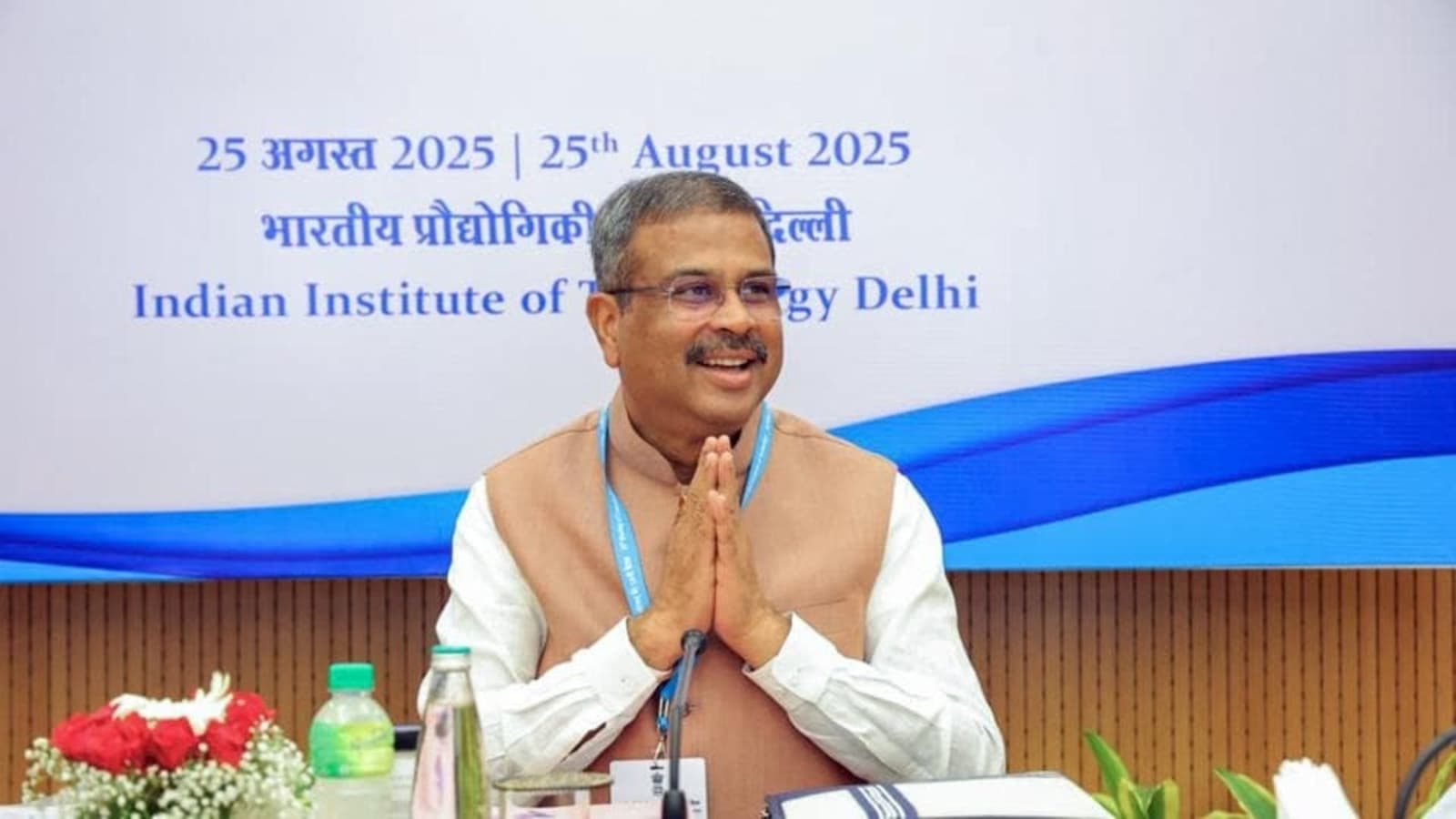
Union Education Minister Dharmendra Pradhan has said the National Education Policy 2020 will be the main vehicle for transforming India’s education system and freeing the next generation from the legacy of colonial-era thinking as the policy moves into an advanced stage of implementation.
Speaking on the progress of the NEP, Pradhan said the reforms are designed to move the country away from outdated educational frameworks and toward a system rooted in skills, innovation, and Indian values.

He emphasized that the policy reflects Prime Minister Narendra Modi’s vision of breaking away from what has been described as the “Macaulay mentality.”
“Prime Minister Modi has said the country needs to come out of the Macaulay mentality. The NEP 2020 will be the medium to bring the new generation of the country out of the Macaulay mentality,” Pradhan said.
The National Education Policy, announced on July 29, 2020, covers school, higher, and technical education and aims to make learning more relevant to present-day social and economic realities.
Officials say the focus is now on translating the policy framework into measurable outcomes through curriculum reform, skill-based learning, and institutional changes.
The issue of confronting the legacy of British-era education has also been raised by Prime Minister Modi. At the sixth Ramnath Goenka Lecture in New Delhi, he called for a collective national effort to reshape educational thinking over the next decade.
“The crime committed by Macaulay against India's cultural and educational foundations will complete 200 years in 2035. I want to appeal to the entire country: over the next decade, we must resolve to free ourselves from the mindset of slavery that Macaulay imposed on India,” he said.
Pradhan has underlined the importance of youth in shaping the country’s future, pointing out that India has one of the world’s largest young populations.
He said education must prioritize instruction in the mother tongue, along with competency-based and skill-oriented studies.
“India is a country of the youth and it is the responsibility of the education department to prepare the youth and future generations with education in mother tongue, competency-based studies and skill-based studies,” he said.
According to officials, the NEP also places strong emphasis on entrepreneurship, innovation, and holistic assessment.
The goal is to encourage students to become job creators rather than only job seekers, while evaluating their abilities through comprehensive assessment methods instead of rote learning.
As the policy approaches its sixth year, the government has described the coming decade as crucial for building an education system that balances Indian cultural foundations with modern global demands.
Officials say the reforms are intended to give students greater flexibility, improve access to education, and prepare young people to contribute meaningfully to society and the economy.




.jpg&w=256&q=75)
.jpg&w=256&q=75)